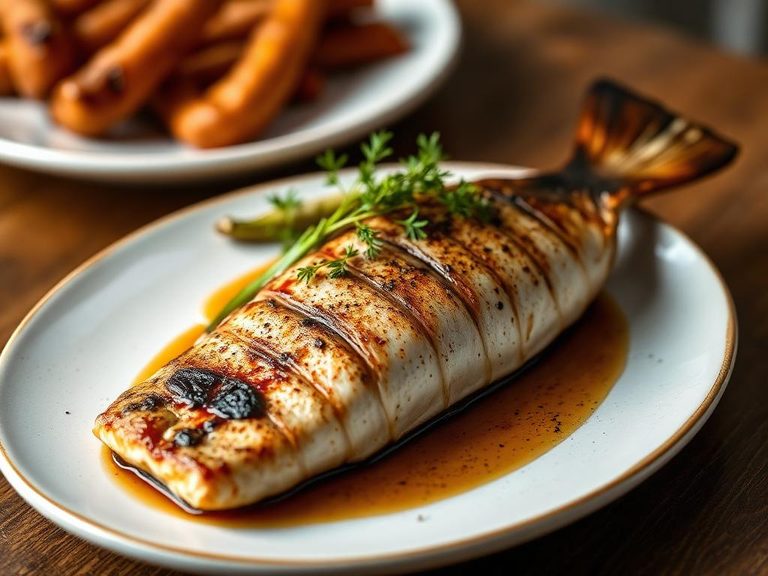
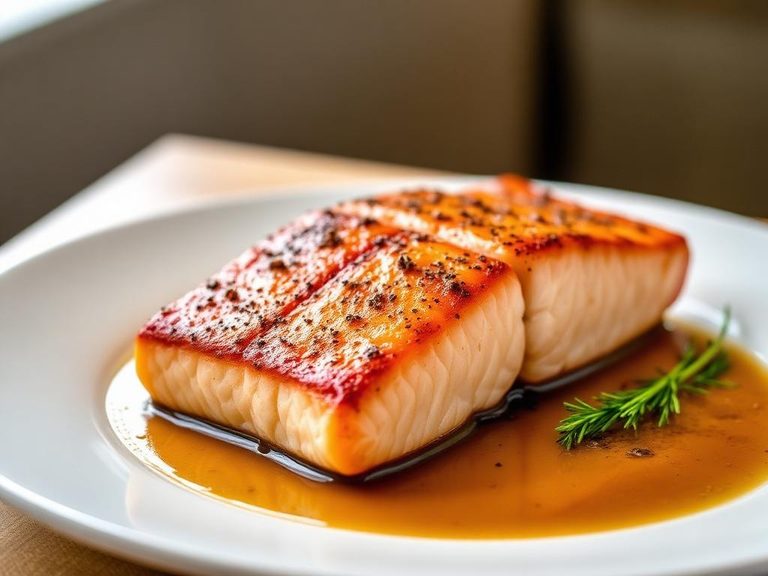
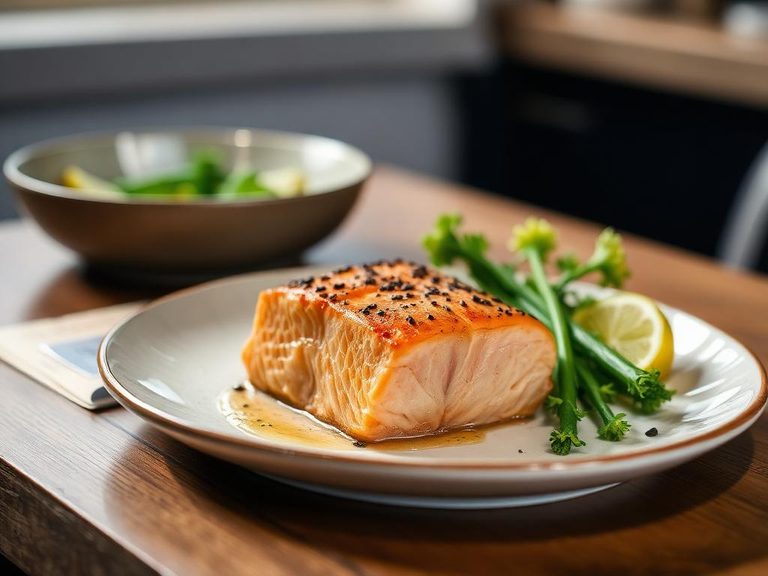
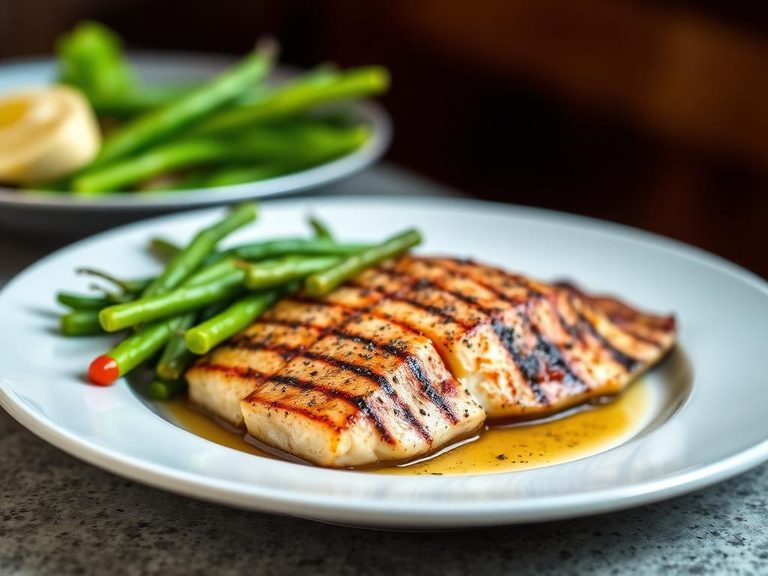
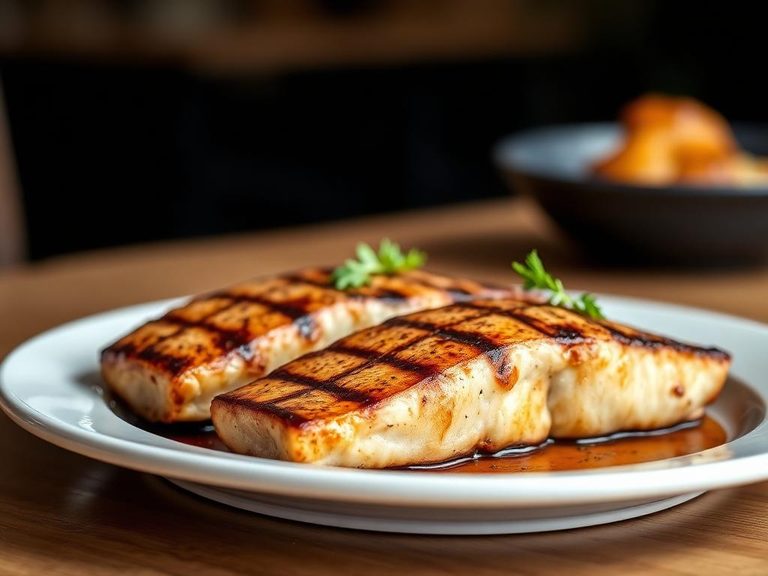
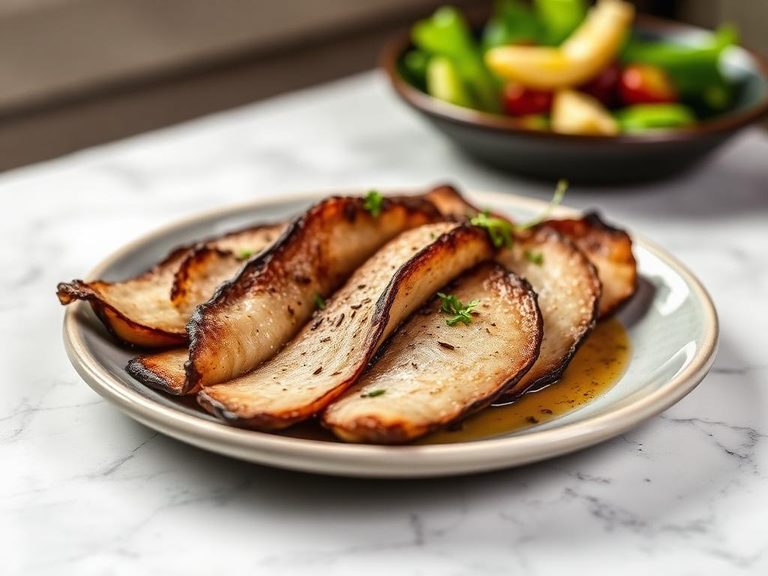
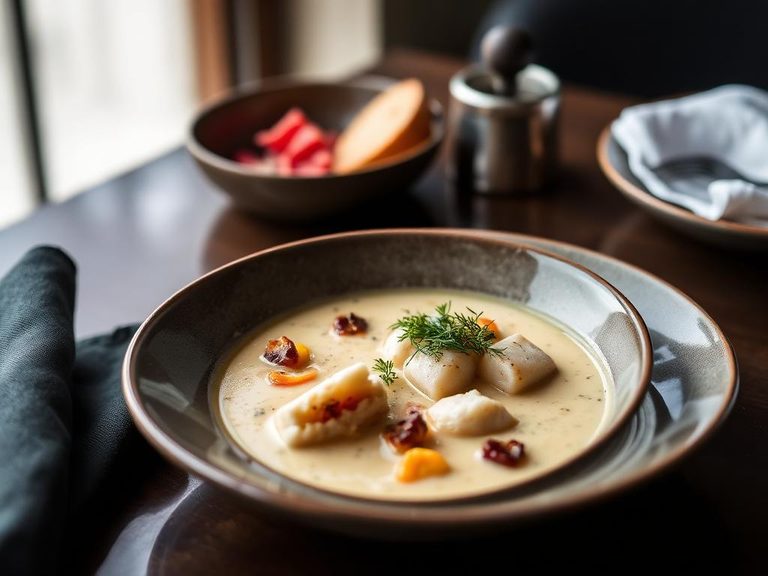
Cedar Plank-Roasted Sablefish
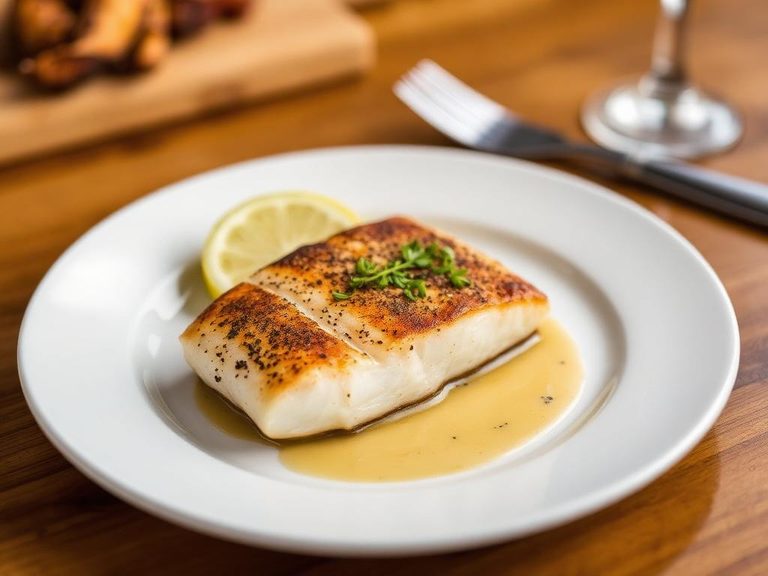
Cedar Plank-Roasted Sablefish is a method of cooking the rich, buttery fish on a water-soaked cedar plank, which imparts a delicate, smoky aroma. The dish typically features sablefish (also known as black cod), often seasoned with simple ingredients like salt, pepper, lemon, and herbs such as dill or thyme. This preparation is a signature technique from the Pacific Northwest of North America, celebrating the region's abundant seafood and indigenous cooking traditions.
🍽️ Nutrition at a glance
This dish is very high in protein and healthy fats, particularly omega-3 fatty acids, while being virtually carbohydrate-free. A typical serving provides a substantial amount of vitamin B12, selenium, and niacin, with a calorie count roughly in the range of 350-450 kcal.
Nutrition breakdown
| Calories | 400 kcal |
| Protein | 34 g |
| Carbs | 0 g |
| Fat | 28 g |
| Fiber | 0 g |
| Sugar | 0 g |
| Sodium | 90 mg |
| Vitamin B12 | 8.5 mcg |
| Niacin (B3) | 8.0 mg |
| Selenium | 45 mcg |
| Phosphorus | 350 mg |
| Potassium | 480 mg |
| Omega-3 (EPA+DHA) | 2.5 g |
| Vitamin D | 12 mcg |
| Magnesium | 55 mg |
Per 1 fillet (170 g) · estimated, varies by recipe
💡 What's interesting
The cedar plank itself is a key cultural element, originating from the traditional cooking methods of Indigenous peoples of the Pacific Northwest Coast, who used aromatic woods to both cook and flavor fish. Nutritionally, sablefish is renowned for having one of the highest concentrations of long-chain omega-3s (EPA and DHA) among commercial fish, which are linked to heart and brain health.