

Bread pudding base
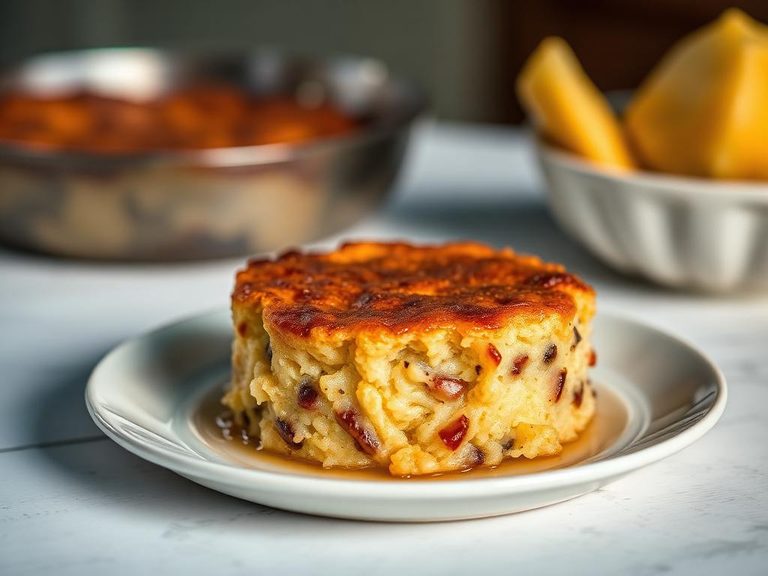
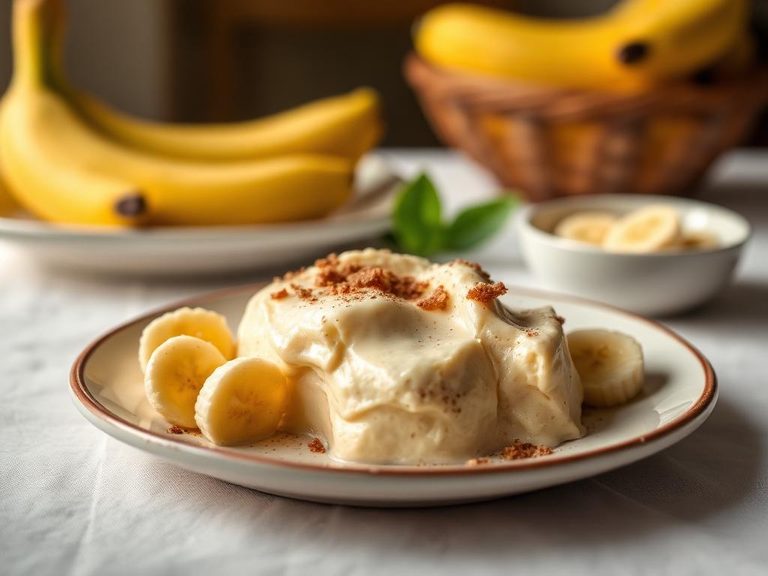
Bread pudding base is a simple, custard-like mixture used as the foundation for the classic dessert, typically made by soaking stale bread in a blend of eggs, milk or cream, sugar, and vanilla. It originates from European cuisines, particularly British and French, where it was a traditional way to use up leftover bread.
🍽️ Nutrition at a glance
This base is high in carbohydrates and fats, providing a good source of energy and some protein from the eggs and dairy. A typical serving contains roughly 300-400 calories.
Nutrition breakdown
| Calories | 350 kcal |
| Protein | 10 g |
| Carbs | 45 g |
| Fat | 15 g |
| Fiber | 1 g |
| Sugar | 20 g |
| Sodium | 250 mg |
| Calcium | 180 mg |
| Phosphorus | 150 mg |
| Vitamin A | 120 mcg |
| Vitamin B12 | 0.6 mcg |
| Riboflavin (B2) | 0.2 mg |
| Selenium | 10 mcg |
Per 1 cup (240 g) · estimated, varies by recipe
💡 What's interesting
Culturally, it's a prime example of 'waste-not' cooking, transforming humble leftovers into a comforting dish. Nutritionally, the combination of protein and fat helps slow the absorption of the carbohydrates, making it more satiating than simple sugary desserts.
🍽️ Related dishes




AI estimate may be inaccurate · Terms