

Bread and cracker baking
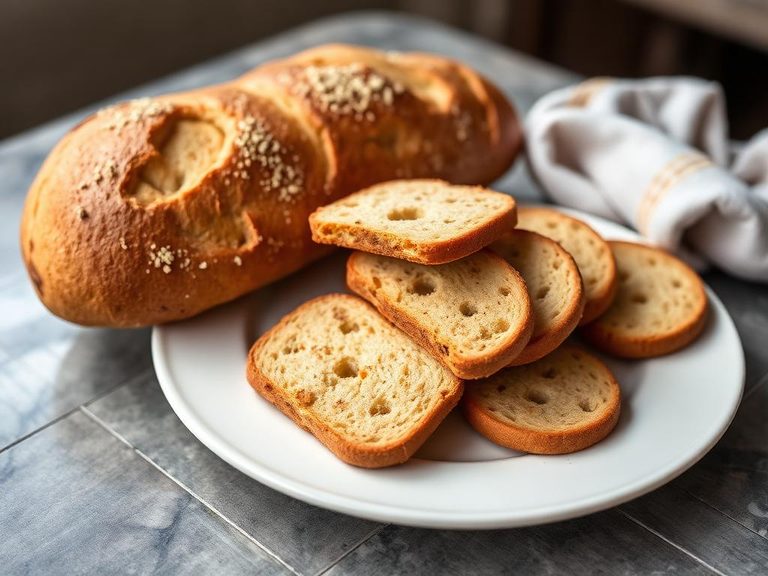
Bread and cracker baking is the traditional craft of preparing a wide variety of leavened and unleavened baked goods, primarily using flour, water, yeast or sourdough starter, and salt. This practice is fundamental to cuisines worldwide, from crusty artisan loaves and soft sandwich breads to crisp, savory crackers.
🍽️ Nutrition at a glance
These baked goods are primarily a source of carbohydrates, providing energy, with varying amounts of protein and fat depending on the recipe. They can be a good source of B vitamins and minerals like iron and magnesium, especially when made with whole-grain flours, with a typical serving ranging from 80 to 150 kcal.
Nutrition breakdown
| Calories | 79 kcal |
| Protein | 4 g |
| Carbs | 14 g |
| Fat | 1 g |
| Fiber | 2 g |
| Sugar | 2 g |
| Sodium | 150 mg |
| Iron | 1.0 mg |
| Magnesium | 24 mg |
| Phosphorus | 60 mg |
| Thiamin (B1) | 0.1 mg |
| Niacin (B3) | 1.5 mg |
| Folate | 20 mcg |
| Manganese | 0.8 mg |
| Selenium | 10 mcg |
Per 1 slice (30 g) of whole-wheat bread · estimated, varies by recipe
💡 What's interesting
The cultural significance of bread is immense, symbolizing sustenance and community across the globe, from the French baguette to Indian naan. Nutritionally, whole-grain versions offer valuable fiber and nutrients, while the fermentation process in sourdough can improve digestibility.
🍽️ Related dishes


AI estimate may be inaccurate · Terms