Braised Pork Lung in Soy Sauce
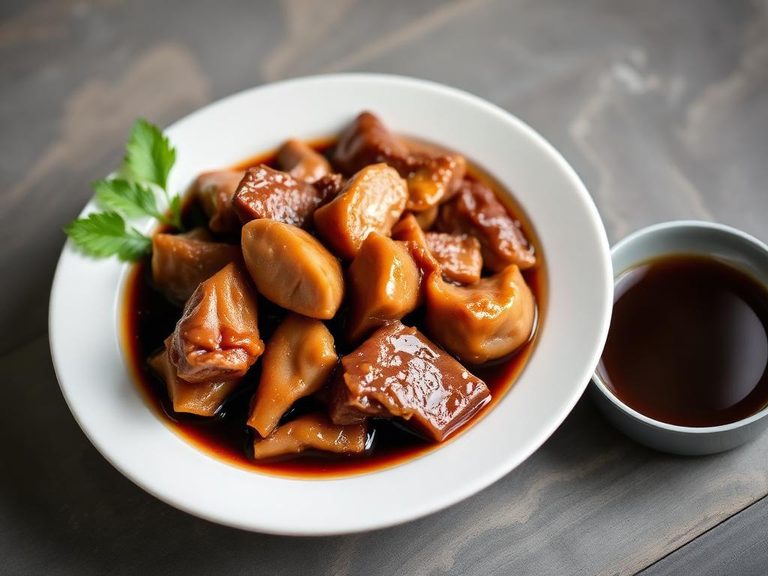
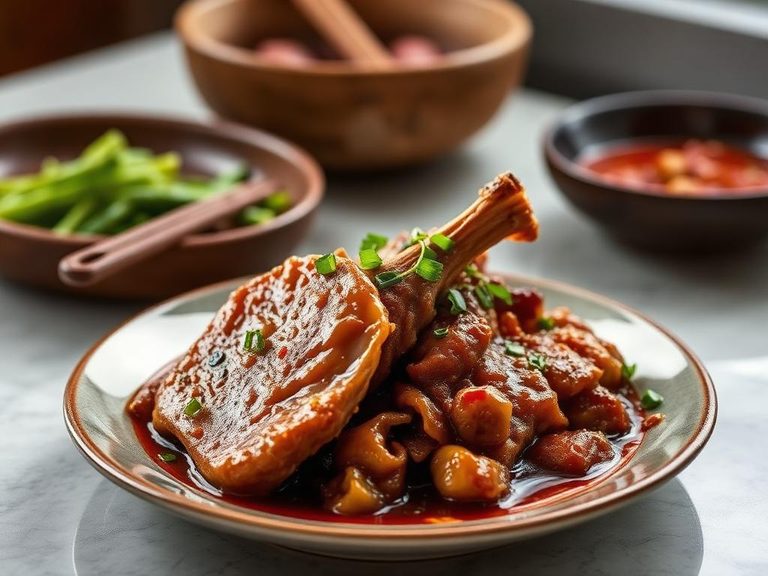
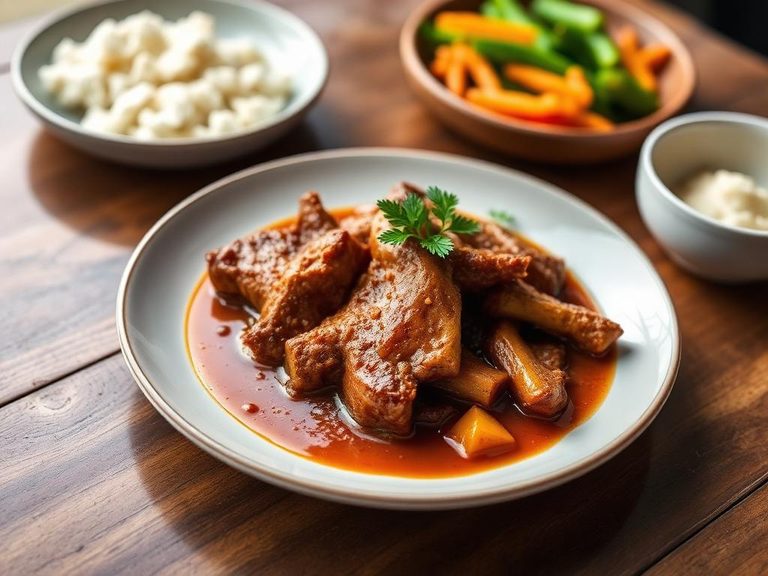
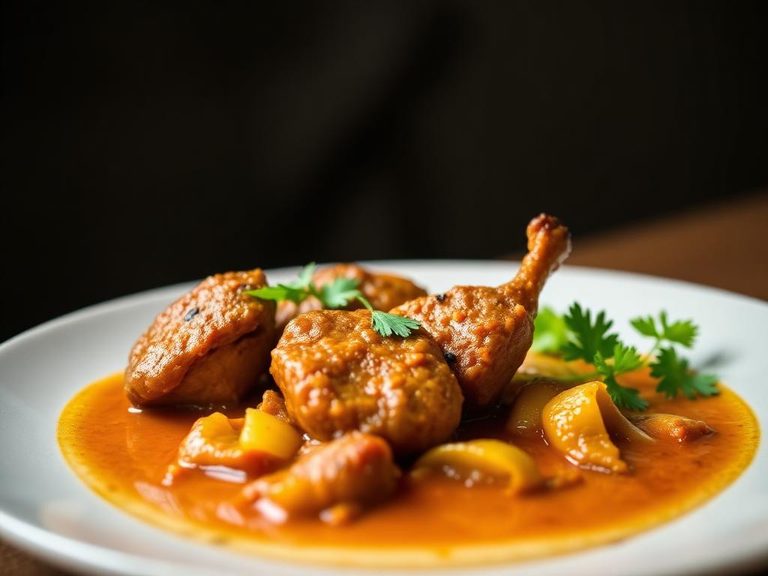
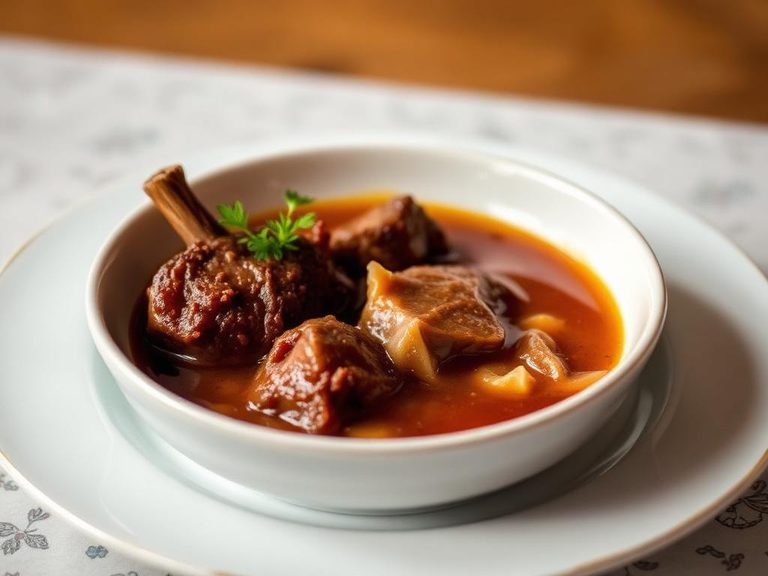
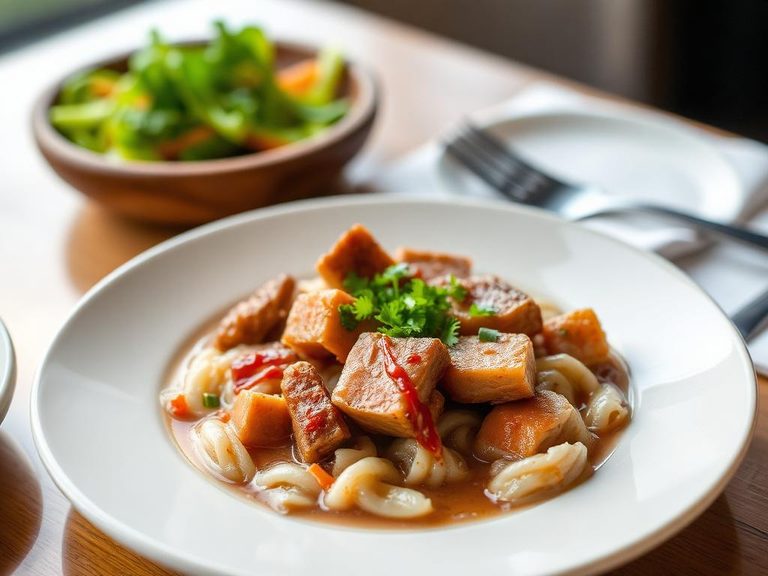
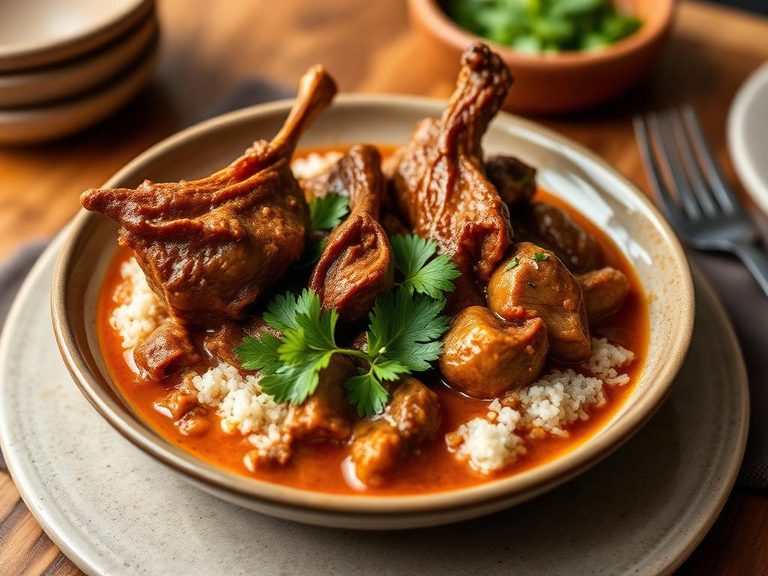
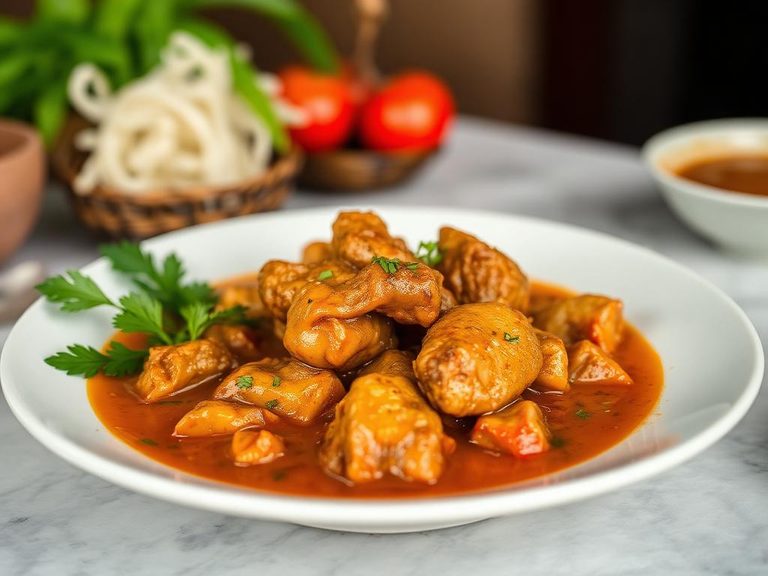
Braised Pork Lung in Soy Sauce is a traditional Chinese dish, particularly popular in Cantonese and Sichuan cuisines. The dish features pork lungs that are meticulously cleaned, blanched, and then slowly braised in a rich, aromatic sauce primarily composed of soy sauce, rice wine, ginger, star anise, and rock sugar. It is known for its tender, slightly spongy texture and deeply savory, umami-rich flavor.
🍽️ Nutrition at a glance
This dish is high in protein and fat, with virtually no carbohydrates. It is a good source of iron and B vitamins, particularly B12, from the organ meat. A typical serving contains approximately 250-300 calories.
Nutrition breakdown
| Calories | 280 kcal |
| Protein | 22 g |
| Carbs | 3 g |
| Fat | 19 g |
| Fiber | 0 g |
| Sugar | 2 g |
| Sodium | 850 mg |
| Iron | 4.2 mg |
| Vitamin B12 | 12.5 mcg |
| Selenium | 24 mcg |
| Phosphorus | 280 mg |
| Zinc | 2.8 mg |
| Niacin (B3) | 5.5 mg |
| Riboflavin (B2) | 0.3 mg |
| Potassium | 310 mg |
Per 1 cup (about 150 g) of braised pork lung pieces with sauce · estimated, varies by recipe
💡 What's interesting
Culturally, this dish is a prime example of nose-to-tail eating, valued for minimizing waste and transforming a humble ingredient into a delicacy. Nutritionally, pork lung is an exceptionally rich source of the essential amino acid tryptophan, which the body uses to produce serotonin and melatonin.