Bison Bourguignon
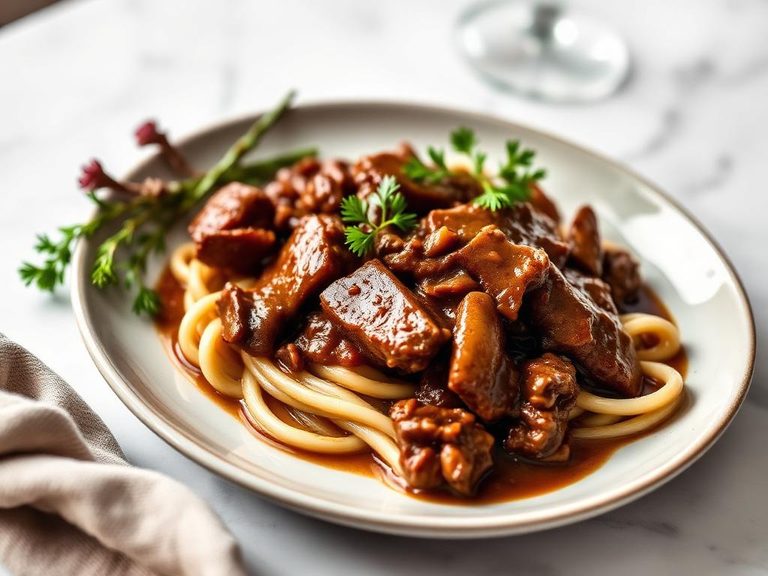
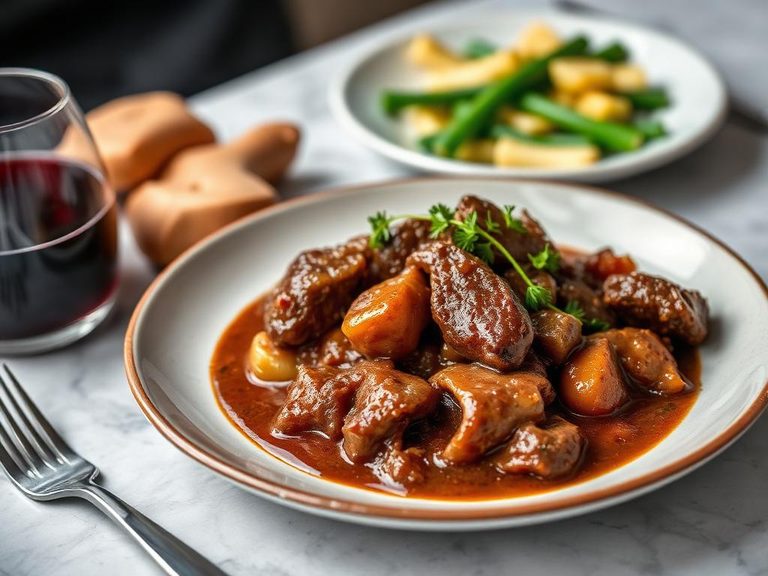
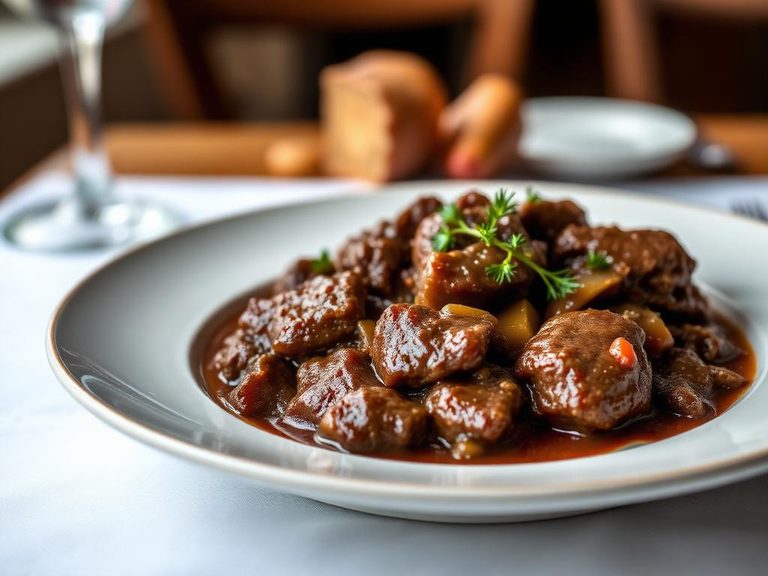
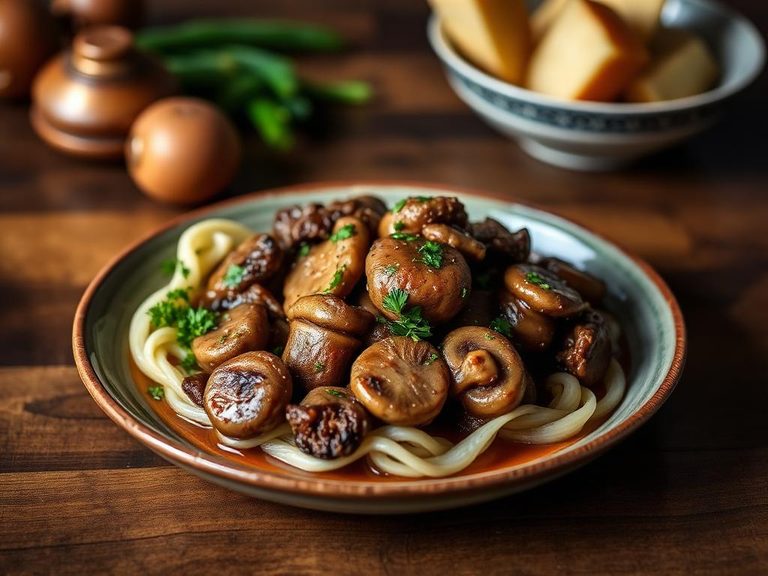
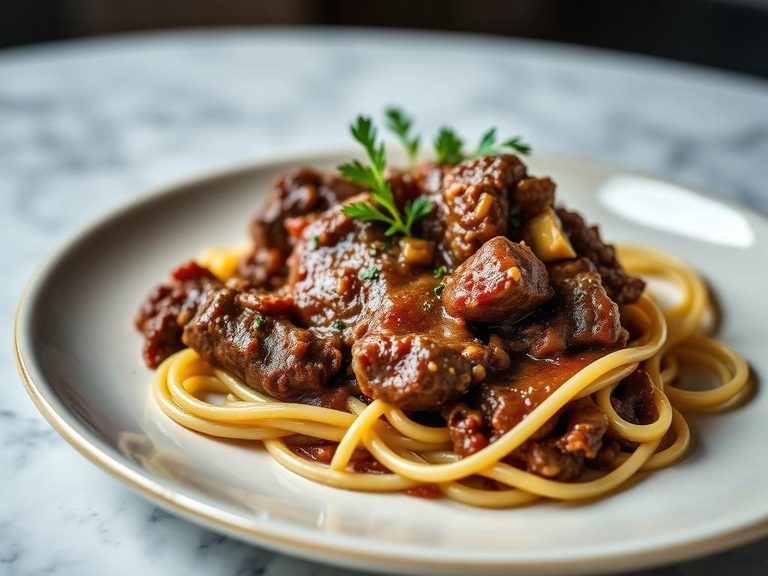
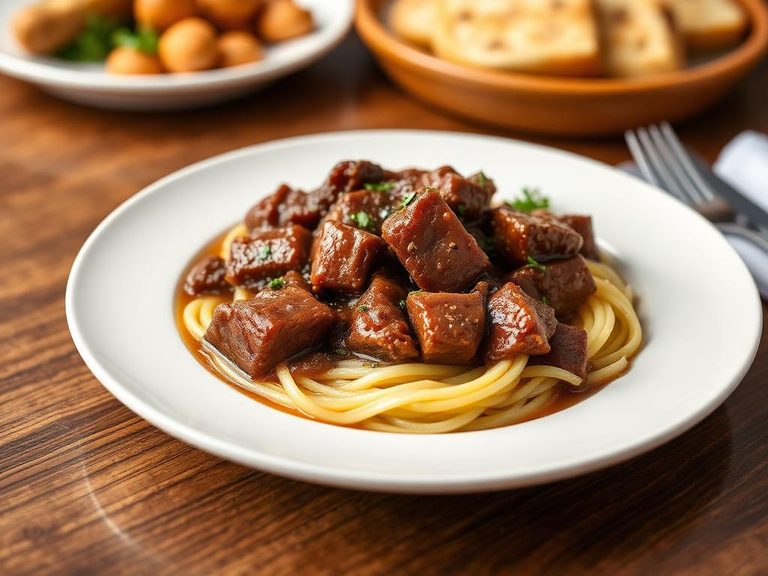
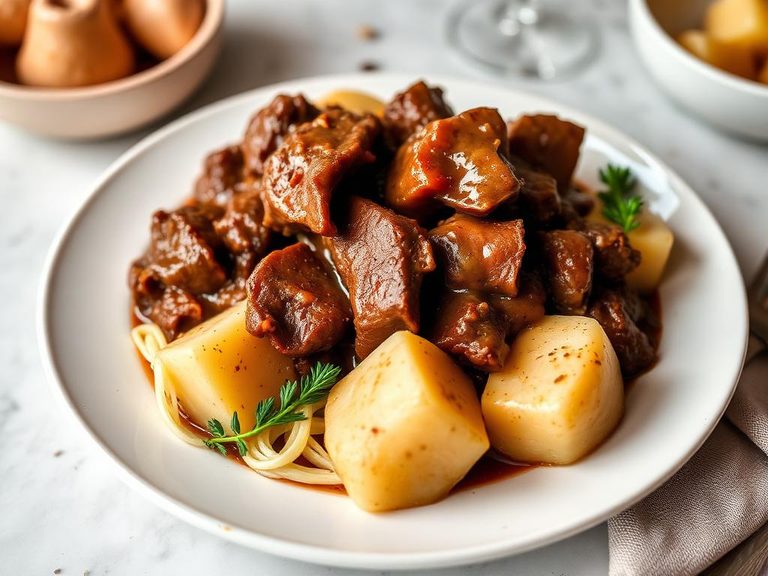
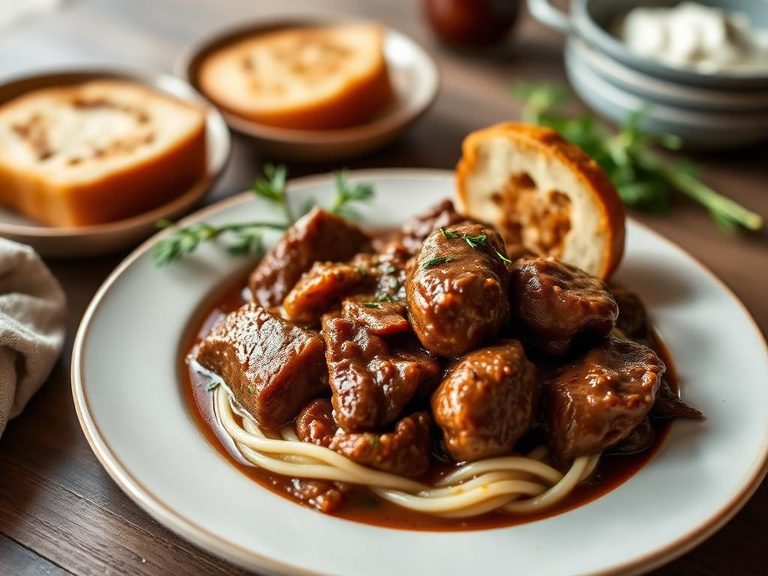
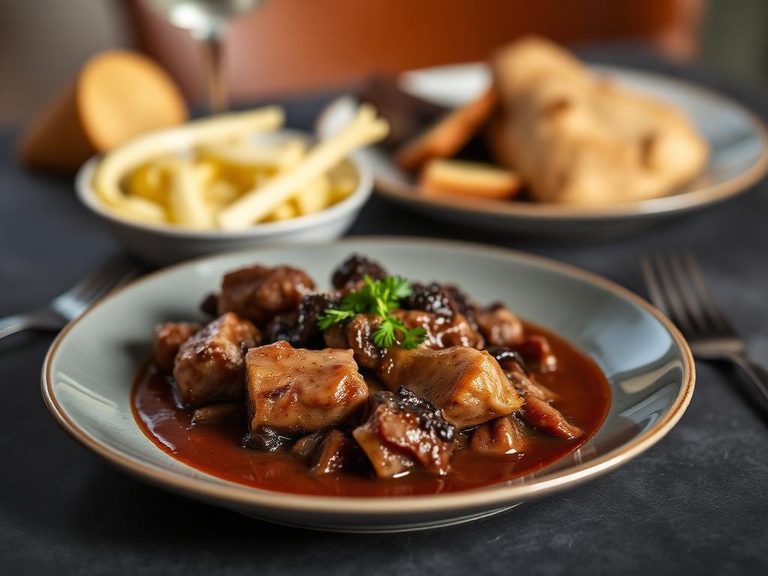
Bison Bourguignon is a rich, hearty stew that reimagines the classic French beef dish by using lean, flavorful bison meat. It typically features bison chuck braised slowly in red wine (traditionally Burgundy) with aromatic vegetables like carrots, onions, and mushrooms, along with herbs such as thyme and bay leaf. The dish is a product of French culinary tradition, specifically from the Burgundy region, but has been adapted in North America to incorporate the locally available and leaner bison.
🍽️ Nutrition at a glance
This dish is high in protein due to the bison, moderate in fat (especially if using a lean cut), and relatively low in carbohydrates unless served with a starchy side like potatoes or noodles. It is an excellent source of iron, zinc, and B vitamins, particularly B12, with a typical serving providing a substantial amount of these nutrients. A rough calorie estimate for a 1-cup serving is between 350 and 450 kcal, depending on the specific recipe and serving size.
Nutrition breakdown
| Calories | 380 kcal |
| Protein | 32 g |
| Carbs | 12 g |
| Fat | 20 g |
| Fiber | 3 g |
| Sugar | 4 g |
| Sodium | 580 mg |
| Iron | 4.5 mg |
| Zinc | 6.2 mg |
| Vitamin B12 | 2.8 mcg |
| Potassium | 620 mg |
| Phosphorus | 280 mg |
| Niacin (B3) | 8.5 mg |
| Selenium | 25 mcg |
| Vitamin B6 | 0.5 mg |
Per 1 cup (240 g) · estimated, varies by recipe
💡 What's interesting
Culturally, Bison Bourguignon represents a fusion of Old World French technique with New World ingredients, highlighting the adaptability of classic recipes. Nutritionally, bison is often considered a more sustainable and leaner red meat alternative to beef, with a similar mineral profile but typically less total fat and calories per ounce.