Base for gingerbread house construction

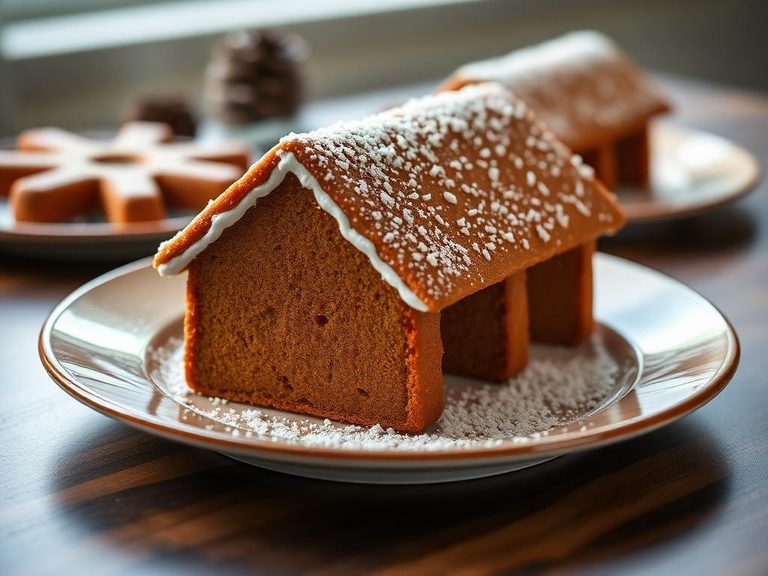
A base for gingerbread house construction is a firm, baked dough made primarily from flour, molasses, ginger, and spices, designed to be structurally sound for building edible houses. It originates from German Christmas traditions, particularly the Lebkuchenherzen, and has become a staple of holiday baking worldwide.
🍽️ Nutrition at a glance
This base is very high in carbohydrates from flour and sugar, with a moderate amount of fat from butter or shortening, and minimal protein. A typical serving provides a quick energy boost but is low in essential nutrients, with a calorie count around 150-200 kcal per 100g.
Nutrition breakdown
| Calories | 180 kcal |
| Protein | 3 g |
| Carbs | 35 g |
| Fat | 3 g |
| Fiber | 1 g |
| Sugar | 18 g |
| Sodium | 120 mg |
| Iron | 2 mg |
| Potassium | 150 mg |
| Magnesium | 20 mg |
| Phosphorus | 40 mg |
| Thiamine (B1) | 0.1 mg |
| Niacin (B3) | 1.5 mg |
| Folate | 25 mcg |
| Manganese | 0.5 mg |
Per 1 piece (100 g) · estimated, varies by recipe
💡 What's interesting
Culturally, this gingerbread base is unique as it's engineered more for architecture than flavor, often being harder and less sweet than cookie dough. Nutritionally, the use of molasses adds small amounts of iron and potassium, but it's primarily a festive treat meant for crafting, not regular consumption.