

All-purpose flour for cakes and cookies
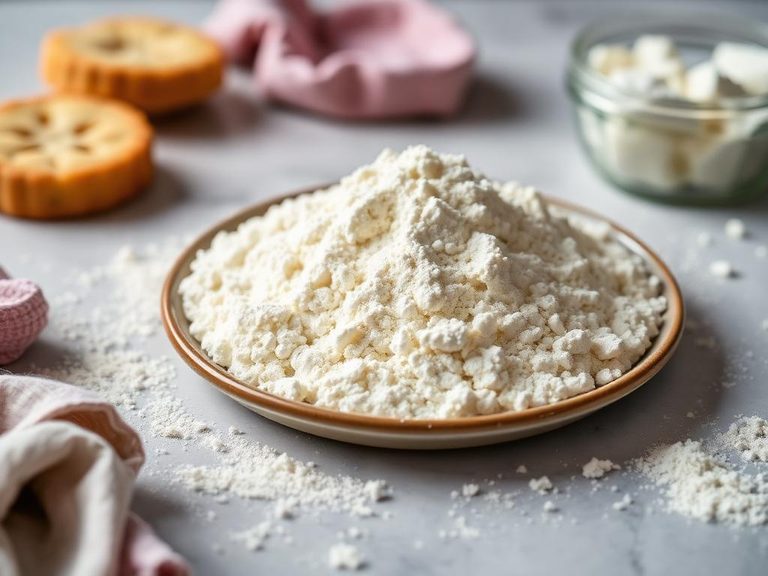
All-purpose flour is a versatile, finely milled powder made from a blend of hard and soft wheat, serving as the foundational ingredient for countless cakes and cookies worldwide. Its typical composition includes wheat endosperm, sometimes with added nutrients like iron and B vitamins, and it originates from global milling traditions refined over centuries. This flour is prized for its balanced protein content, making it ideal for achieving tender yet structured baked goods.
🍳 View the full All-purpose flour for cakes and cookies recipe →
🍽️ Nutrition at a glance
All-purpose flour is high in carbohydrates, providing a quick energy source, with moderate protein levels that contribute to gluten formation for structure. A standard 1/4 cup serving (about 30 grams) offers roughly 100-110 calories, along with small amounts of iron, B vitamins like thiamine, and dietary fiber if not overly processed.
Nutrition breakdown
| Calories | 455 kcal |
| Protein | 12.9 g |
| Carbs | 95.4 g |
| Fat | 1.2 g |
| Fiber | 3.4 g |
| Sugar | 0.3 g |
| Sodium | 3 mg |
| Iron | 5.8 mg |
| Thiamin (B1) | 0.7 mg |
| Niacin (B3) | 7.2 mg |
| Folate | 183 mcg |
| Phosphorus | 135 mg |
| Magnesium | 34 mg |
| Manganese | 1.0 mg |
| Selenium | 42 mcg |
Per 1 cup (120 g) · estimated, varies by recipe
💡 What's interesting
Culturally, all-purpose flour symbolizes home baking traditions across diverse cuisines, from American chocolate chip cookies to European sponge cakes, often adapting to local flavors and techniques. Nutritionally, its ability to be enriched with vitamins helps address common deficiencies, making it a practical staple in many diets while allowing for creative variations in texture and taste.
🍽️ Related dishes






AI estimate may be inaccurate · Terms