

Thai peanut sauce
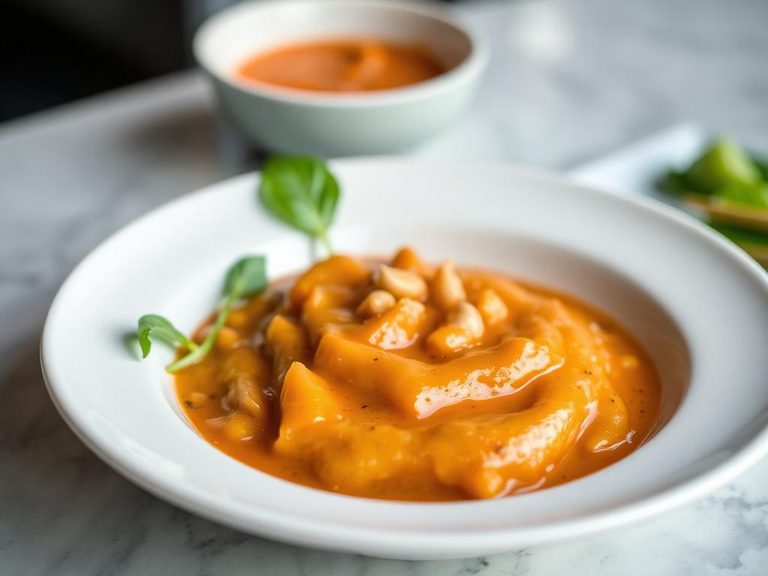
Thai peanut sauce, often made with cashews instead of peanuts for a creamier texture, is a rich and savory condiment originating from Thailand. It typically features a blend of roasted nuts or peanuts, coconut milk, soy sauce, lime juice, and aromatic spices like garlic and ginger, creating a balanced flavor profile that's both sweet and savory.
🍳 View the full Thai peanut sauce recipe →
🍽️ Nutrition at a glance
This sauce is generally high in healthy fats and protein due to its nut base, while also providing some carbohydrates from added sweeteners or coconut milk. A typical two-tablespoon serving contains around 80-120 calories, with notable amounts of magnesium, vitamin E, and antioxidants from the nuts.
Nutrition breakdown
| Calories | 180 kcal |
| Protein | 5 g |
| Carbs | 10 g |
| Fat | 14 g |
| Fiber | 2 g |
| Sugar | 4 g |
| Sodium | 350 mg |
| Potassium | 120 mg |
| Magnesium | 30 mg |
| Phosphorus | 80 mg |
| Iron | 1.2 mg |
| Zinc | 1.0 mg |
| Vitamin E | 2.5 mg |
| Vitamin B6 | 0.1 mg |
| Copper | 0.3 mg |
Per 1/4 cup (60 g) · estimated, varies by recipe
💡 What's interesting
Culturally, this sauce represents Thailand's skillful balancing of contrasting flavors—sweet, salty, sour, and umami—in a single condiment. Nutritionally, using cashews instead of peanuts not only creates a smoother texture but also increases the mineral content, particularly zinc and copper, which support immune function.
🍽️ Related dishes

AI estimate may be inaccurate · Terms