

Teriyaki Vegetable Rice
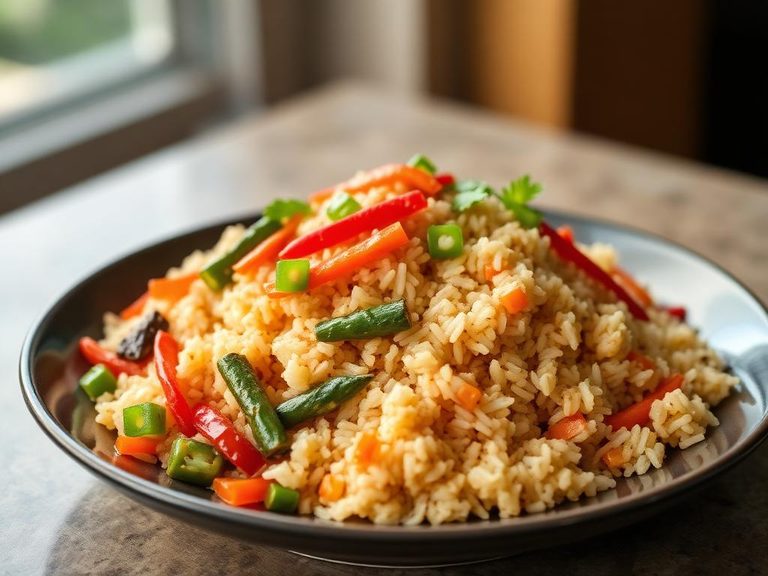
Teriyaki Vegetable Rice is a popular Japanese-inspired dish where a savory-sweet teriyaki sauce is tossed with stir-fried vegetables and served over steamed rice. It typically features a colorful mix of vegetables like broccoli, bell peppers, carrots, and onions, all glazed in the signature glossy sauce. While the teriyaki sauce originates from Japan, this vegetable-forward version is a common and customizable staple in home cooking and casual dining worldwide.
🍽️ Nutrition at a glance
This dish is primarily high in carbohydrates from the rice, with a moderate amount of fiber and vitamins from the vegetables. The teriyaki sauce adds sodium and a small amount of sugar, while the overall fat content is generally low unless prepared with a lot of oil. A typical serving provides a good source of energy, along with key nutrients like vitamin C, vitamin A, and potassium, and usually ranges between 350-500 calories per serving.
Nutrition breakdown
| Calories | 280 kcal |
| Protein | 6 g |
| Carbs | 48 g |
| Fat | 7 g |
| Fiber | 4 g |
| Sugar | 8 g |
| Sodium | 480 mg |
| Potassium | 350 mg |
| Vitamin C | 15 mg |
| Iron | 2.5 mg |
| Calcium | 60 mg |
| Vitamin A | 80 mcg |
| Magnesium | 45 mg |
| Phosphorus | 120 mg |
| Folate | 50 mcg |
Per 1 cup (240 g) · estimated, varies by recipe
💡 What's interesting
The term 'teriyaki' refers to the Japanese cooking method of grilling or broiling with a glaze, showcasing a beautiful balance of umami, sweet, and salty flavors. Nutritionally, this dish is a great example of how a flavorful sauce can make a vegetable-rich meal appealing and satisfying, encouraging higher vegetable intake in a delicious, accessible way.
🍽️ Related dishes

AI estimate may be inaccurate · Terms