Tea Eggs
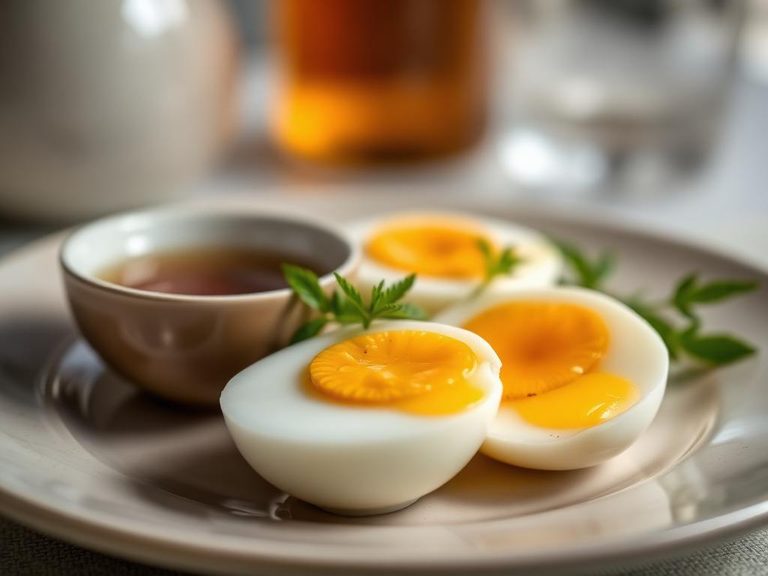
Tea eggs are a popular Chinese snack made by simmering hard-boiled eggs in a savory broth of tea, soy sauce, and aromatic spices like star anise and cinnamon. The eggs are gently cracked before simmering, allowing the flavorful liquid to seep in and create a beautiful marbled pattern on the egg white. They are a beloved street food and household staple across China and other parts of Asia.
🍽️ Nutrition at a glance
Tea eggs are a high-protein, low-carb snack, with one egg providing about 6-7 grams of protein and roughly 80-100 calories. They are also a good source of essential nutrients like choline, selenium, and B vitamins, with minimal fat coming primarily from the yolk.
Nutrition breakdown
| Calories | 180 kcal |
| Protein | 12.5 g |
| Carbs | 1.5 g |
| Fat | 14 g |
| Fiber | 0 g |
| Sugar | 1 g |
| Sodium | 450 mg |
| Vitamin A | 270 IU |
| Vitamin D | 82 IU |
| Vitamin B12 | 1.1 mcg |
| Riboflavin (B2) | 0.5 mg |
| Selenium | 30 mcg |
| Choline | 294 mg |
| Iron | 1.8 mg |
| Phosphorus | 198 mg |
Per 2 eggs (130 g) · estimated, varies by recipe
💡 What's interesting
The distinctive marbled appearance of tea eggs is not just for show; it's a result of a clever culinary technique that allows the eggs to absorb complex flavors while remaining shelf-stable for a day or two at room temperature. Nutritionally, the tea and spices used in the broth may contribute antioxidants, making this a flavorful snack with potential added benefits beyond basic nutrition.