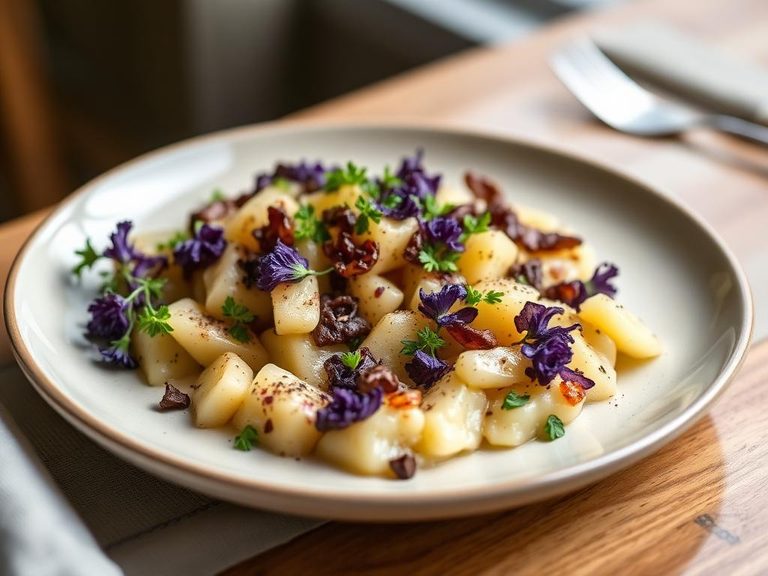
Stuffed Borage Leaves

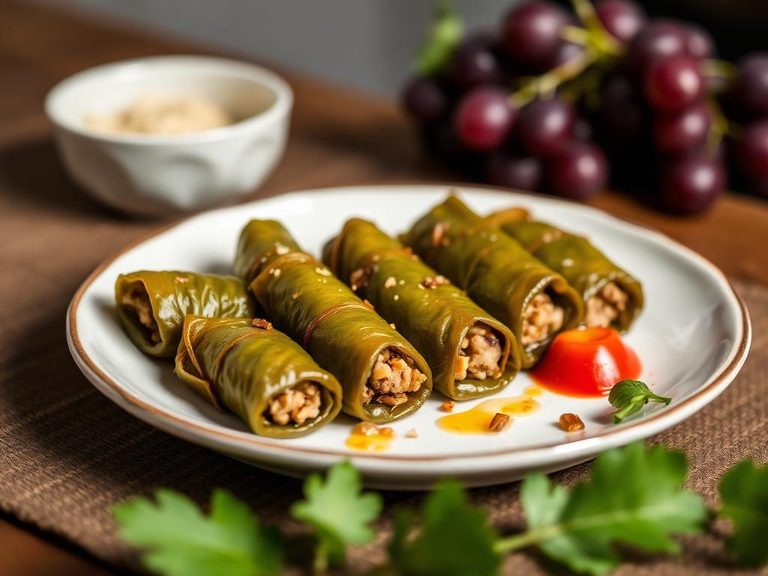
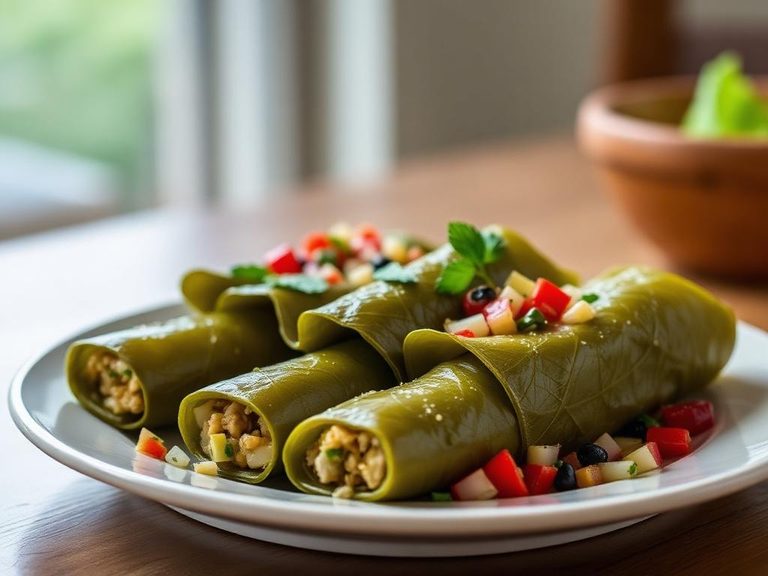
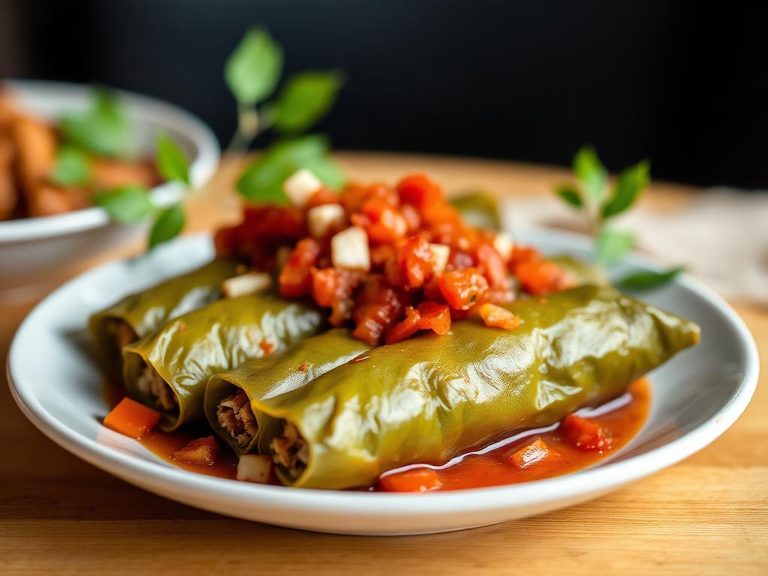
Stuffed Borage Leaves, known as 'Kousa Borani' in parts of the Middle East and the Mediterranean, are tender, fuzzy borage leaves wrapped around a savory filling, typically a mixture of rice, herbs, and sometimes minced meat. This dish is a traditional, seasonal delicacy prepared when the young borage plants are plentiful, often served with a tangy yogurt or lemon-based sauce. It's a beloved comfort food that highlights the unique, slightly cucumber-like flavor of the borage herb.
🍽️ Nutrition at a glance
This dish is generally balanced, with a moderate amount of carbohydrates from the rice filling and healthy fats if prepared with olive oil. It provides a good source of dietary fiber, vitamin C, and potassium from both the borage leaves and the filling ingredients. A typical serving contains approximately 250-350 calories.
Nutrition breakdown
| Calories | 280 kcal |
| Protein | 6.5 g |
| Carbs | 38 g |
| Fat | 12 g |
| Fiber | 5.5 g |
| Sugar | 4 g |
| Sodium | 450 mg |
| Vitamin C | 25 mg |
| Potassium | 480 mg |
| Vitamin A | 180 mcg |
| Iron | 2.8 mg |
| Calcium | 150 mg |
| Magnesium | 45 mg |
| Vitamin K | 55 mcg |
| Folate | 70 mcg |
Per 1 cup (240 g) of stuffed borage leaves with rice and herbs · estimated, varies by recipe
💡 What's interesting
Borage leaves are one of the few edible plants that provide a complete source of the omega-3 fatty acid ALA (alpha-linolenic acid), making this dish a unique plant-based source of these beneficial fats. Culturally, it's a dish that celebrates foraging and seasonal eating, often prepared by families as a communal activity during the spring harvest.