

Sponge Cake
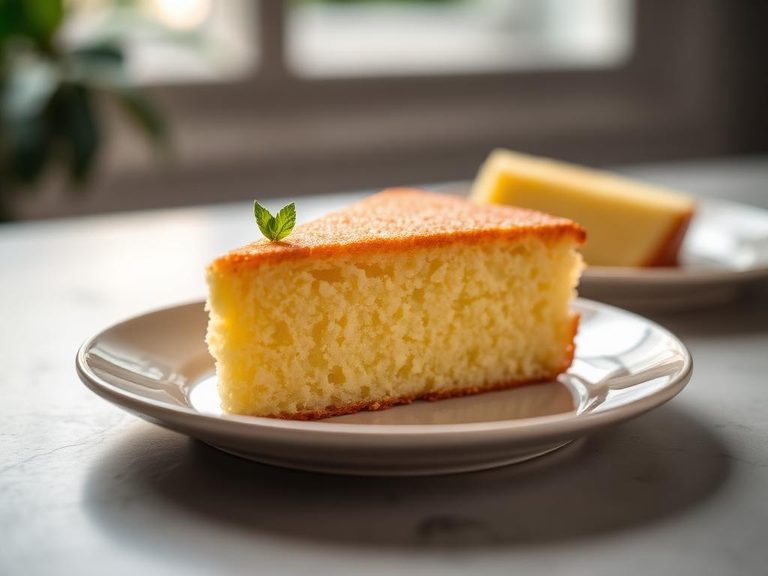
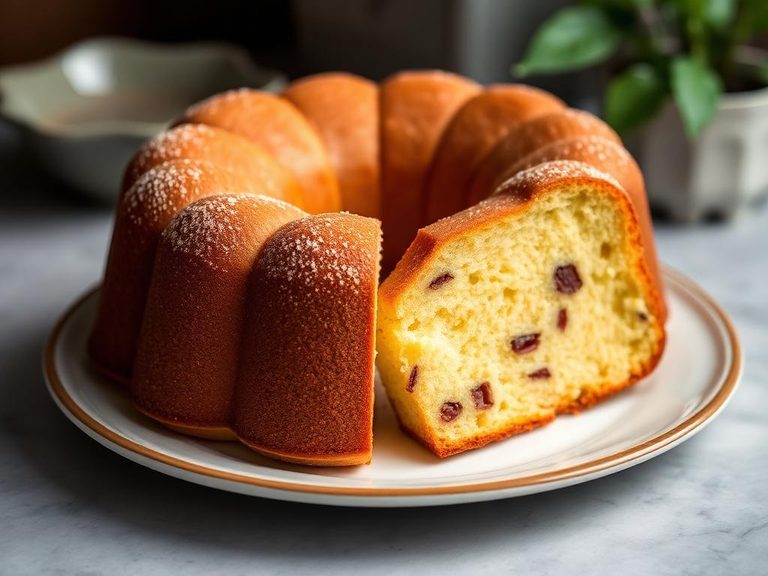
Sponge cake is a light, airy dessert characterized by its soft, springy texture, achieved by whipping eggs to incorporate air. Its classic ingredients typically include eggs, sugar, flour, and sometimes a small amount of fat or flavoring like vanilla. It is a foundational cake in Western baking, with variations found globally.
🍳 View the full Sponge Cake recipe →
🍽️ Nutrition at a glance
Sponge cake is primarily a source of carbohydrates from sugar and flour, with a moderate amount of protein from the eggs. A standard slice (about 80g) provides roughly 250-300 calories, with minimal fat unless additions like buttercream or fillings are included.
Nutrition breakdown
| Calories | 299 kcal |
| Protein | 6.2 g |
| Carbs | 55 g |
| Fat | 5.9 g |
| Fiber | 0.6 g |
| Sugar | 32 g |
| Sodium | 210 mg |
| Calcium | 45 mg |
| Iron | 1.8 mg |
| Potassium | 100 mg |
| Phosphorus | 70 mg |
| Vitamin A | 50 µg RAE |
| Vitamin B1 (Thiamin) | 0.12 mg |
| Vitamin B2 (Riboflavin) | 0.15 mg |
| Folate | 35 µg DFE |
Per 1 piece (100 g) · estimated, varies by recipe
💡 What's interesting
The unique rise of sponge cake relies on the mechanical leavening of whipped eggs rather than chemical agents like baking powder, making its texture a direct result of technique. Nutritionally, it serves as a versatile base, often adapted into lower-calorie or gluten-free versions to suit modern dietary preferences.
🍽️ Related dishes




AI estimate may be inaccurate · Terms