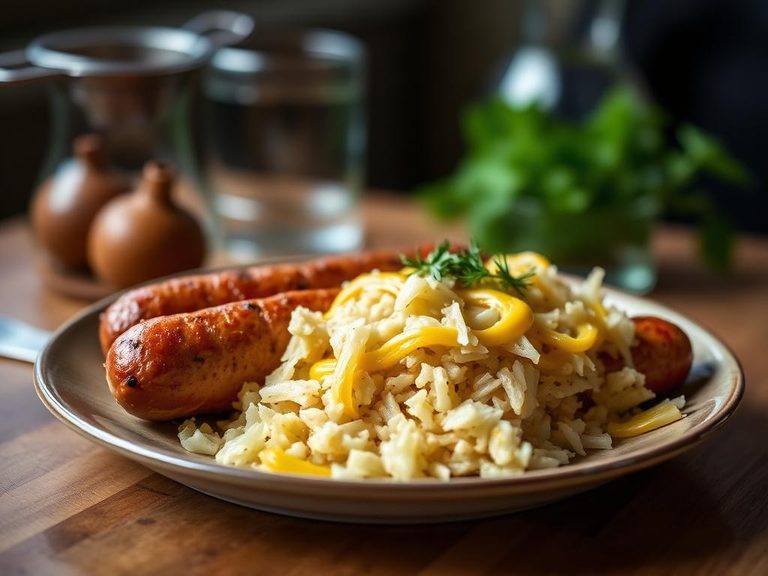
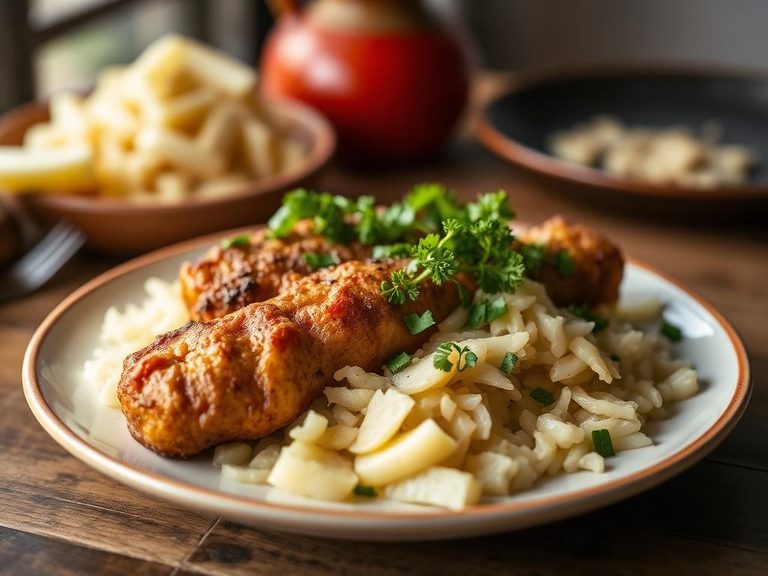
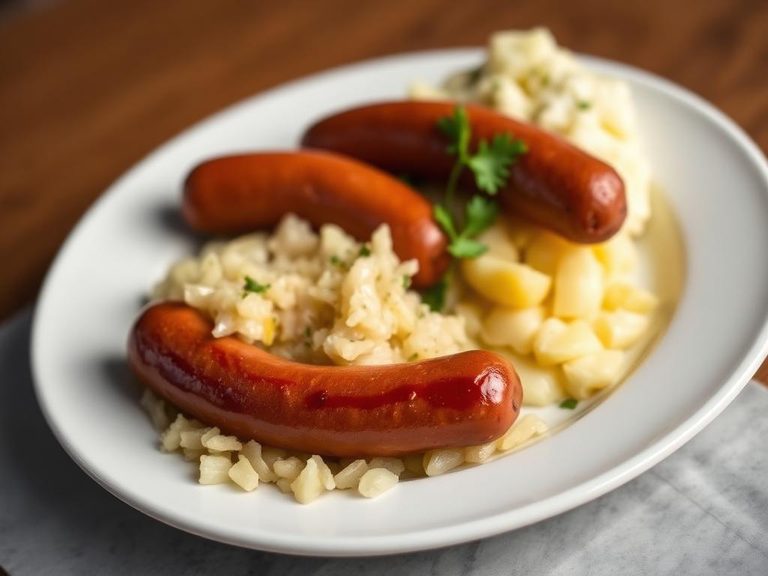
Sliced with sauerkraut and mustard
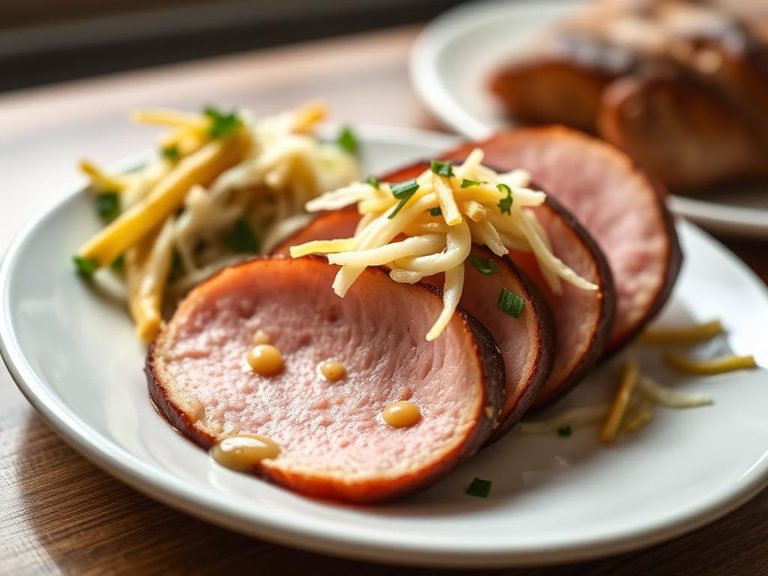
Sliced with sauerkraut and mustard is a hearty, traditional dish featuring sliced meat (often pork or beef) served atop or alongside tangy fermented cabbage and a sharp, spicy mustard. It is a staple in Central and Eastern European cuisines, particularly in German, Polish, and Austrian culinary traditions, often enjoyed as a comforting main course.
🍽️ Nutrition at a glance
This dish is typically high in protein and fat from the meat, with moderate carbs from the sauerkraut and any accompanying bread or potatoes. It provides key nutrients like protein, B vitamins, and probiotics from the fermented cabbage, with a rough calorie range of 400-600 kcal per serving depending on the cut of meat and portion sizes.
Nutrition breakdown
| Calories | 450 kcal |
| Protein | 30 g |
| Carbs | 15 g |
| Fat | 32 g |
| Fiber | 5 g |
| Sugar | 4 g |
| Sodium | 1200 mg |
| Vitamin C | 20 mg |
| Vitamin B12 | 2.5 mcg |
| Iron | 3 mg |
| Potassium | 450 mg |
| Zinc | 5 mg |
| Selenium | 25 mcg |
| Probiotics | Live cultures from sauerkraut |
| Sodium | 1200 mg |
Per 1 serving (approximately 300 g) · estimated, varies by recipe
💡 What's interesting
Culturally, this dish highlights the preservation technique of fermenting cabbage into sauerkraut, which was essential for winter sustenance in Europe. Nutritionally, the sauerkraut offers beneficial probiotics and vitamin C, while the mustard adds antioxidants and can aid digestion.