

Salmon Katsu
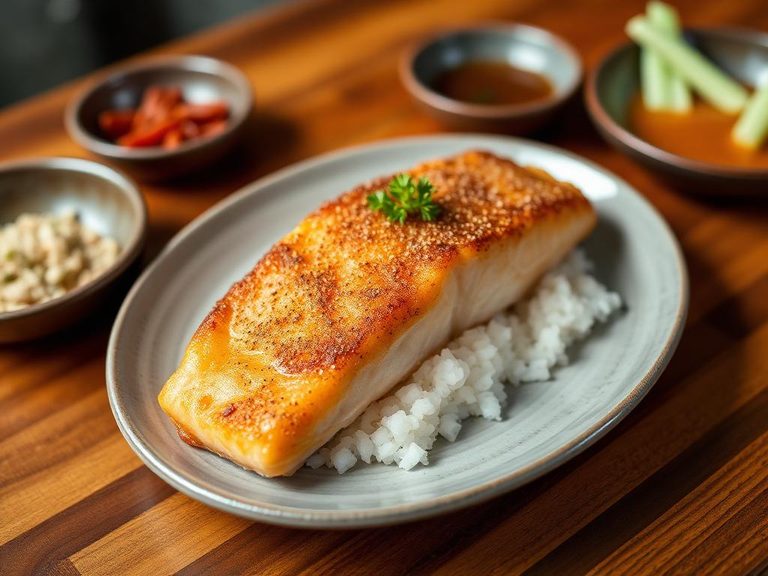
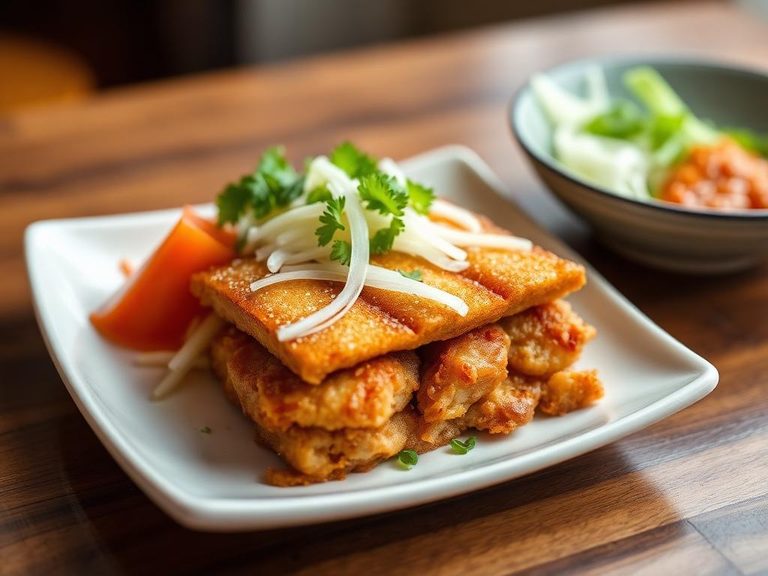
Salmon Katsu is a Japanese-style cutlet where a salmon fillet is coated in flour, egg, and panko breadcrumbs, then deep-fried until golden and crispy. It typically features a tender, flaky salmon center and is often served with shredded cabbage, rice, and a tangy tonkatsu sauce or miso-based dip. This dish is a popular example of yoshoku, or Western-influenced Japanese cuisine, found in homes and casual restaurants across Japan.
🍽️ Nutrition at a glance
This dish is high in protein from the salmon and fat from the frying oil, with a moderate amount of carbohydrates from the panko coating. A typical serving provides omega-3 fatty acids, vitamin D, and selenium, and generally ranges from 500 to 700 calories depending on portion size and preparation.
Nutrition breakdown
| Calories | 450 kcal |
| Protein | 28 g |
| Carbs | 25 g |
| Fat | 27 g |
| Fiber | 1.5 g |
| Sugar | 2 g |
| Sodium | 580 mg |
| Potassium | 480 mg |
| Phosphorus | 320 mg |
| Vitamin B12 | 4.2 mcg |
| Niacin (B3) | 8.5 mg |
| Vitamin D | 14.2 mcg |
| Selenium | 38 mcg |
| Omega-3 (EPA+DHA) | 1.5 g |
| Vitamin B6 | 0.8 mg |
Per 1 piece (180 g) · estimated, varies by recipe
💡 What's interesting
Salmon Katsu showcases Japan's skill in adapting foreign cooking techniques—like deep-frying—into its own culinary tradition, creating a unique fusion. Nutritionally, it balances the rich, heart-healthy fats of salmon with the satisfying crunch of panko, making it a flavorful yet nutrient-dense meal.
🍽️ Related dishes

AI estimate may be inaccurate · Terms