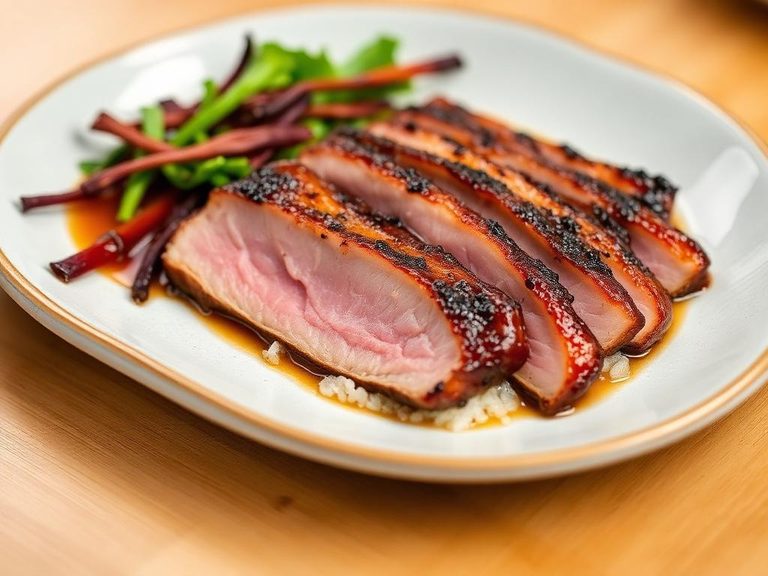
Sake-marinated salmon
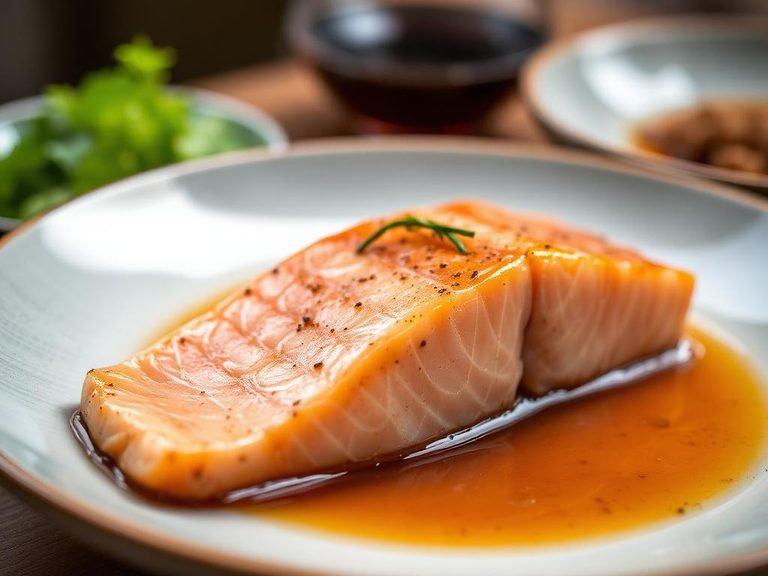
Sake-zuke is a classic Japanese preparation where fresh salmon is marinated in a mixture of sake, mirin, and a touch of salt or soy sauce. The alcohol in the sake gently 'cooks' the fish's surface, tenderizing it and infusing it with a subtle, savory-sweet flavor. It's a popular way to prepare salmon for both sashimi and cooked dishes like grilled or pan-fried fillets.
🍽️ Nutrition at a glance
This dish is an excellent source of high-quality protein and healthy omega-3 fatty acids, with very little to no carbohydrates. A typical 150g serving of marinated and cooked salmon provides around 250-300 calories, along with important nutrients like vitamin D and selenium.
Nutrition breakdown
| Calories | 280 kcal |
| Protein | 30 g |
| Carbs | 3 g |
| Fat | 16 g |
| Fiber | 0 g |
| Sugar | 1 g |
| Sodium | 450 mg |
| Potassium | 450 mg |
| Vitamin D | 12 mcg |
| Vitamin B12 | 4.5 mcg |
| Selenium | 35 mcg |
| Niacin (B3) | 8 mg |
| Omega-3 (EPA+DHA) | 1.5 g |
| Phosphorus | 300 mg |
| Vitamin B6 | 0.8 mg |
Per 1 fillet (150 g) · estimated, varies by recipe
💡 What's interesting
The technique of using alcohol to 'cook' or cure fish is a cornerstone of Japanese cuisine, seen in dishes like sashimi and tataki. Nutritionally, the sake marinade not only adds flavor but may also help reduce the 'fishy' taste and odor, making the salmon more palatable while preserving its delicate texture.