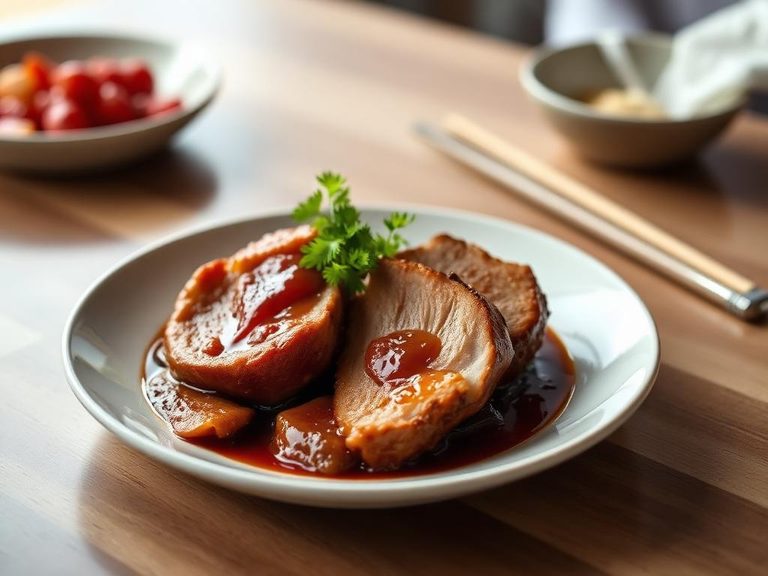
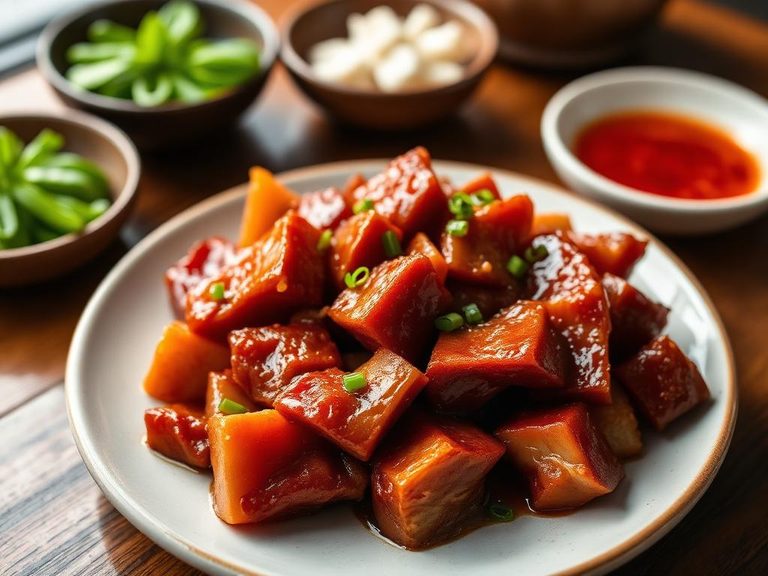
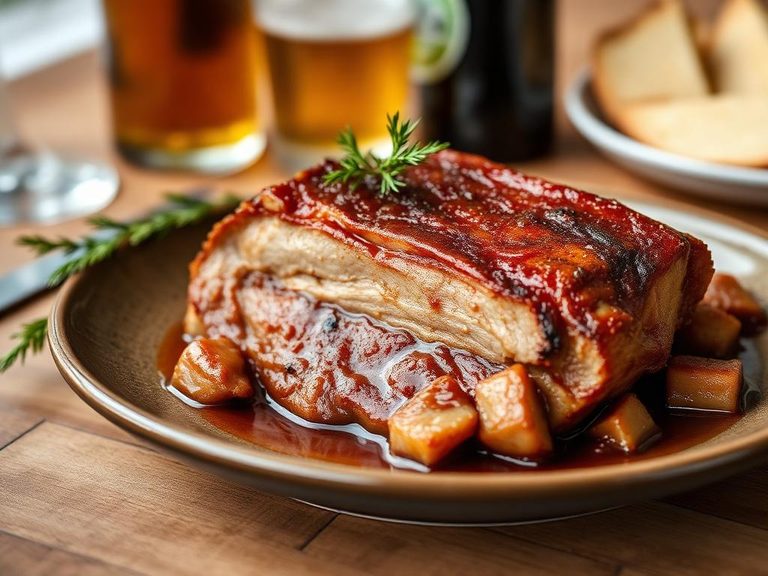
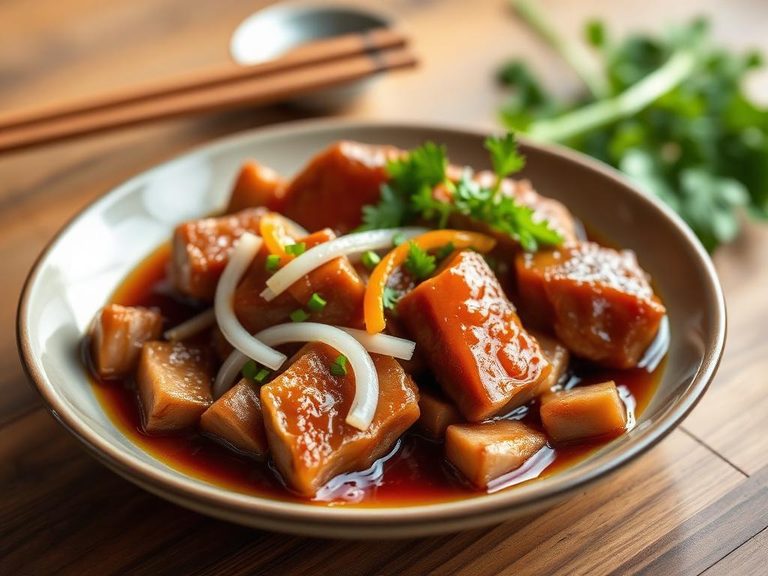
Sake-braised pork belly
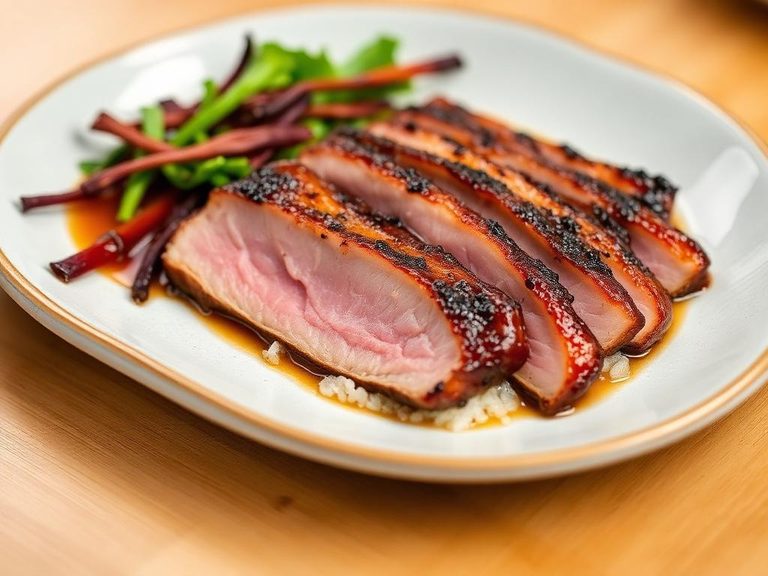
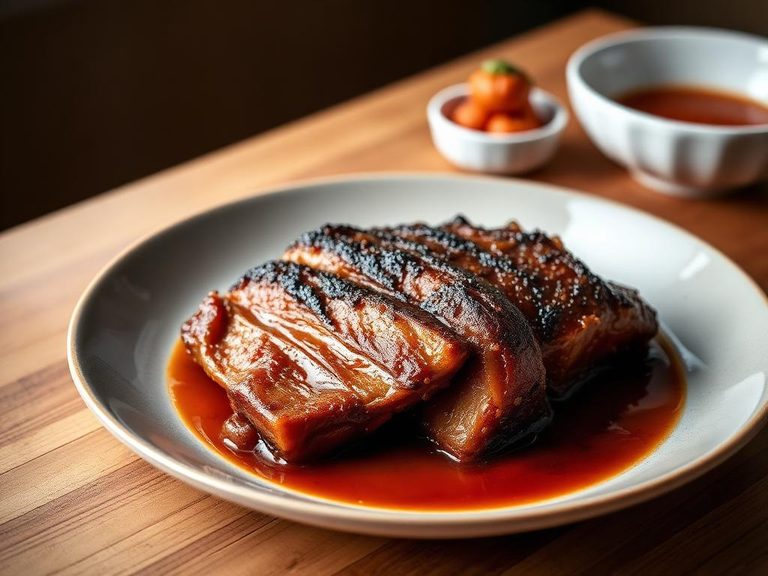
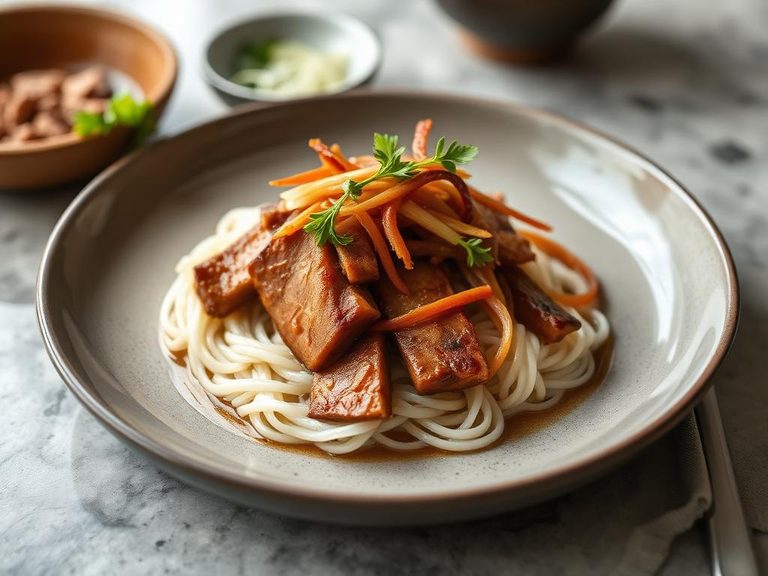
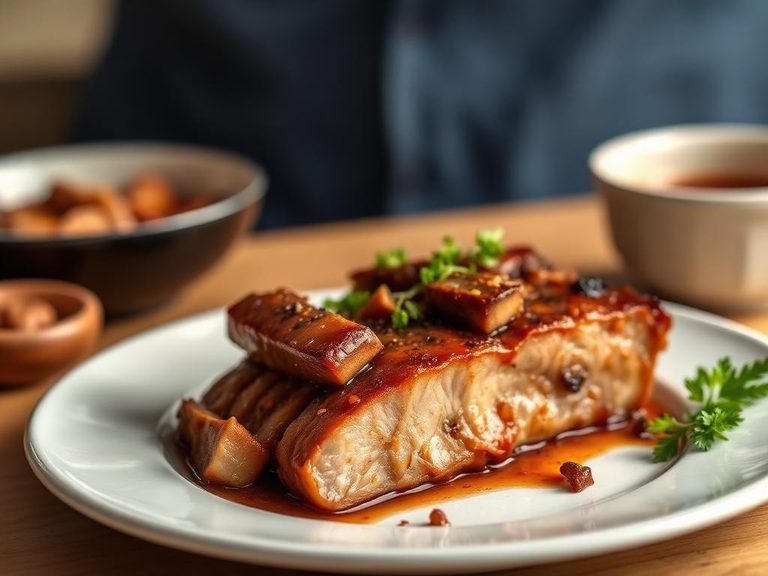
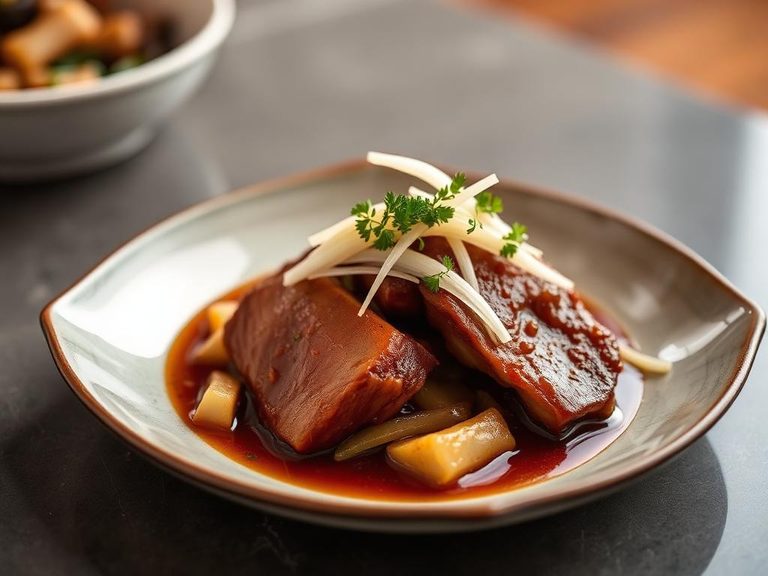
Buta no kakuni is a classic Japanese dish of pork belly that has been slowly simmered in a savory-sweet broth of sake, soy sauce, mirin, and sugar until it becomes incredibly tender and flavorful. Originating in Nagasaki, it reflects a historical fusion of Chinese cooking techniques with Japanese ingredients, resulting in a melt-in-your-mouth texture and a deep, umami-rich glaze.
🍽️ Nutrition at a glance
This dish is high in protein and fat, particularly saturated fat from the pork belly, with very few carbohydrates. A typical serving of about 150-200 grams provides a substantial amount of protein, B vitamins, and iron, but also carries a calorie count in the range of 400-600 calories due to the fatty cut of meat and sweet braising liquid.
Nutrition breakdown
| Calories | 450 kcal |
| Protein | 18 g |
| Carbs | 12 g |
| Fat | 35 g |
| Fiber | 0.5 g |
| Sugar | 8 g |
| Sodium | 900 mg |
| Iron | 2.5 mg |
| Zinc | 4.0 mg |
| Vitamin B1 (Thiamine) | 0.3 mg |
| Vitamin B6 | 0.4 mg |
| Vitamin B12 | 1.5 mcg |
| Selenium | 25 mcg |
| Phosphorus | 180 mg |
| Niacin (B3) | 5.0 mg |
Per 1 typical serving (200 g) · estimated, varies by recipe
💡 What's interesting
Culturally, kakuni is a prime example of 'Nagasaki Ryori,' a regional cuisine shaped by centuries of trade with China and the Netherlands. Nutritionally, while it's a rich comfort food, the slow braising process helps break down the connective tissue, making the protein easier to digest despite its high fat content.