

Russian black bread
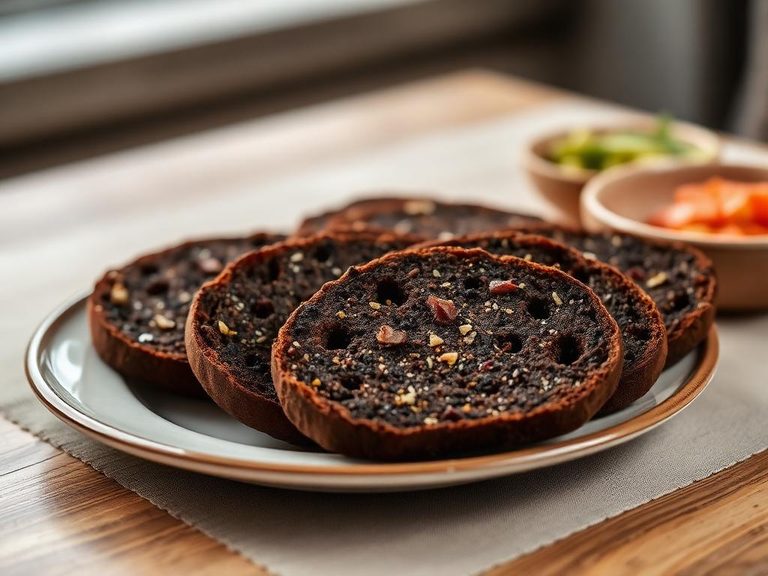
Russian black bread, often known as Borodinsky or rye bread, is a dark, dense, and hearty loaf made primarily from rye flour. Its deep color and complex flavor come from ingredients like rye flour, molasses or dark syrup, and sometimes a touch of coffee or cocoa, with a characteristic sourdough or malted rye starter. It is a staple of Russian and Eastern European cuisine, traditionally served with soups, stews, or as a base for open-faced sandwiches.
🍽️ Nutrition at a glance
This bread is a complex carbohydrate-rich food, providing sustained energy from its high fiber and rye content. A typical serving offers a good amount of dietary fiber, along with essential minerals like iron, magnesium, and selenium, with a calorie count generally in the range of 150-200 kcal per slice.
Nutrition breakdown
| Calories | 130 kcal |
| Protein | 4 g |
| Carbs | 25 g |
| Fat | 1 g |
| Fiber | 5 g |
| Sugar | 3 g |
| Sodium | 250 mg |
| Iron | 2.0 mg |
| Magnesium | 40 mg |
| Selenium | 12 mcg |
| Phosphorus | 80 mg |
| Manganese | 1.5 mg |
| Thiamine (B1) | 0.1 mg |
| Niacin (B3) | 1.5 mg |
| Folate | 25 mcg |
Per 1 slice (50 g) · estimated, varies by recipe
💡 What's interesting
Culturally, this bread is deeply embedded in Russian tradition, often associated with hospitality and celebration, and its dark, robust flavor is considered a point of national pride. Nutritionally, its high fiber and low glycemic index make it a more blood-sugar-friendly option compared to many white breads.
🍽️ Related dishes







AI estimate may be inaccurate · Terms