

Rum-glazed pork
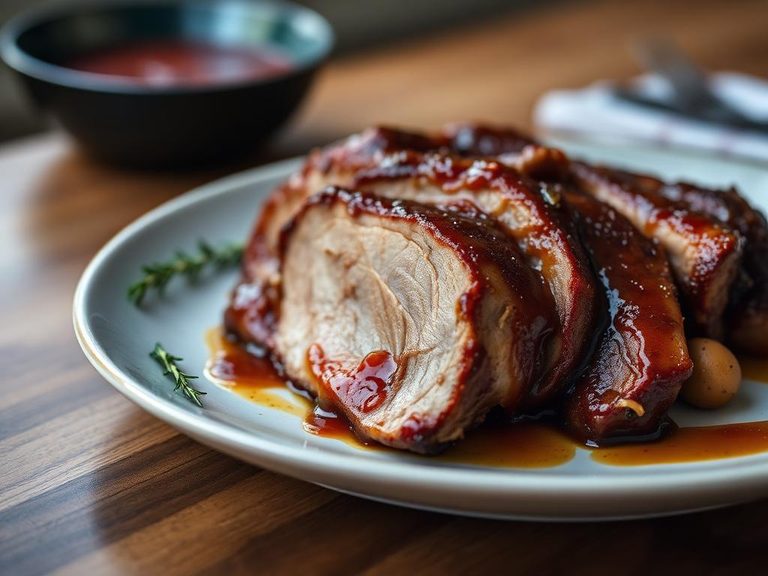
Rum-glazed pork is a savory-sweet dish where pork (often tenderloin or chops) is coated in a glaze made with rum, brown sugar, and spices, then roasted or pan-seared until caramelized. It draws inspiration from Caribbean and Latin American cooking, where rum is a staple ingredient used to add depth and a subtle boozy sweetness to meats. The dish is popular in fusion cuisine and home cooking for its rich flavor and relatively simple preparation.
🍳 View the full Rum-glazed pork recipe →
🍽️ Nutrition at a glance
This dish is moderately high in protein from the pork and contains a notable amount of fat, especially if using fattier cuts or added oils in the glaze. The rum glaze contributes some carbohydrates from sugar, while the pork provides essential nutrients like B vitamins, zinc, and selenium. A typical serving (around 4-6 oz of pork with glaze) may range from 300-450 calories, depending on the cut and glaze recipe.
Nutrition breakdown
| Calories | 380 kcal |
| Protein | 28 g |
| Carbs | 12 g |
| Fat | 22 g |
| Fiber | 0 g |
| Sugar | 10 g |
| Sodium | 650 mg |
| Potassium | 420 mg |
| Phosphorus | 250 mg |
| Iron | 1.5 mg |
| Zinc | 3.5 mg |
| Niacin (B3) | 6.0 mg |
| Vitamin B6 | 0.5 mg |
| Vitamin B12 | 0.8 mcg |
| Selenium | 35 mcg |
Per 1 serving (170 g) · estimated, varies by recipe
💡 What's interesting
Culturally, rum-glazed pork highlights the global influence of rum, which originated in the Caribbean and became a key trade commodity, blending African, European, and Indigenous culinary traditions. Nutritionally, using rum in moderation can add flavor without excessive calories, and the caramelization process creates complex flavors that enhance the eating experience, though it's best enjoyed as part of a balanced diet.
🍽️ Related dishes







AI estimate may be inaccurate · Terms