

Rowal Squash
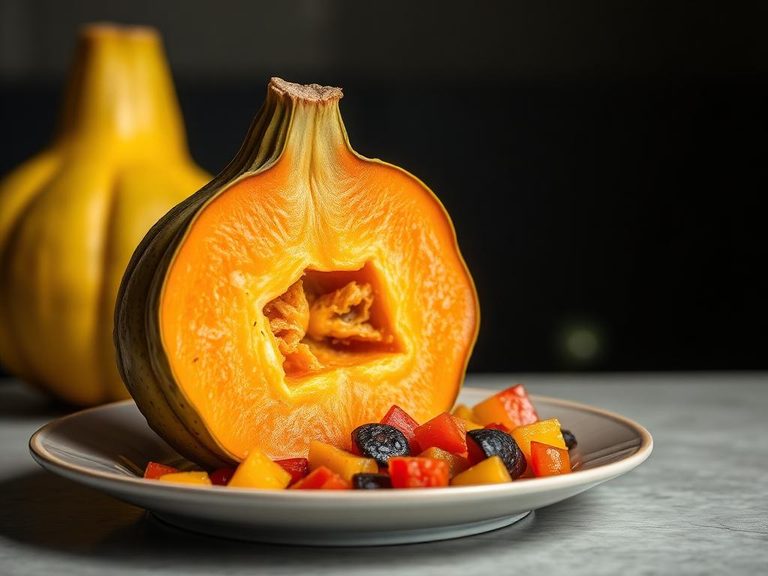
Rowal Squash is a traditional savory-sweet dish from the Indian subcontinent, particularly popular in regions like Uttar Pradesh and Bihar. It is typically made by slow-cooking grated or mashed squash (often bottle gourd or a similar variety) with jaggery or sugar, ghee, and warm spices like cardamom and saffron, resulting in a rich, pudding-like consistency.
🍽️ Nutrition at a glance
This dish is generally high in carbohydrates due to the added sweeteners and the natural sugars in the squash, with a moderate amount of fat from ghee. It provides a good source of dietary fiber, vitamin C, and potassium, with a typical serving containing roughly 200-250 calories.
Nutrition breakdown
| Calories | 220 kcal |
| Protein | 3 g |
| Carbs | 38 g |
| Fat | 8 g |
| Fiber | 4 g |
| Sugar | 25 g |
| Sodium | 30 mg |
| Potassium | 350 mg |
| Vitamin C | 12 mg |
| Vitamin A | 150 mcg RAE |
| Calcium | 45 mg |
| Iron | 1.5 mg |
| Magnesium | 30 mg |
| Phosphorus | 50 mg |
| Manganese | 0.3 mg |
Per 1 cup (240 g) · estimated, varies by recipe
💡 What's interesting
Culturally, Rowal Squash is often prepared during festivals and special occasions as a celebratory sweet, symbolizing abundance. Nutritionally, the use of squash as a base makes it a more nutrient-dense alternative to many other traditional sweets, offering vitamins and minerals alongside its indulgent flavors.
🍽️ Related dishes



AI estimate may be inaccurate · Terms