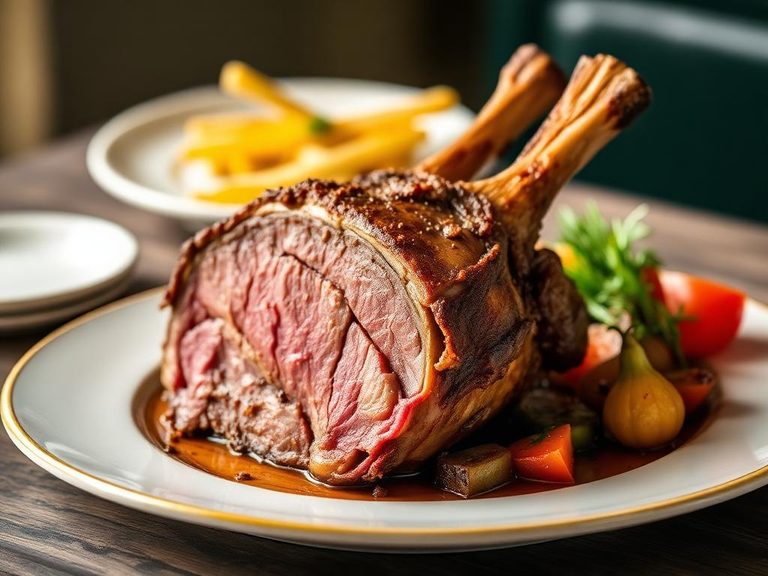
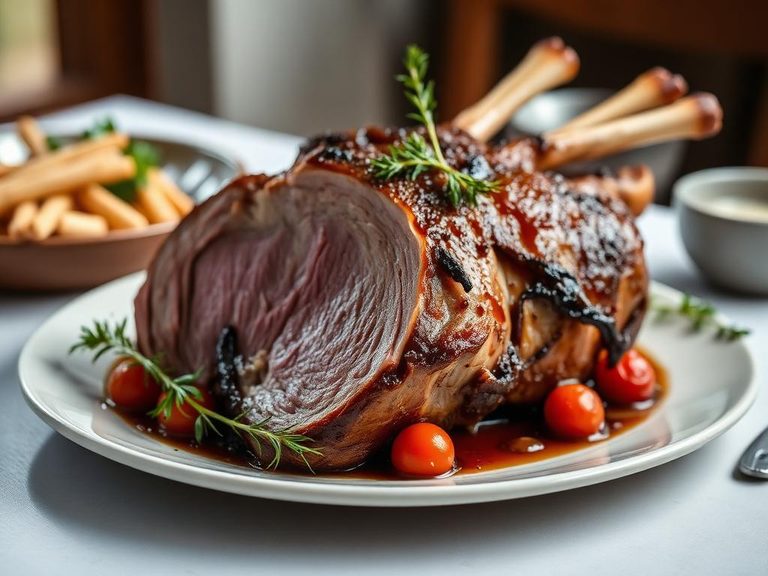
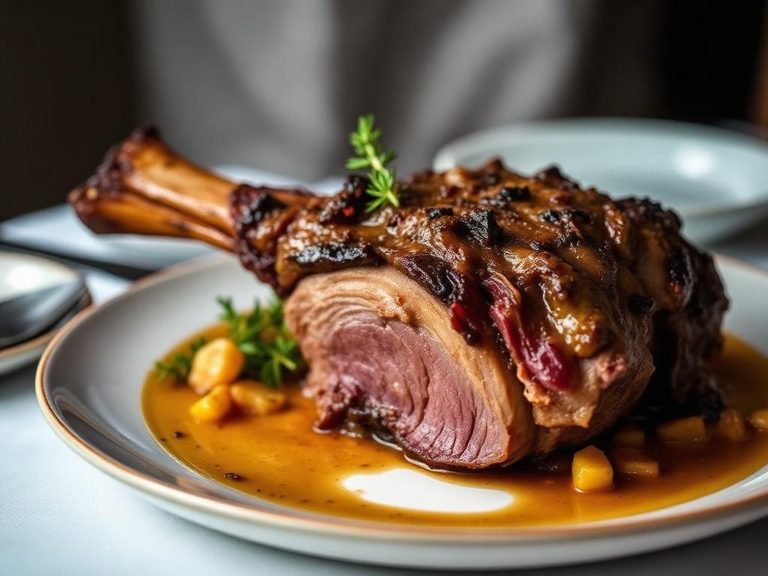
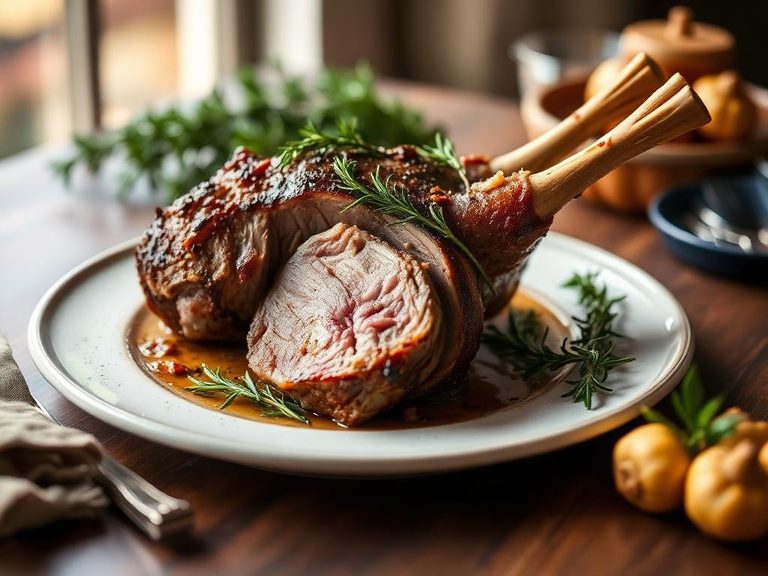
Roasted Leg of Lamb
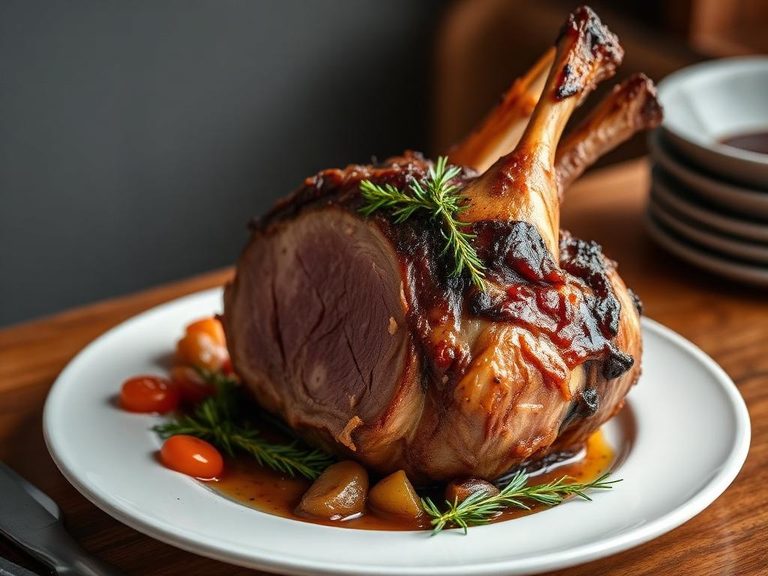
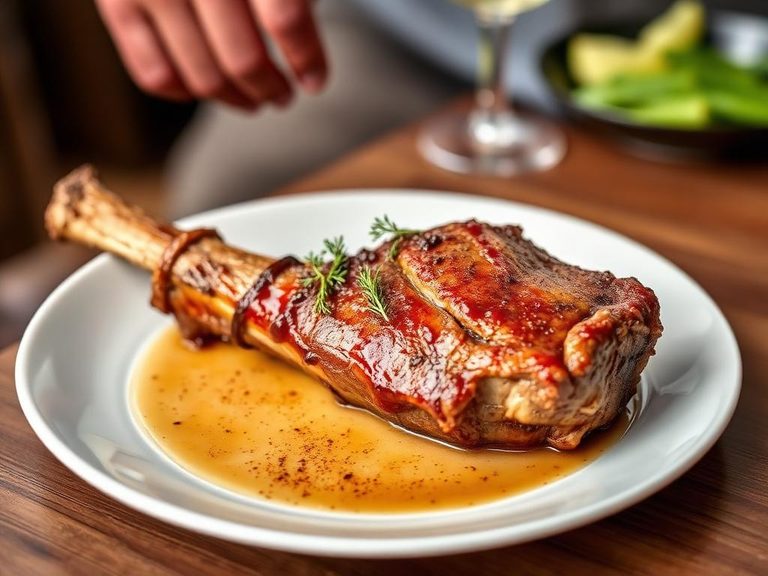
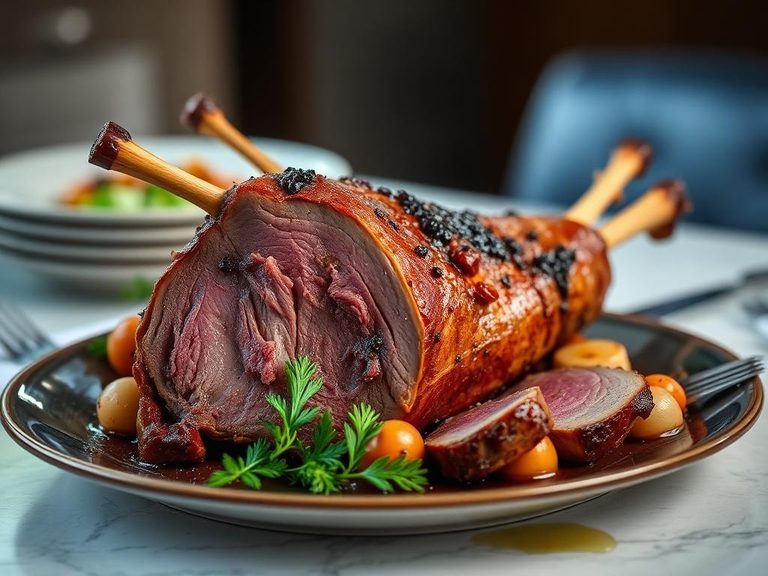
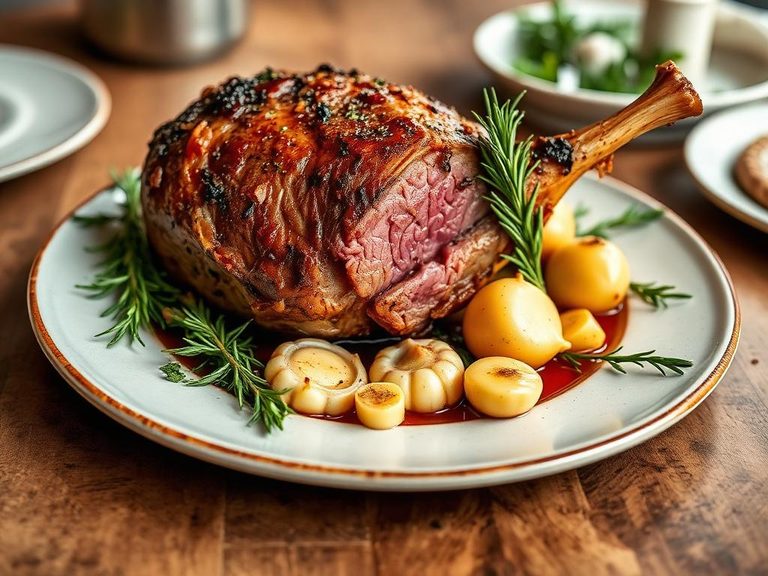
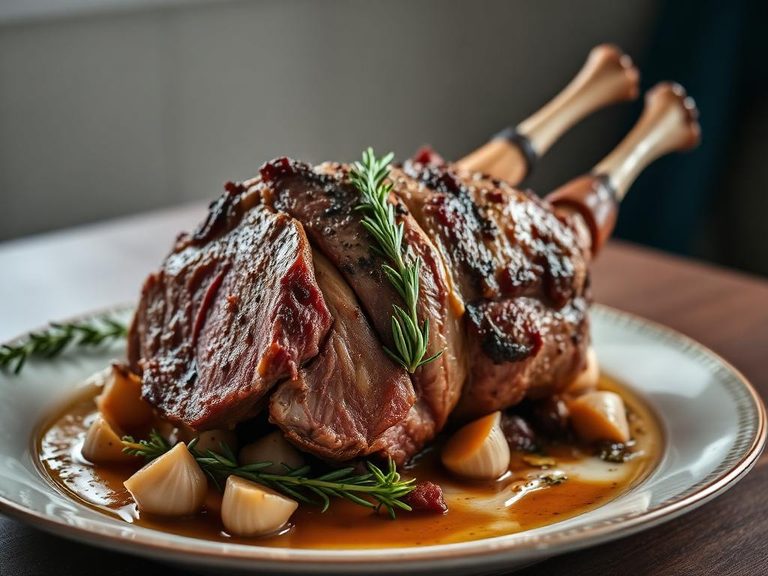
Roasted Leg of Lamb is a celebratory centerpiece dish featuring a whole leg of lamb, typically seasoned with garlic, rosemary, and other herbs, then slow-roasted until tender and browned. It is a classic main course in Mediterranean, Middle Eastern, and European cuisines, often served for holidays and special gatherings.
🍽️ Nutrition at a glance
This dish is a high-protein, low-carbohydrate meal with a significant amount of fat, depending on the cut and trimming. A standard serving provides substantial iron, zinc, and B vitamins, with a rough calorie range of 400-600 per serving.
Nutrition breakdown
| Calories | 250 kcal |
| Protein | 25 g |
| Carbs | 0 g |
| Fat | 17 g |
| Fiber | 0 g |
| Sugar | 0 g |
| Sodium | 65 mg |
| Iron | 2.1 mg |
| Zinc | 4.5 mg |
| Vitamin B12 | 2.5 mcg |
| Niacin (B3) | 6.5 mg |
| Phosphorus | 195 mg |
| Selenium | 22 mcg |
| Vitamin B6 | 0.3 mg |
| Potassium | 310 mg |
Per 3 oz cooked (85 g) · estimated, varies by recipe
💡 What's interesting
Culturally, roasted lamb is a symbol of hospitality and celebration in many societies, from Greek Easter feasts to Middle Eastern Eid al-Adha. Nutritionally, lamb is one of the richest dietary sources of conjugated linoleic acid (CLA), a fatty acid studied for its potential health benefits.