Slow-Roasted Lamb Leg
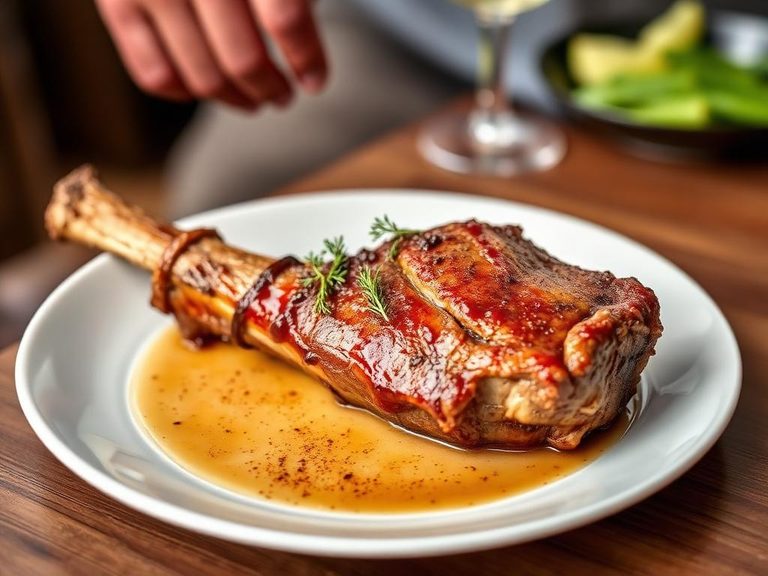
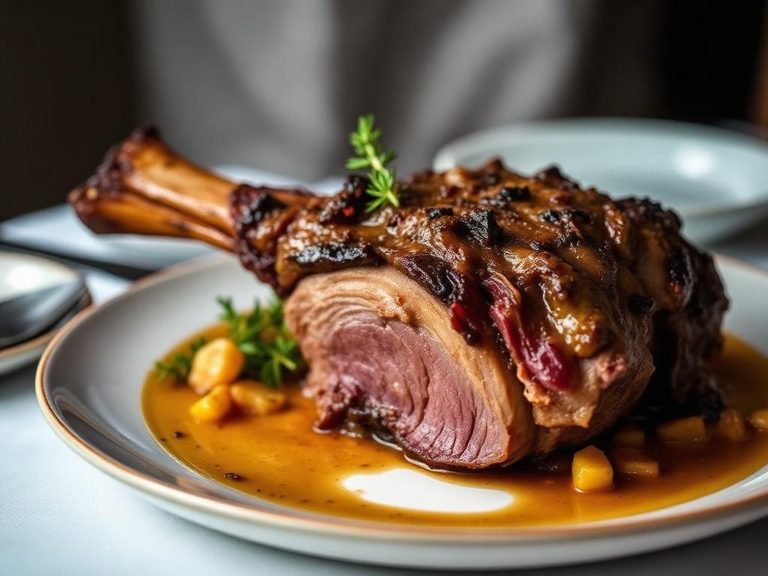
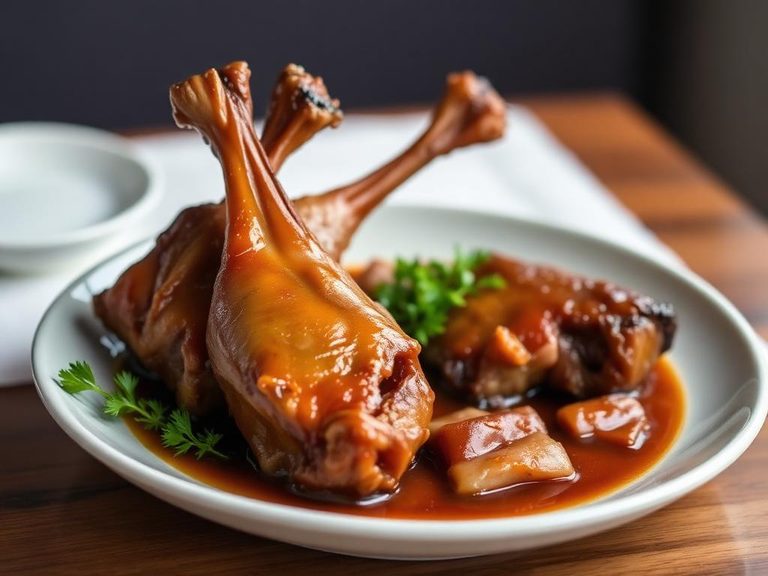
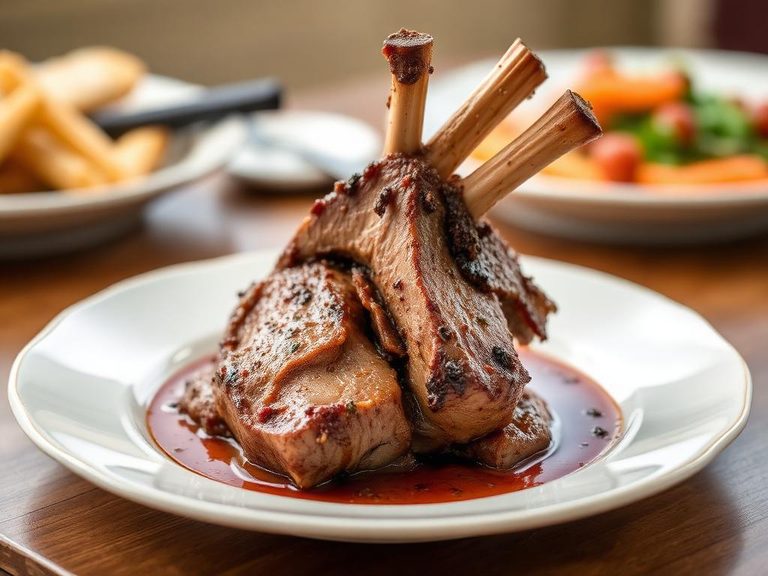
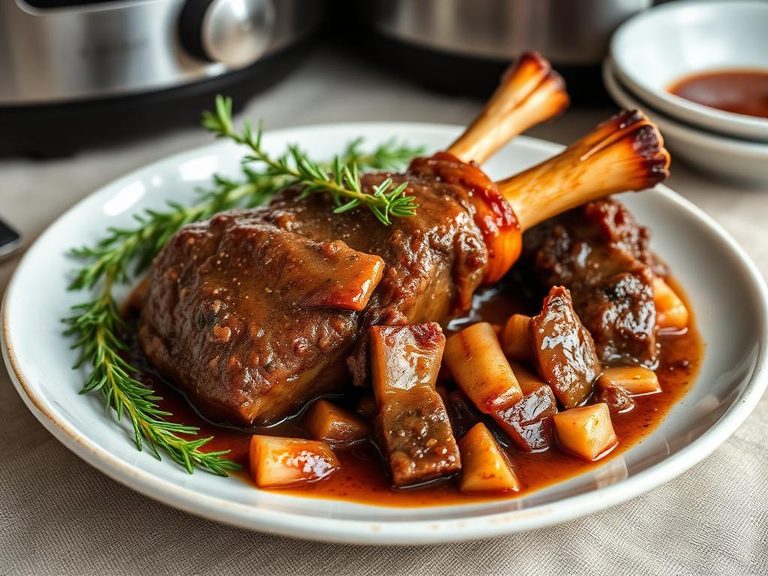
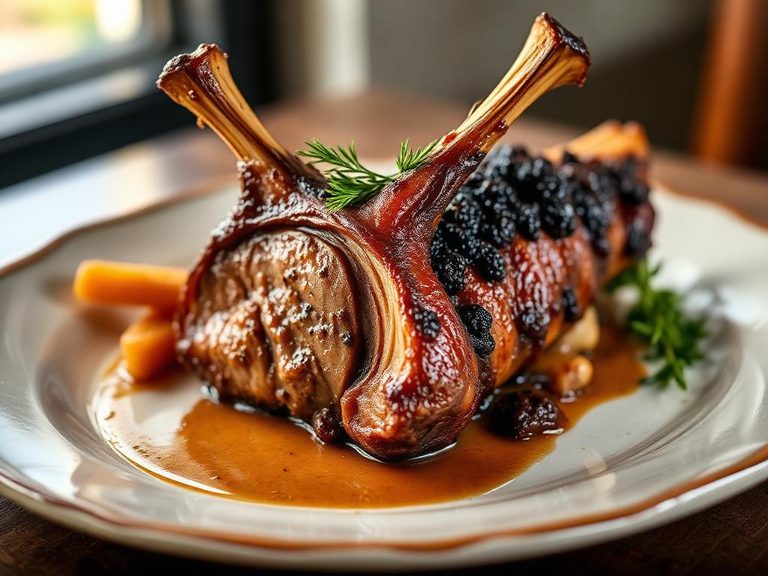
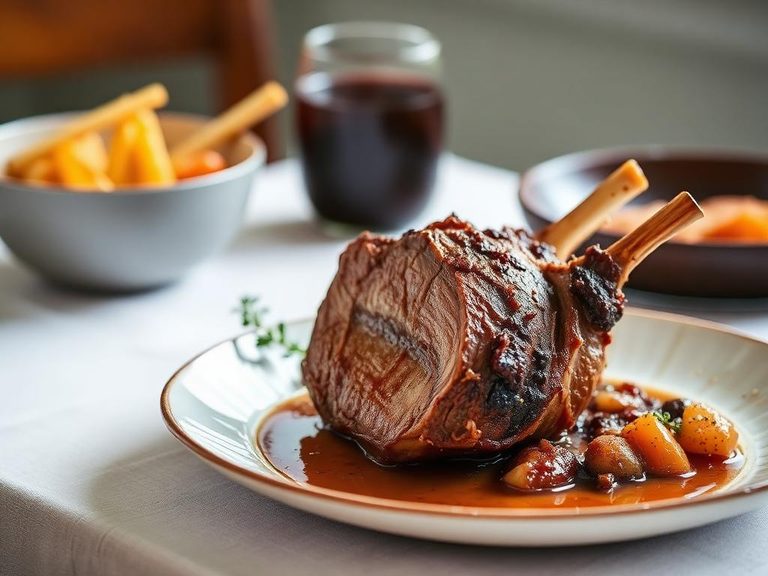
Slow-Roasted Lamb Leg is a classic, hearty main dish originating from Mediterranean and Middle Eastern cuisines, featuring a whole leg of lamb cooked low and slow until tender. It's typically seasoned with a blend of aromatic herbs like rosemary and thyme, garlic, and olive oil, often roasted on a bed of vegetables. The slow cooking method renders the fat, resulting in incredibly succulent and flavorful meat.
🍽️ Nutrition at a glance
This dish is a high-protein, high-fat meal with minimal carbohydrates, making it rich in energy. It is an excellent source of iron, zinc, and B vitamins, particularly B12, with a typical serving containing roughly 400-500 calories.
Nutrition breakdown
| Calories | 450 kcal |
| Protein | 35 g |
| Carbs | 0 g |
| Fat | 34 g |
| Fiber | 0 g |
| Sugar | 0 g |
| Sodium | 80 mg |
| Iron | 3.2 mg |
| Zinc | 6.5 mg |
| Vitamin B12 | 2.8 mcg |
| Niacin (B3) | 8.5 mg |
| Phosphorus | 240 mg |
| Selenium | 32 mcg |
| Potassium | 380 mg |
| Vitamin B6 | 0.4 mg |
Per 1 serving (150 g) of roasted meat · estimated, varies by recipe
💡 What's interesting
Culturally, a roasted leg of lamb is often the centerpiece of celebratory feasts, from Easter Sunday in Greece to family gatherings in the UK. Nutritionally, the slow-roasting process helps break down connective tissue into gelatin, which can aid in digestion and provides a source of collagen.