

Rice Pilaf or Biryani
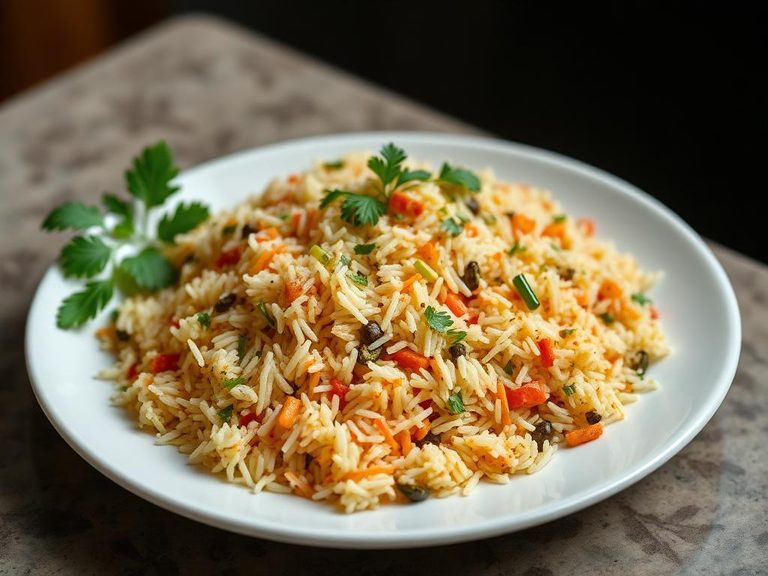
Rice pilaf and biryani are aromatic rice dishes where grains are cooked with spices, herbs, and often meat or vegetables. Pilaf typically involves sautéing rice in oil or butter before simmering in broth, while biryani is a layered, slow-cooked South Asian specialty with marinated meat or vegetables and saffron-infused rice. Both have roots in Persian and Mughlai culinary traditions, beloved across the Middle East, Central Asia, and the Indian subcontinent.
🍽️ Nutrition at a glance
These dishes are carbohydrate-rich due to the rice base, with moderate protein if containing meat or legumes, and fat from cooking oils or ghee. A typical serving provides energy, B vitamins, and minerals like iron and magnesium, ranging from 300 to 500 calories depending on ingredients and portion size.
Nutrition breakdown
| Calories | 350 kcal |
| Protein | 10 g |
| Carbs | 55 g |
| Fat | 10 g |
| Fiber | 2 g |
| Sugar | 3 g |
| Sodium | 600 mg |
| Iron | 2.5 mg |
| Potassium | 150 mg |
| Magnesium | 25 mg |
| Phosphorus | 120 mg |
| Zinc | 1.5 mg |
| Niacin (B3) | 3 mg |
| Folate | 40 mcg |
| Vitamin B6 | 0.2 mg |
Per 1 cup (240 g) · estimated, varies by recipe
💡 What's interesting
Biryani's layered cooking method creates distinct flavors and textures, while pilaf's versatility allows it to adapt to local ingredients worldwide. Nutritionally, using brown rice or adding vegetables can boost fiber and micronutrient content, making these dishes both comforting and adaptable to healthier preparations.
🍽️ Related dishes






AI estimate may be inaccurate · Terms