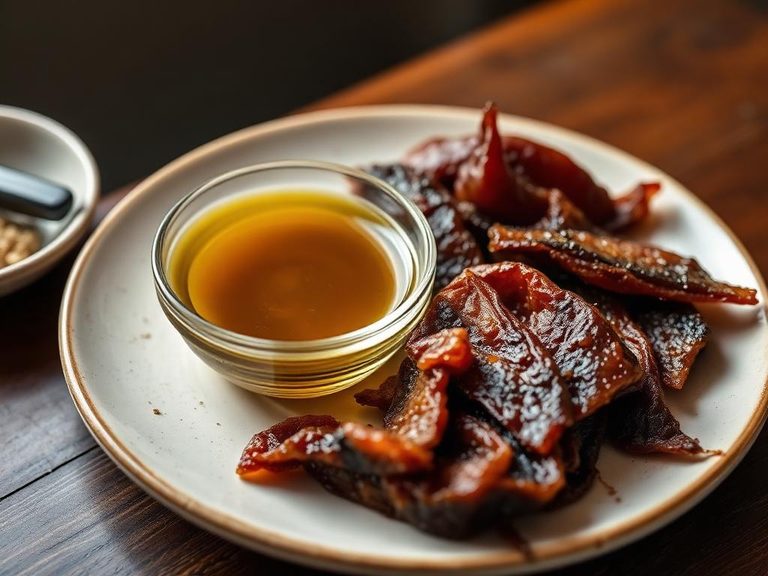
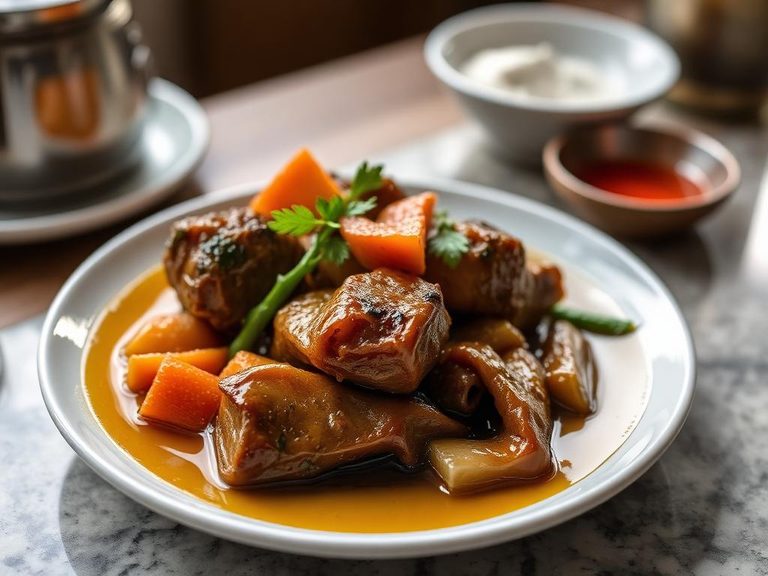
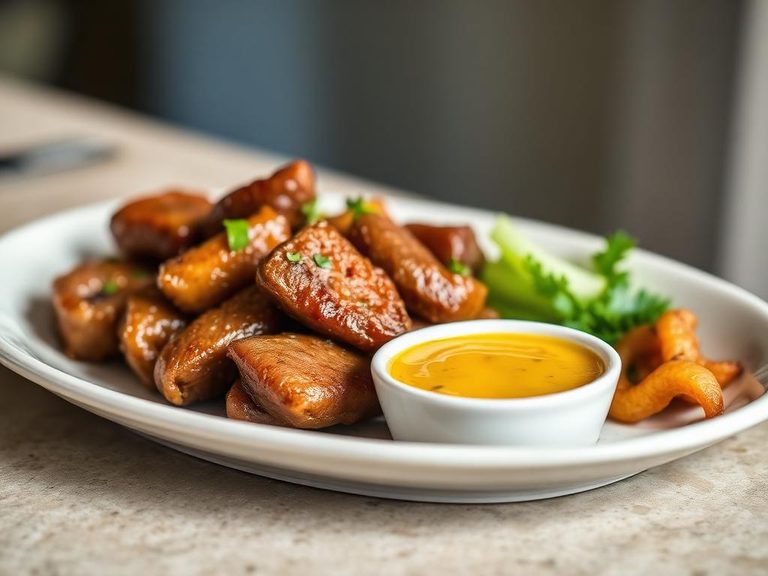
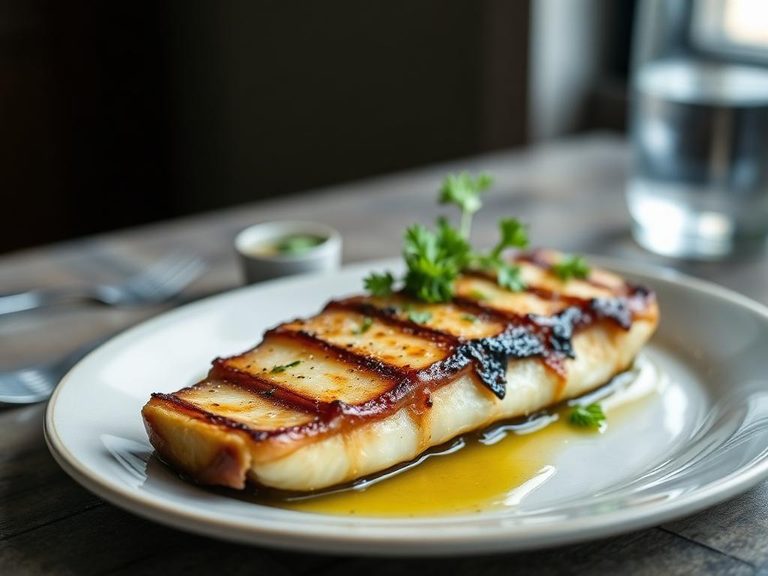
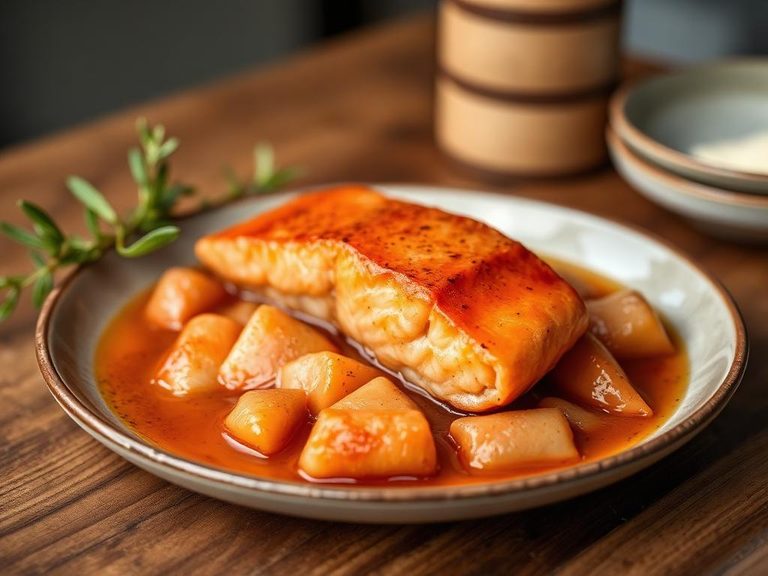
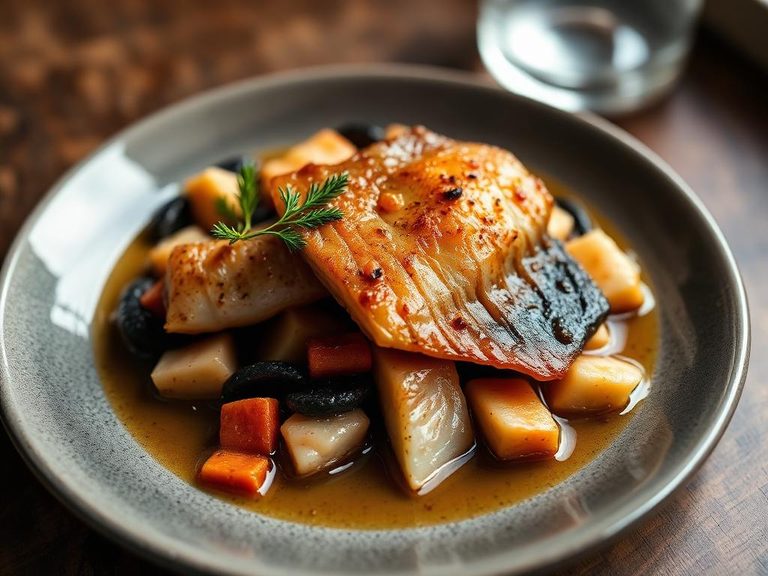
Raw, diced meat with seal oil
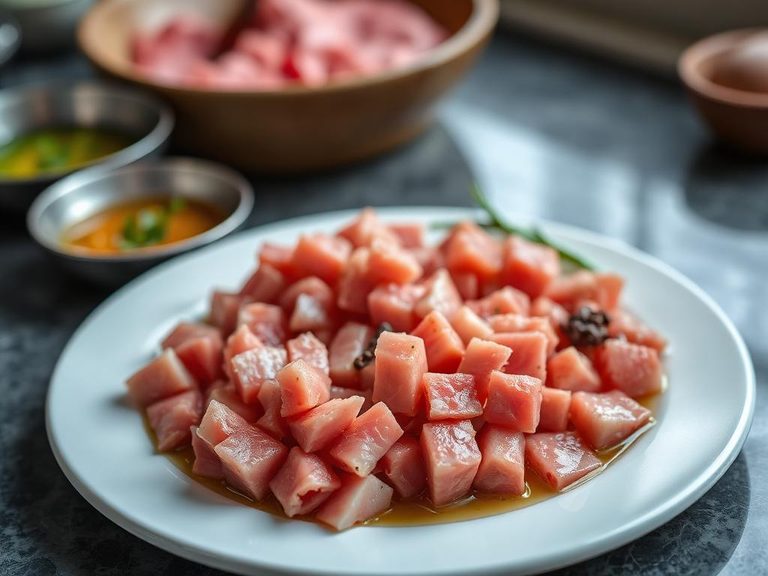
Raw, diced meat with seal oil is a traditional Inuit and Yupik dish, often called 'maktaaq' or 'muktuk' when including skin and blubber, but here focusing on the meat component. It typically consists of fresh, raw seal meat diced and mixed with rendered seal oil, which is rich in omega-3 fatty acids. This dish originates from Arctic regions like northern Canada, Alaska, and Greenland, where it's a vital source of nutrition in harsh climates.
🍽️ Nutrition at a glance
The dish is extremely high in fat and protein, with virtually no carbohydrates, making it a dense energy source. It provides abundant omega-3 fatty acids (EPA and DHA), vitamin D, and iron, with a rough calorie ballpark of 300-400 kcal per typical serving due to the high fat content.
Nutrition breakdown
| Calories | 350 kcal |
| Protein | 25 g |
| Carbs | 0 g |
| Fat | 28 g |
| Fiber | 0 g |
| Sugar | 0 g |
| Sodium | 120 mg |
| Vitamin D | 15 µg |
| Iron | 4.5 mg |
| Vitamin B12 | 12 µg |
| Selenium | 35 µg |
| Zinc | 3 mg |
| Potassium | 300 mg |
| Omega-3 (EPA+DHA) | 2.5 g |
| Vitamin A | 150 µg RAE |
Per 1 cup (150 g) · estimated, varies by recipe
💡 What's interesting
Culturally, this dish is a cornerstone of traditional Arctic diets, showcasing adaptation to extreme environments where plant foods are scarce. Nutritionally, the seal oil provides anti-inflammatory omega-3s that support brain and heart health, and the raw preparation preserves heat-sensitive nutrients like vitamin C.