Raw caribou eye
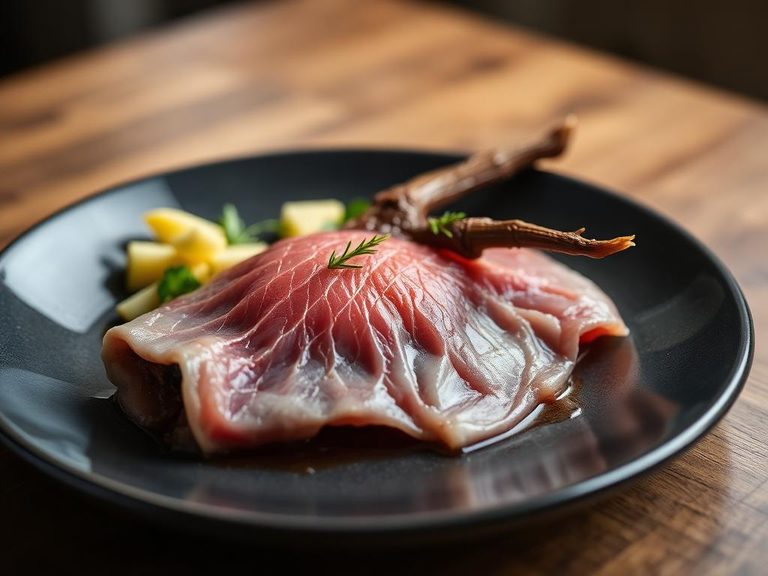
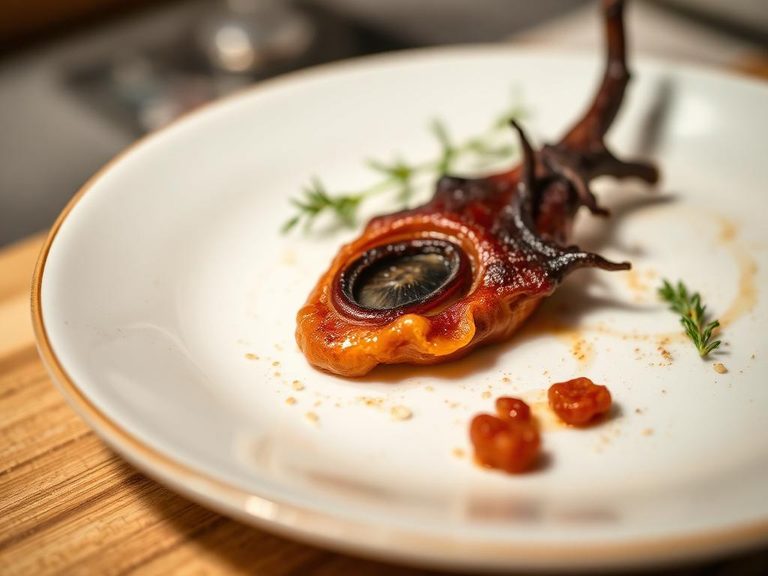
Raw caribou eye is a traditional delicacy in Arctic and subarctic regions, particularly among Inuit and other Indigenous communities. It consists of the fresh, uncooked eyeball of a caribou, often consumed whole or sliced, and is prized for its unique texture and cultural significance.
🍽️ Nutrition at a glance
This dish is very high in protein and healthy fats, with minimal carbohydrates. It provides essential nutrients like vitamin A, iron, and omega-3 fatty acids, and a typical serving has roughly 100-150 calories.
Nutrition breakdown
| Calories | 120 kcal |
| Protein | 8 g |
| Carbs | 0 g |
| Fat | 10 g |
| Fiber | 0 g |
| Sugar | 0 g |
| Sodium | 60 mg |
| Vitamin A | 350 mcg RAE |
| Iron | 2.5 mg |
| Omega-3 (DHA) | 200 mg |
| Collagen | 1.5 g |
| Vitamin B12 | 3.0 mcg |
| Zinc | 1.2 mg |
| Selenium | 15 mcg |
| Cholesterol | 85 mg |
Per 1 caribou eye (approx. 30 g) · estimated, varies by recipe
💡 What's interesting
Culturally, eating raw caribou eye is a practice that symbolizes respect for the animal and connection to the land, while nutritionally, the vitreous humor inside is rich in collagen and hyaluronic acid, which are sought after for skin and joint health.