Posole Stew
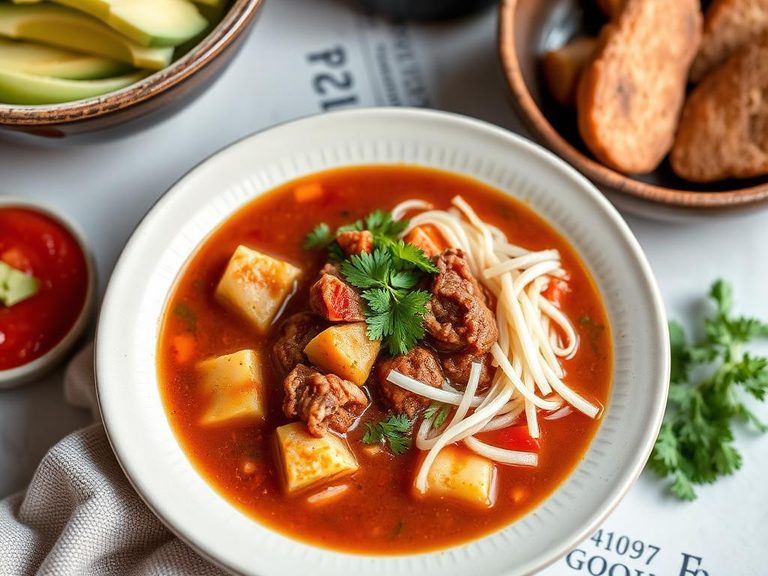
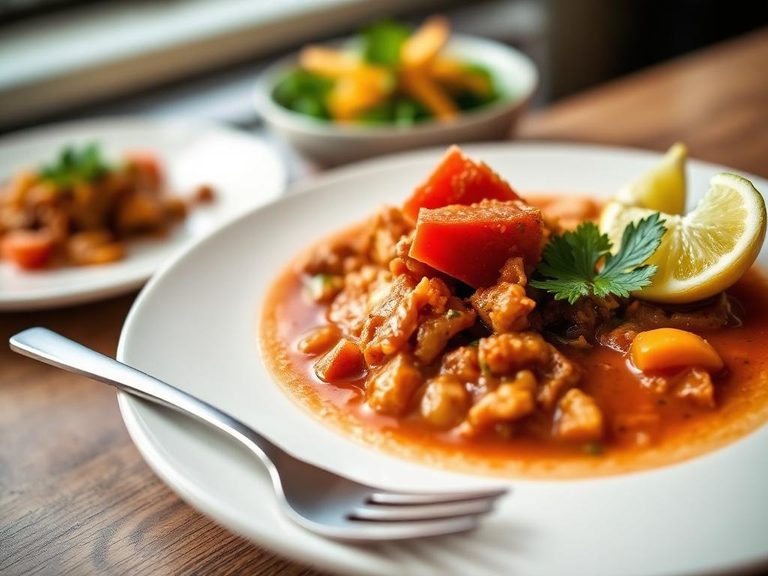
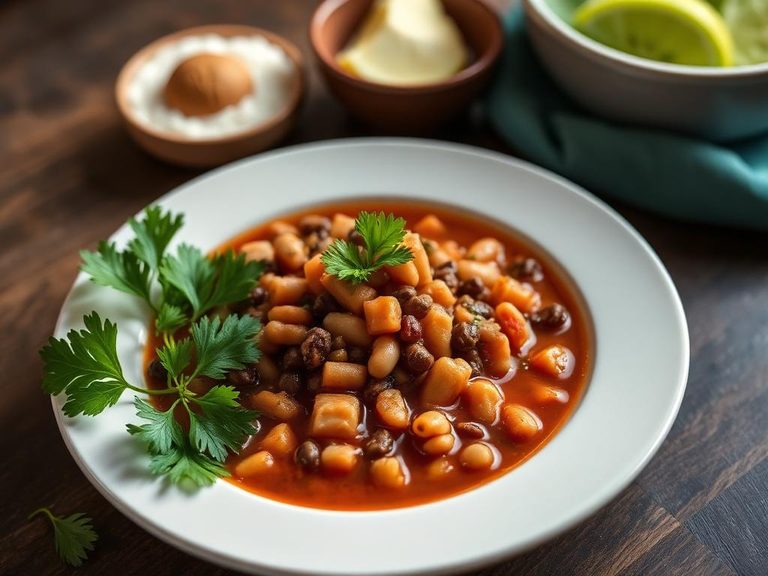
Posole (or Pozole) is a traditional Mexican stew, typically made with hominy (nucleated corn kernels) and meat, such as pork or chicken, in a flavorful broth. It is commonly garnished with fresh toppings like shredded cabbage, radishes, cilantro, lime, and oregano, and is often served during celebrations and holidays.
🍽️ Nutrition at a glance
Posole is generally high in carbohydrates from the hominy and provides a good source of protein from the meat, with a moderate fat content depending on the cut used. A typical serving offers key nutrients like fiber, B vitamins, and minerals such as iron and zinc, with a calorie range of approximately 300-500 per serving.
Nutrition breakdown
| Calories | 250 kcal |
| Protein | 18 g |
| Carbs | 30 g |
| Fat | 7 g |
| Fiber | 6 g |
| Sugar | 4 g |
| Sodium | 680 mg |
| Potassium | 450 mg |
| Iron | 3.2 mg |
| Vitamin C | 15 mg |
| Vitamin B6 | 0.4 mg |
| Niacin (B3) | 5 mg |
| Magnesium | 65 mg |
| Phosphorus | 220 mg |
| Zinc | 2.8 mg |
Per 1 cup (240 g) · estimated, varies by recipe
💡 What's interesting
Culturally, posole has deep roots in Mexican history, with origins tracing back to ancient Aztec rituals where it was considered a sacred food. Nutritionally, the hominy provides a unique, chewy texture and is a good source of resistant starch, which can support digestive health.