

Pizza Primavera
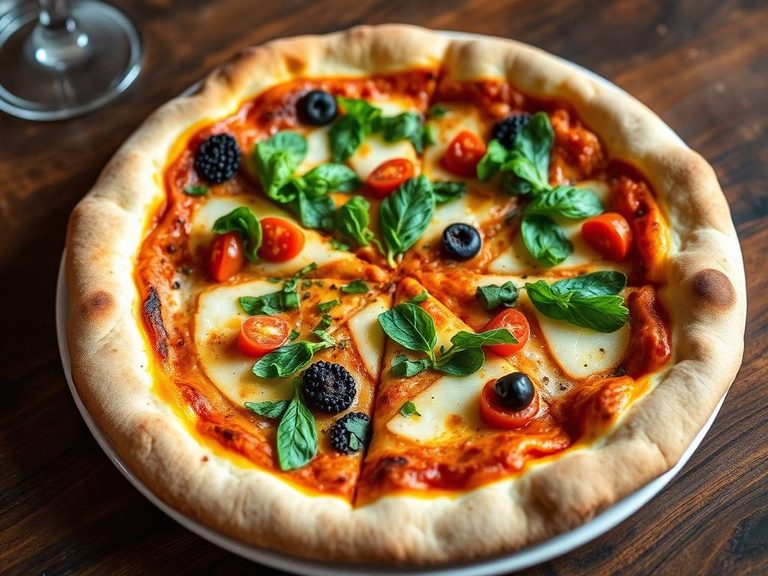
Pizza Primavera is a vibrant, vegetable-forward pizza that celebrates the fresh flavors of spring. It typically features a medley of seasonal vegetables like bell peppers, zucchini, broccoli, and tomatoes, often paired with a light garlic or olive oil base rather than a heavy tomato sauce. While its exact origins are debated, it became popular in the United States during the 1980s as a fresh, lighter alternative to traditional meat-heavy pizzas.
🍳 View the full Pizza Primavera recipe →
🍽️ Nutrition at a glance
This dish is generally balanced but can be higher in carbohydrates from the crust and fat from the cheese, with a moderate amount of protein. It provides a good source of fiber, vitamins (like A and C), and minerals from the diverse vegetables, with a typical slice ranging from 250 to 350 calories depending on portion size and toppings.
Nutrition breakdown
| Calories | 280 kcal |
| Protein | 12 g |
| Carbs | 32 g |
| Fat | 11 g |
| Fiber | 3 g |
| Sugar | 4 g |
| Sodium | 620 mg |
| Calcium | 180 mg |
| Iron | 2.1 mg |
| Potassium | 210 mg |
| Vitamin A | 80 µg |
| Vitamin C | 8 mg |
| Vitamin B12 | 0.5 µg |
| Phosphorus | 150 mg |
| Magnesium | 20 mg |
Per 1 slice (120 g) · estimated, varies by recipe
💡 What's interesting
Culturally, Pizza Primavera represents a shift towards healthier, vegetable-centric eating trends that gained momentum in the late 20th century. Nutritionally, it's unique for packing a wide variety of plant-based nutrients into a familiar, comforting format, making it an accessible way to increase vegetable intake.
🍽️ Related dishes
AI estimate may be inaccurate · Terms