

Pickled plums
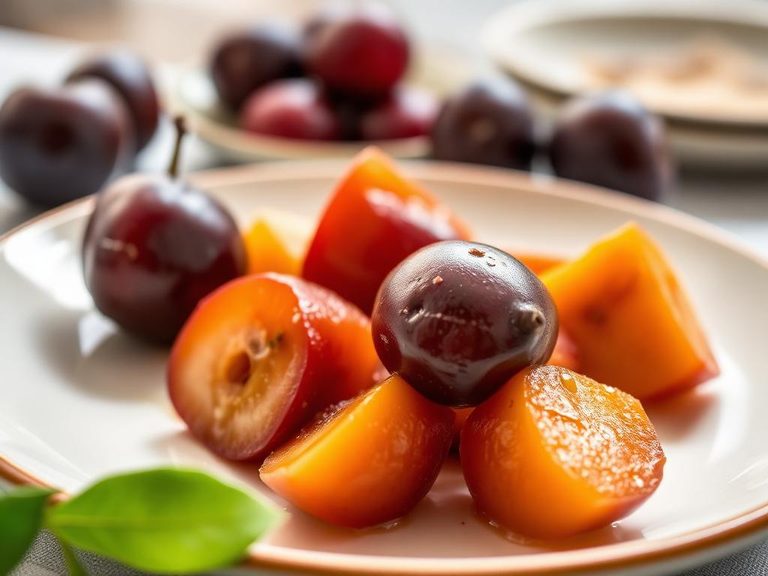
Pickled plums, most famously known as umeboshi, are a traditional Japanese condiment made from salt-pickled Japanese apricots (Prunus mume). The primary ingredients are the plums themselves, salt, and often red shiso (perilla) leaves for color and flavor. This ancient preservation method results in a intensely sour, salty, and savory fruit that is a staple in Japanese cuisine.
🍽️ Nutrition at a glance
Pickled plums are very low in fat and protein, with their calories coming almost entirely from carbohydrates, primarily from natural fruit sugars. They are an exceptional source of sodium due to the brining process and also provide notable amounts of potassium and citric acid, which are linked to their traditional health benefits.
Nutrition breakdown
| Calories | 3 kcal |
| Protein | 0.1 g |
| Carbs | 0.6 g |
| Fat | 0 g |
| Fiber | 0.2 g |
| Sugar | 0.4 g |
| Sodium | 240 mg |
| Sodium | 240 mg |
| Potassium | 35 mg |
| Citric Acid | Significant |
| Iron | 0.1 mg |
| Manganese | 0.02 mg |
Per 1 pickled plum (umeboshi) (approx. 10 g) · estimated, varies by recipe
💡 What's interesting
Culturally, umeboshi is considered a powerful symbol of summer and stamina in Japan, often packed in bento boxes. Nutritionally, they are unique for their very high citric acid content, which is believed to aid digestion and combat fatigue, and for being a rare, low-calorie food that delivers a potent probiotic punch from natural fermentation.
🍽️ Related dishes
AI estimate may be inaccurate · Terms