

Overnight Oats with Yogurt
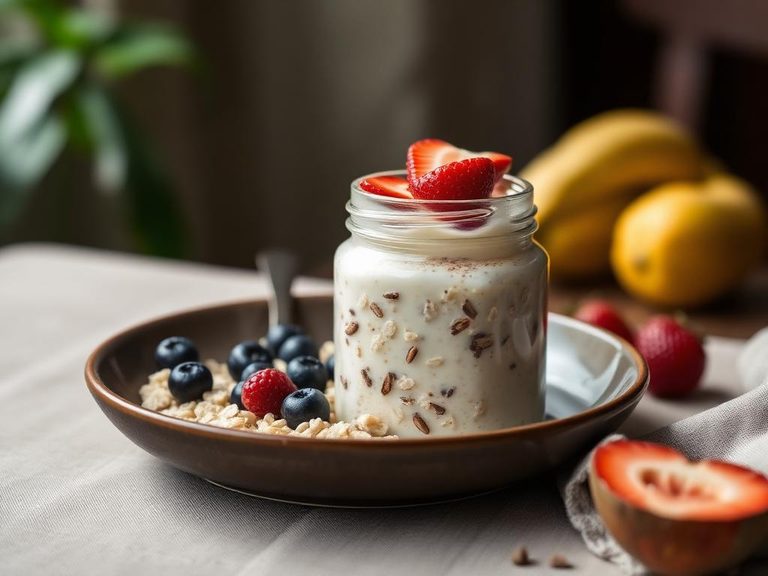
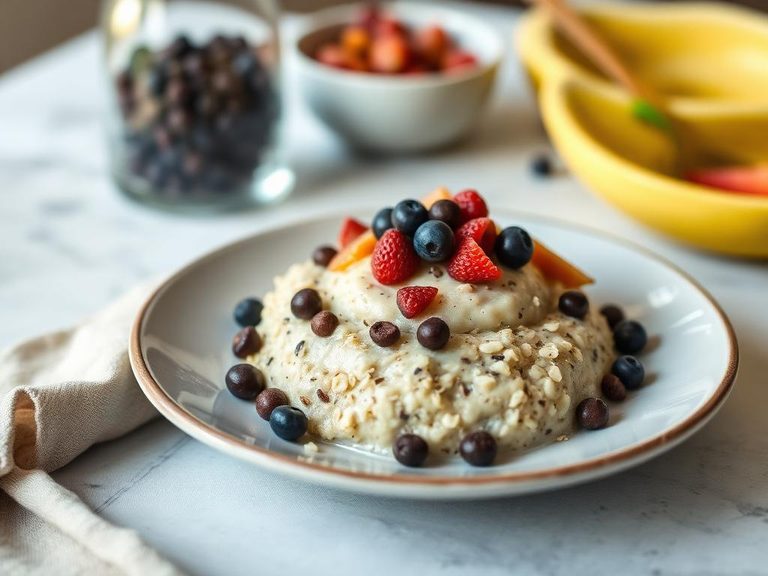
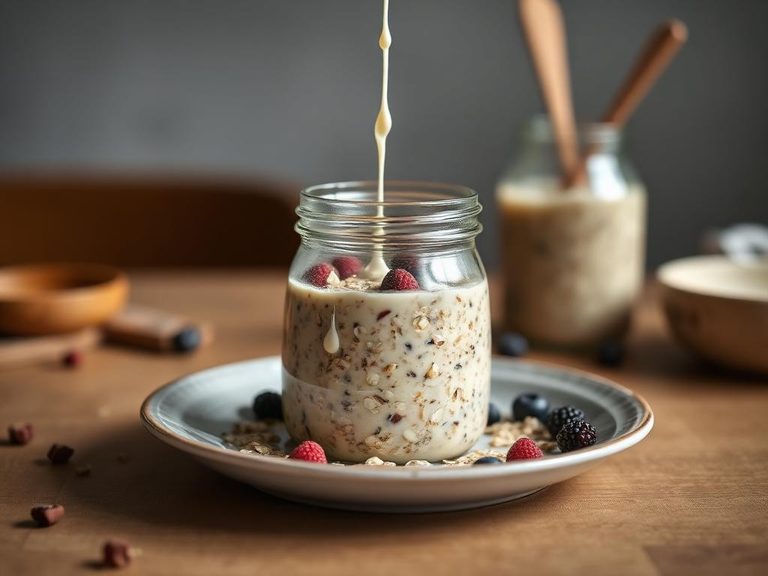
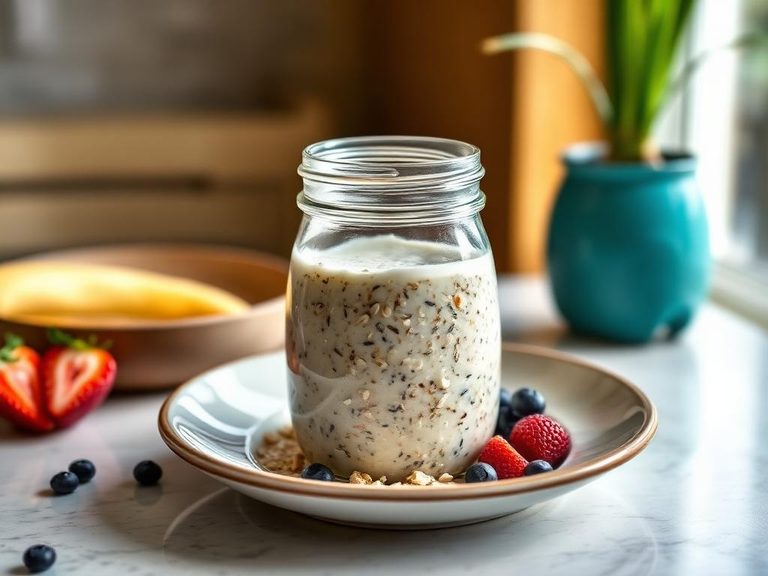
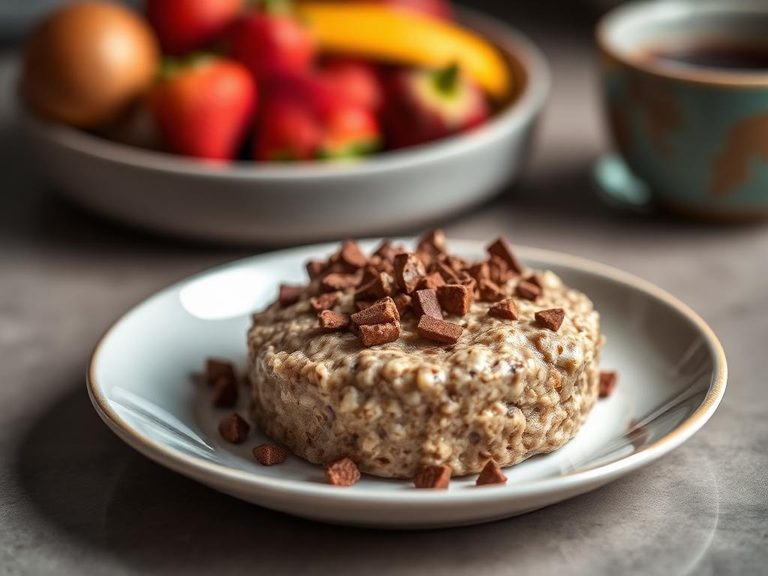
Overnight oats with yogurt is a no-cook breakfast made by soaking rolled oats in yogurt (often mixed with milk or plant-based milk) overnight in the fridge, allowing the oats to soften and thicken into a creamy, pudding-like texture. Common ingredients include rolled oats, plain or flavored yogurt, a sweetener like honey or maple syrup, and toppings such as fresh fruit, nuts, seeds, or chia seeds. This preparation method is popular in Western health-conscious and busy-lifestyle circles, particularly in North America and Europe, as a convenient make-ahead meal.
🍳 View the full Overnight Oats with Yogurt recipe →
🍽️ Nutrition at a glance
This dish is typically balanced in macronutrients, providing a good mix of complex carbohydrates from oats, protein from yogurt, and healthy fats from toppings like nuts or seeds. Key nutrients include fiber, calcium, probiotics (from yogurt), and various vitamins and minerals depending on add-ins. A standard serving usually ranges from 250 to 400 calories, depending on portion size and specific ingredients used.
Nutrition breakdown
| Calories | 250 kcal |
| Protein | 12 g |
| Carbs | 35 g |
| Fat | 7 g |
| Fiber | 4 g |
| Sugar | 10 g |
| Sodium | 120 mg |
| Calcium | 250 mg |
| Phosphorus | 200 mg |
| Potassium | 350 mg |
| Magnesium | 60 mg |
| Iron | 2 mg |
| Zinc | 1.5 mg |
| Vitamin B12 | 0.6 mcg |
| Riboflavin (B2) | 0.3 mg |
Per 1 cup (240 g) · estimated, varies by recipe
💡 What's interesting
What makes overnight oats with yogurt unique is its fermentation-like process where the oats absorb liquid and soften without cooking, enhancing digestibility and creating a naturally creamy texture. Nutritionally, the combination of oats and yogurt offers a gut-friendly meal with sustained energy release, aligning with modern trends toward convenient, nutrient-dense, and microbiome-supporting foods.
🍽️ Related dishes
AI estimate may be inaccurate · Terms