

Non-stick muffin tins
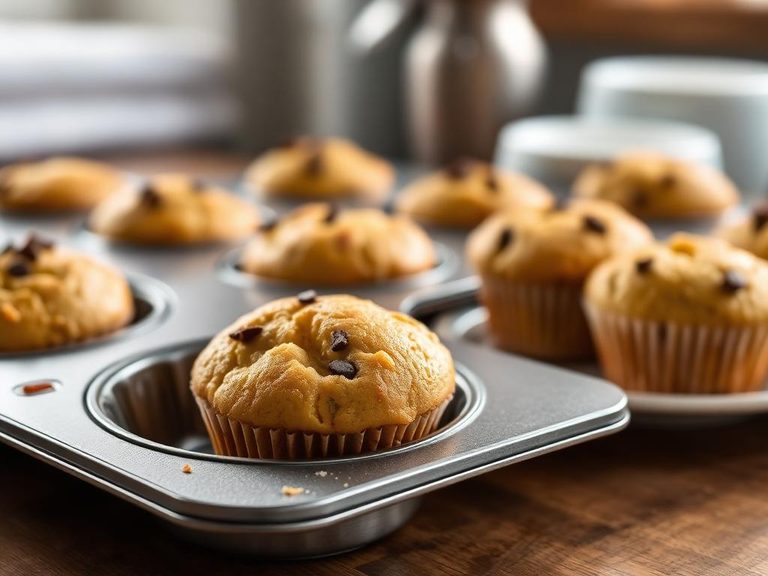
Non-stick muffin tins are not a dish themselves, but rather a specialized baking tool used to create perfectly shaped muffins, cupcakes, and other individual baked goods. They are typically made of metal with a non-stick coating, allowing for easy release and cleanup. This kitchen essential is a staple in home baking worldwide.
🍳 View the full Non-stick muffin tins recipe →
🍽️ Nutrition at a glance
The nutritional profile depends entirely on the batter used, but muffins are generally high in carbohydrates and fat, with a moderate amount of protein. A standard homemade muffin can range from 200 to 400 calories per serving, depending on ingredients like sugar, butter, and flour.
Nutrition breakdown
| Calories | 210 kcal |
| Protein | 3 g |
| Carbs | 28 g |
| Fat | 10 g |
| Fiber | 1 g |
| Sugar | 12 g |
| Sodium | 200 mg |
| Calcium | 40 mg |
| Iron | 1.2 mg |
| Potassium | 50 mg |
| Vitamin A | 60 IU |
| Vitamin D | 0.5 µg |
| Vitamin B12 | 0.1 µg |
| Folate | 30 µg |
| Phosphorus | 50 mg |
Per 1 standard muffin (approx. 60 g) · estimated, varies by recipe
💡 What's interesting
The non-stick coating on these tins revolutionized home baking by eliminating the need for excessive greasing, making the process more accessible and less messy. Culturally, muffins are a beloved breakfast or snack item in many Western countries, often adapted with local flavors and ingredients.
🍽️ Related dishes





AI estimate may be inaccurate · Terms