Non-stick cooking sprays
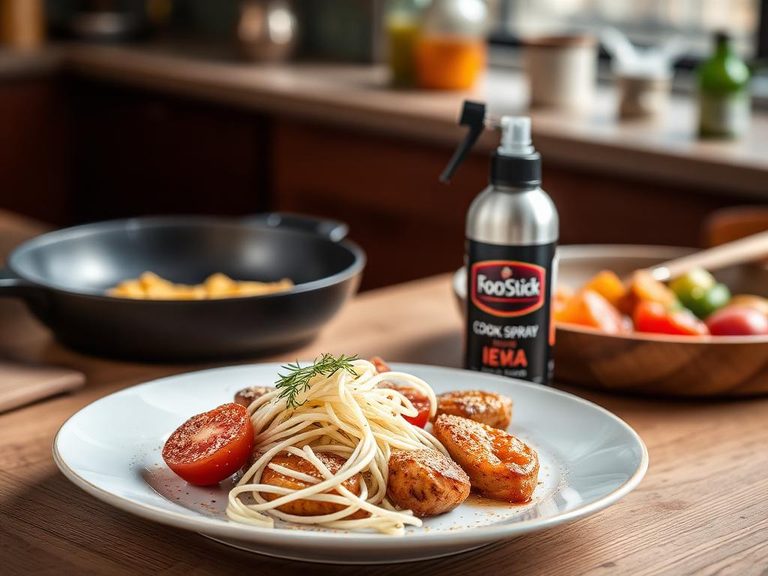
Non-stick cooking sprays are aerosolized or pump-action oils designed to create a thin, even layer on cookware to prevent food from sticking. They are typically made from a base oil (like canola, olive, or coconut) combined with an emulsifier (like lecithin) and sometimes a propellant. While not a 'dish' themselves, they are a ubiquitous kitchen staple originating from the United States in the mid-20th century.
🍽️ Nutrition at a glance
Non-stick cooking sprays are almost entirely fat, providing a very low-calorie way to grease a pan. A typical serving is a very short spray (about 1/3 second), which delivers roughly 5-10 calories and 0.5-1 gram of fat, with negligible carbs, protein, or other nutrients.
Nutrition breakdown
| Calories | 7 kcal |
| Protein | 0 g |
| Carbs | 0 g |
| Fat | 0.7 g |
| Fiber | 0 g |
| Sugar | 0 g |
| Sodium | 0 mg |
| Vitamin E | 0.1 mg |
| Vitamin K | 0.5 mcg |
Per 1 spray (approx. 0.25 g) · estimated, varies by recipe
💡 What's interesting
Their unique cultural role is in enabling 'low-fat' cooking methods, allowing food to be prepared with minimal added oil. Nutritionally, they are a tool for calorie control, as a single can claims to provide hundreds of servings, far more than pouring oil directly from a bottle.