Milkshakes or Smoothies
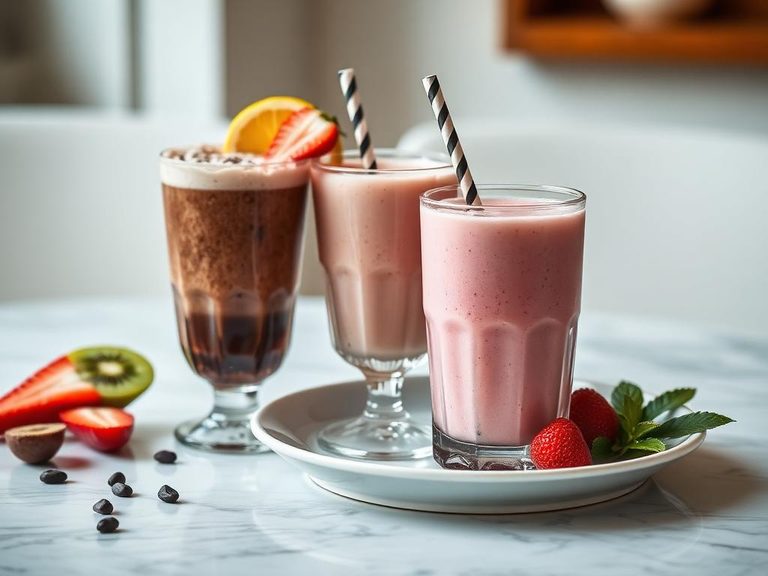
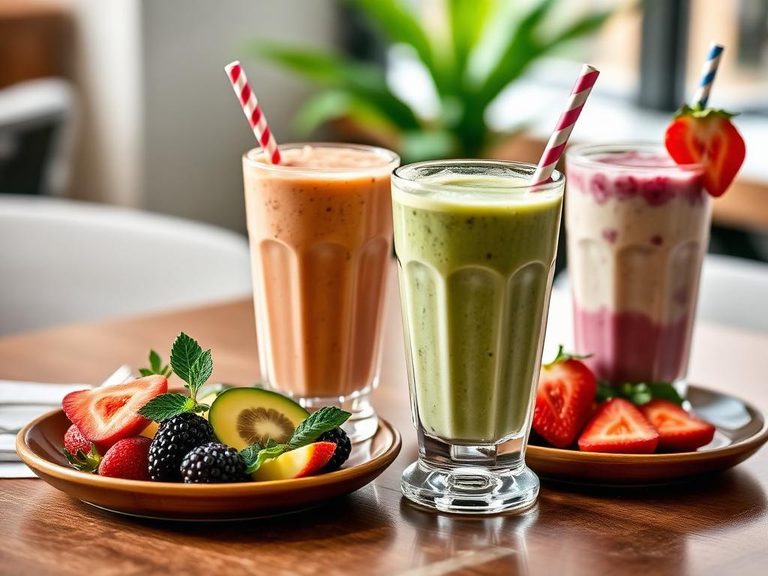
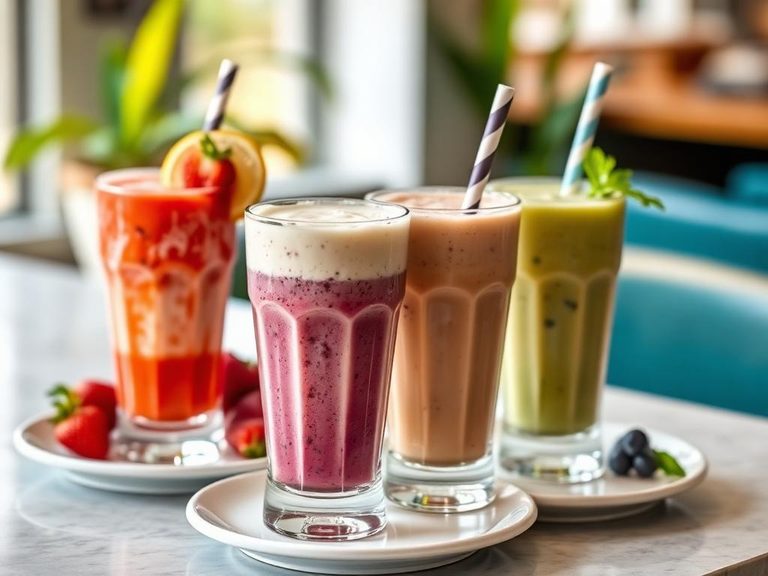
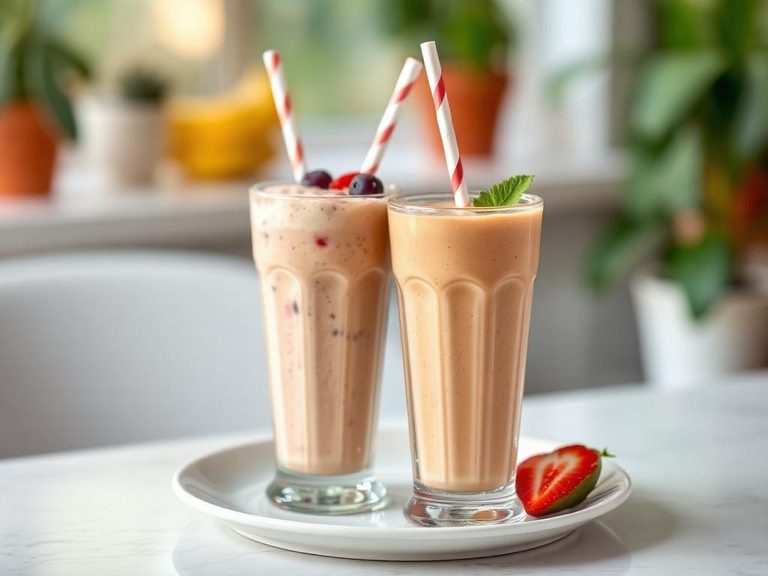
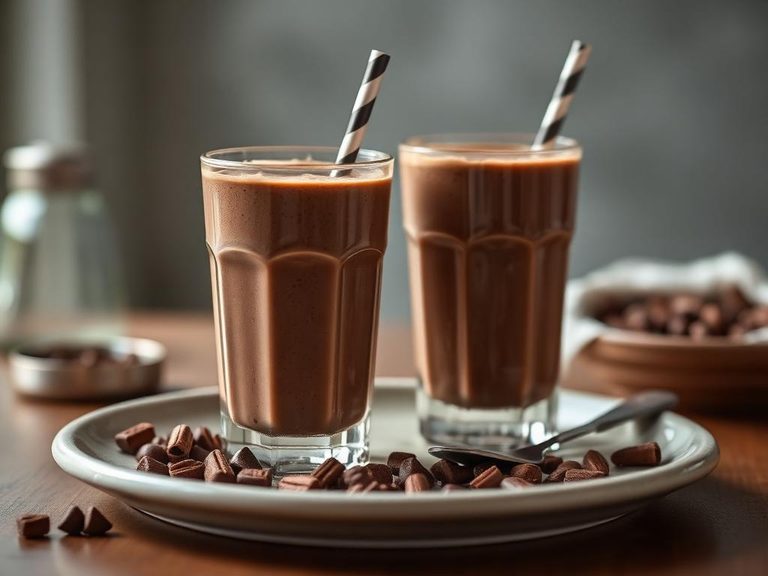
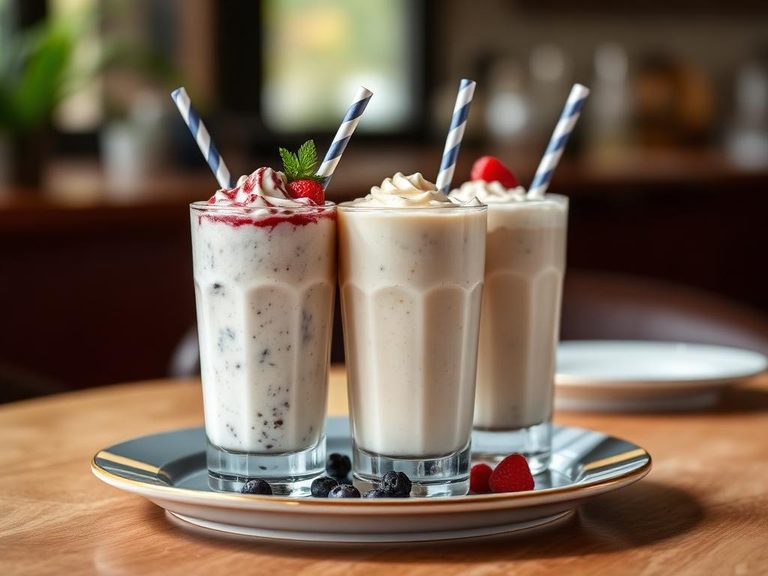
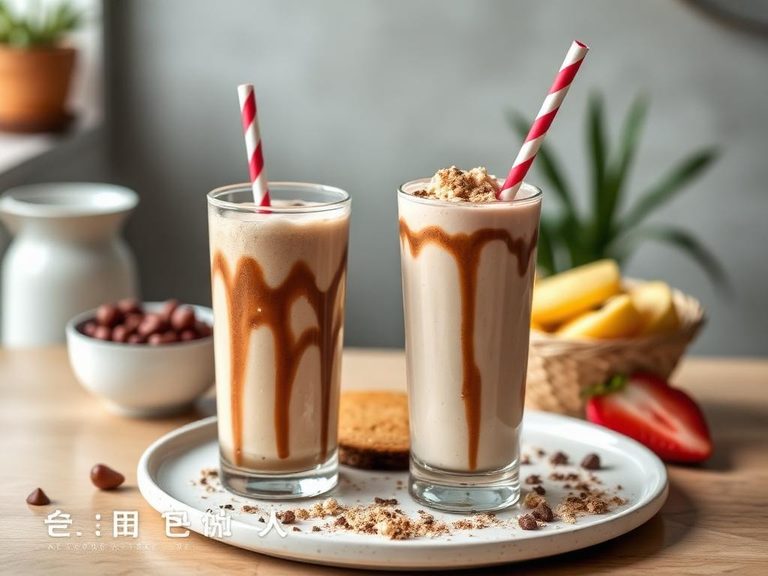
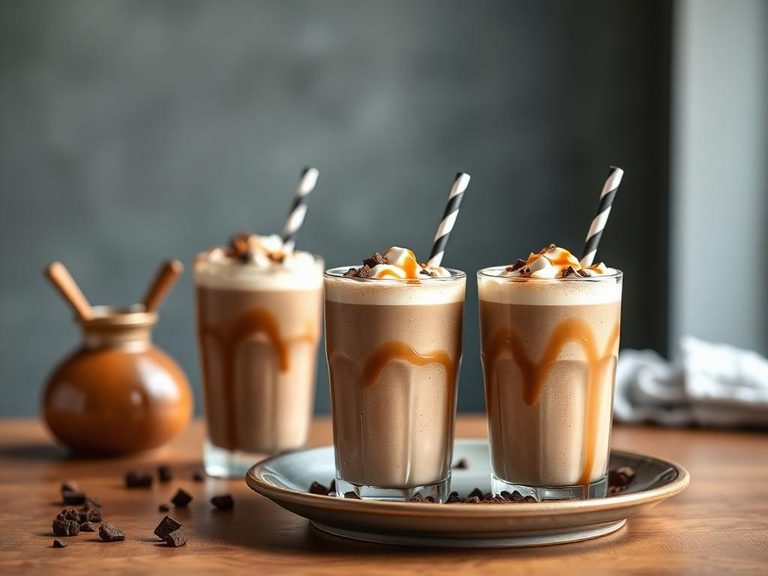
Milkshakes and smoothies are blended, drinkable treats. Milkshakes are typically made with ice cream, milk, and flavorings like fruit or chocolate, while smoothies are usually made with fruit, yogurt or milk, and sometimes vegetables. Both are popular worldwide, with origins in the United States for the modern milkshake and various health-focused cultures for the smoothie.
🍽️ Nutrition at a glance
These drinks can be high in carbohydrates and sugar, especially milkshakes, with smoothies often offering more fiber and vitamins from whole fruits. A typical serving can range from 200 to over 500 calories, depending on ingredients like added sugars, ice cream, or protein powders.
Nutrition breakdown
| Calories | 300 kcal |
| Protein | 8 g |
| Carbs | 50 g |
| Fat | 8 g |
| Fiber | 3 g |
| Sugar | 40 g |
| Sodium | 100 mg |
| Calcium | 200 mg |
| Potassium | 350 mg |
| Vitamin C | 30 mg |
| Vitamin A | 200 IU |
| Vitamin D | 2.5 mcg |
| Magnesium | 30 mg |
| Phosphorus | 150 mg |
| Vitamin B12 | 0.5 mcg |
Per 1 cup (240 g) · estimated, varies by recipe
💡 What's interesting
Milkshakes are a classic symbol of American diner culture, while smoothies have become a global staple in health and fitness trends. Nutritionally, smoothies can be a convenient way to consume multiple servings of fruits and vegetables in one drink.