

Mexican street food
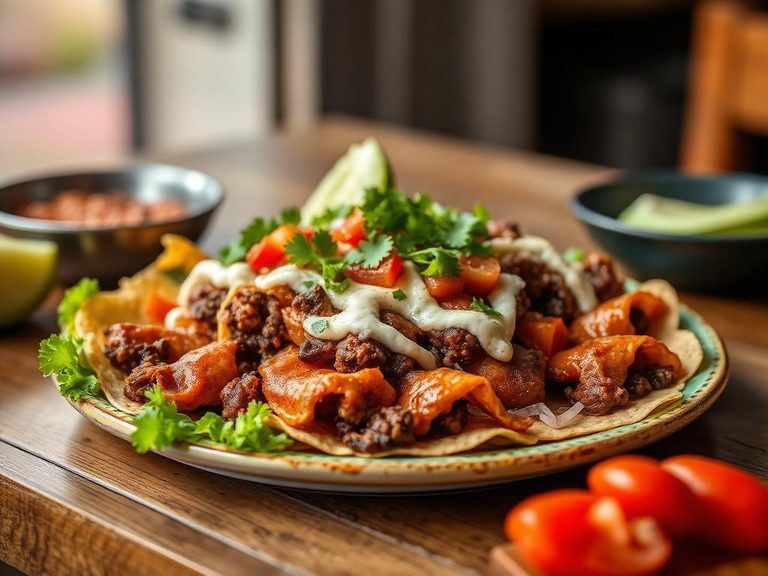
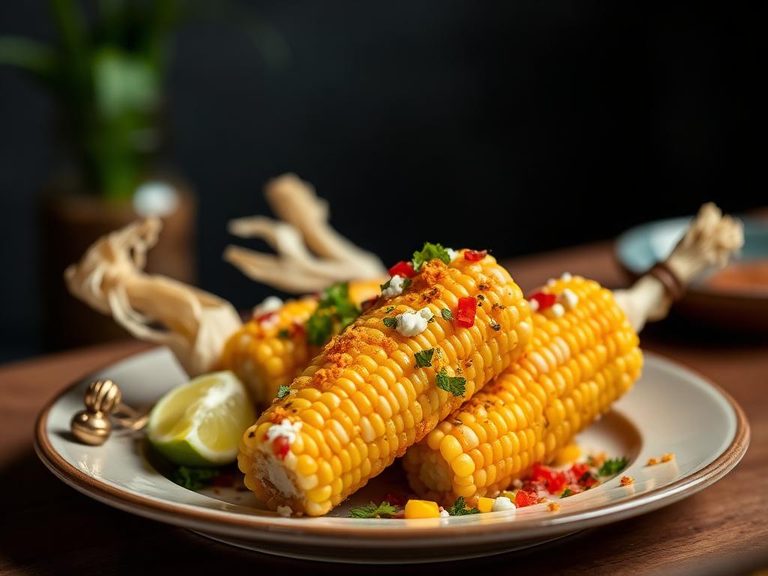
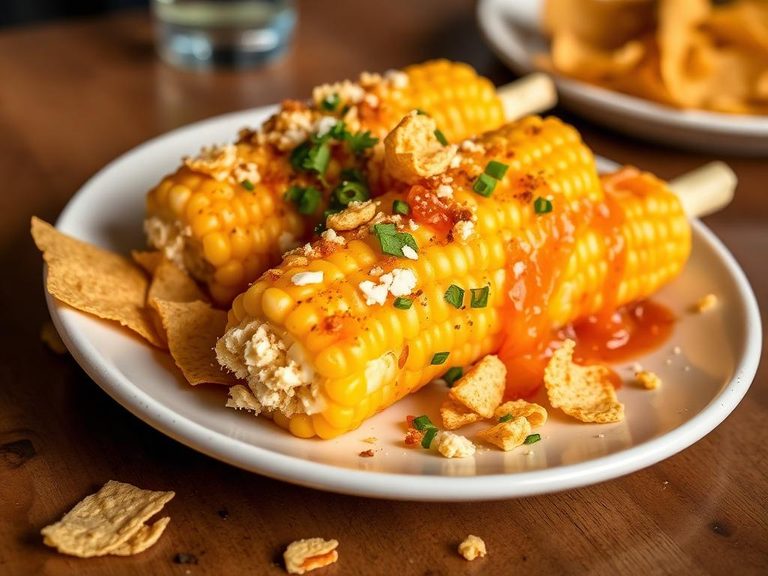
Mexican street food, or 'antojitos' (little cravings), refers to a vibrant category of casual, flavorful snacks sold by vendors and in markets across Mexico. Common examples include tacos, elotes (grilled corn), tamales, and tlacoyos, typically featuring a base of corn or wheat tortilla topped with ingredients like seasoned meats, beans, cheese, salsa, and fresh lime. This culinary tradition originates from Mexico's bustling urban centers and rural communities, reflecting a blend of Indigenous Mesoamerican and Spanish influences.
🍽️ Nutrition at a glance
Mexican street food is generally high in carbohydrates from tortillas and can be moderate to high in fat depending on preparation (e.g., fried items or added cheese/crema). It provides key nutrients like protein from meats or beans, fiber from corn and vegetables, and essential vitamins such as vitamin C from salsa and lime, with a typical serving ranging from 200 to 400 calories.
Nutrition breakdown
| Calories | 350 kcal |
| Protein | 18 g |
| Carbs | 30 g |
| Fat | 16 g |
| Fiber | 4 g |
| Sugar | 2 g |
| Sodium | 450 mg |
| Vitamin C | 15 mg |
| Iron | 2.5 mg |
| Calcium | 120 mg |
| Potassium | 300 mg |
| Niacin (B3) | 4 mg |
| Zinc | 3 mg |
| Phosphorus | 200 mg |
| Magnesium | 40 mg |
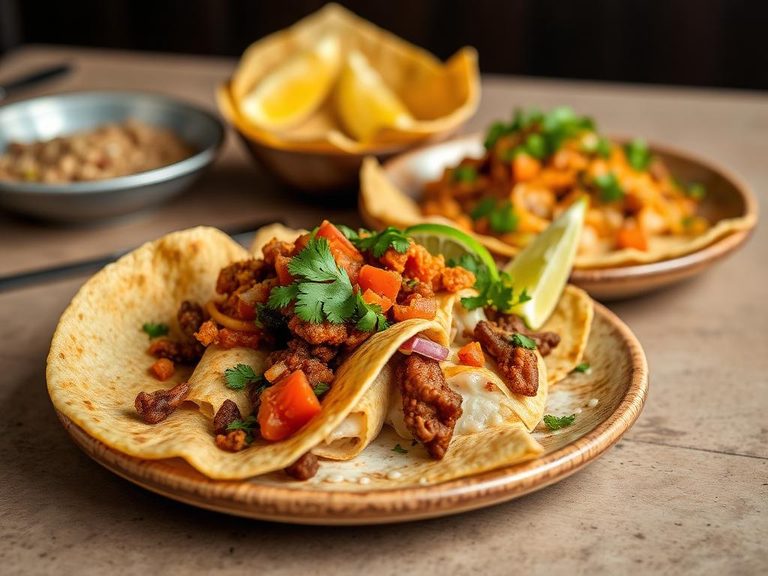
Per 2 tacos al pastor (each with one corn tortilla, 60 g pork, toppings; total ~180 g) · estimated, varies by recipe
💡 What's interesting
Culturally, Mexican street food is a social and economic cornerstone, fostering community gatherings and preserving regional culinary identities. Nutritionally, the use of nixtamalized corn (masa) enhances the bioavailability of niacin and calcium, making it a more nutrient-dense staple than unprocessed corn.
🍽️ Related dishes


AI estimate may be inaccurate · Terms