

Mango sorbet (global)
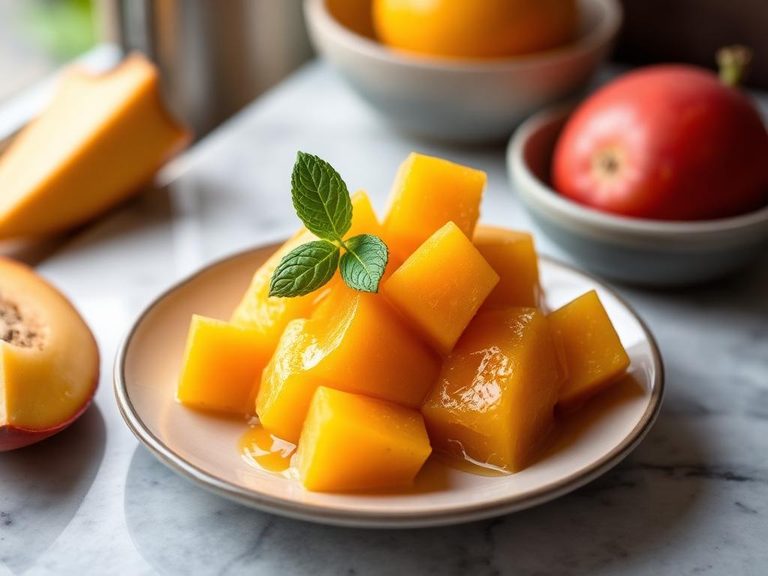
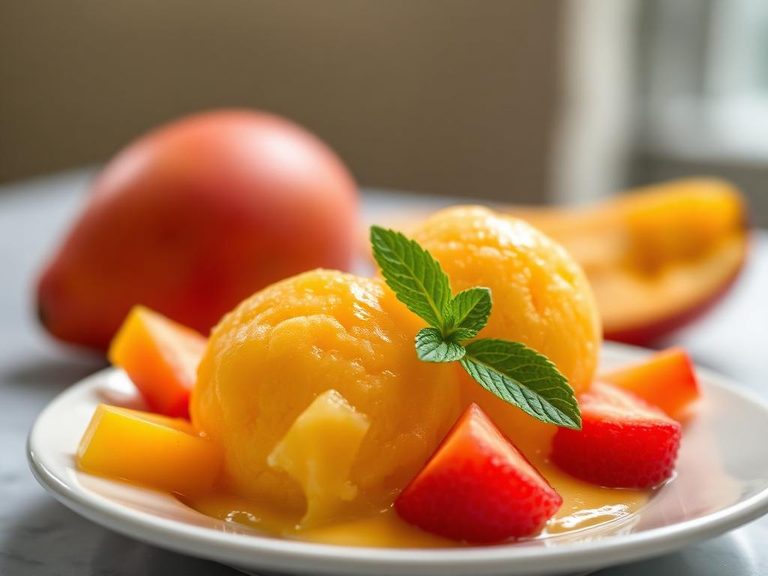
Mango sorbet is a refreshing frozen dessert made primarily from pureed mangoes, sugar, and water or fruit juice, with no dairy or eggs. Originating from the broader tradition of fruit-based ices, it is now enjoyed globally, especially in tropical and subtropical regions where mangoes are abundant. Its smooth, icy texture and intense fruit flavor make it a popular palate cleanser or light dessert.
🍳 View the full Mango sorbet (global) recipe →
🍽️ Nutrition at a glance
This dessert is high in carbohydrates, mainly from natural fruit sugars and added sweeteners, but contains virtually no fat or protein. A typical 1-cup serving provides key nutrients like vitamin C and vitamin A from the mango, with a calorie range of approximately 150-250 calories depending on sugar content.
Nutrition breakdown
| Calories | 150 kcal |
| Protein | 0.5 g |
| Carbs | 37 g |
| Fat | 0 g |
| Fiber | 1.5 g |
| Sugar | 34 g |
| Sodium | 10 mg |
| Vitamin C | 30 mg |
| Vitamin A | 150 mcg RAE |
| Potassium | 250 mg |
| Folate | 60 mcg |
| Vitamin B6 | 0.2 mg |
| Magnesium | 15 mg |
| Copper | 0.1 mg |
| Manganese | 0.3 mg |
Per 1 cup (240 g) · estimated, varies by recipe
💡 What's interesting
Nutritionally, it offers a way to enjoy the antioxidants and vitamins of mangoes in a low-fat form, while culturally, it represents a universal adaptation of fruit ices that can be found in variations from Italian granita to Indian aamras, highlighting mango's global appeal.
🍽️ Related dishes

AI estimate may be inaccurate · Terms