

Kartoffelknödel
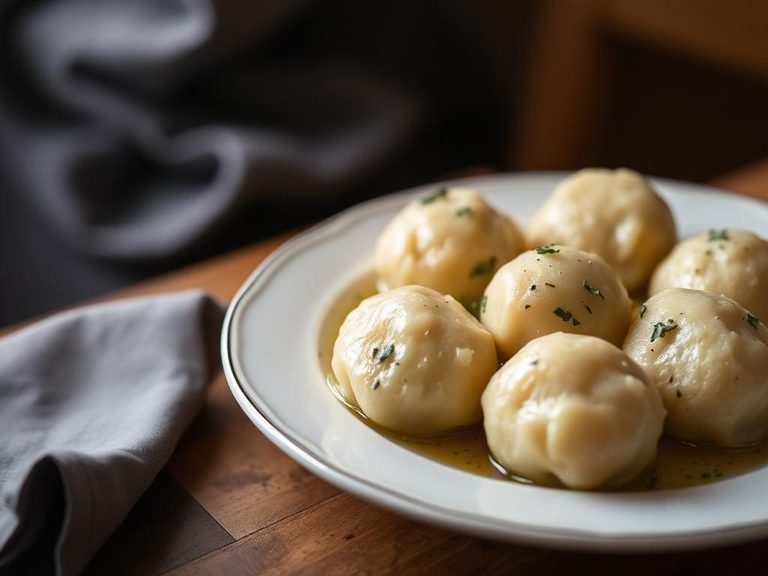
Kartoffelknödel are soft, chewy potato dumplings that are a beloved side dish in German cuisine, particularly popular in Bavaria and Swabia. They are traditionally made from a mixture of raw and cooked potatoes, often with a bread crouton center, and are typically boiled until tender. These dumplings are commonly served alongside rich, savory dishes like roast pork, sauerbraten, or game meats.
🍽️ Nutrition at a glance
As a potato-based dish, Kartoffelknödel are high in carbohydrates, providing a good source of energy, with a moderate amount of protein and very little fat. A typical serving of two medium dumplings contains roughly 200-300 calories, along with potassium and some B vitamins from the potatoes.
Nutrition breakdown
| Calories | 350 kcal |
| Protein | 6 g |
| Carbs | 65 g |
| Fat | 8 g |
| Fiber | 3 g |
| Sugar | 2 g |
| Sodium | 600 mg |
| Potassium | 450 mg |
| Phosphorus | 120 mg |
| Iron | 1.5 mg |
| Vitamin C | 8 mg |
| Thiamin (B1) | 0.1 mg |
| Niacin (B3) | 1.5 mg |
| Folate | 25 mcg |
| Magnesium | 30 mg |
Per 4 dumplings (200 g) · estimated, varies by recipe
💡 What's interesting
What makes Kartoffelknödel unique is the traditional 'Semmelknödel' variation, which uses stale bread rolls to create a lighter, fluffier texture, showcasing a classic German principle of using leftover ingredients. Nutritionally, they serve as a hearty, starchy base that balances and soaks up the intense flavors of the rich gravies they are often paired with.
🍽️ Related dishes







AI estimate may be inaccurate · Terms