

Japanese Sukiyaki
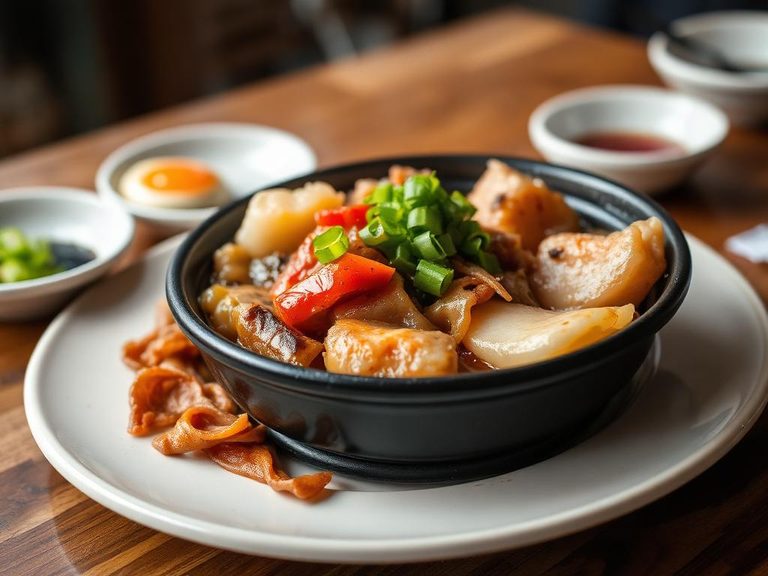
Japanese Sukiyaki is a popular one-pot dish where thinly sliced beef and various vegetables are simmered in a sweet and savory soy-based broth called 'warishita.' It typically includes ingredients like shirataki noodles, tofu, shiitake mushrooms, napa cabbage, and negi (green onion). Originating in the Meiji era, it's a beloved communal meal often cooked at the table.
🍽️ Nutrition at a glance
Sukiyaki is a high-protein dish due to the beef and tofu, with moderate fat content from the meat and cooking oils. It provides key nutrients like iron, zinc, and B vitamins from the beef, along with various minerals from the vegetables, with a typical serving containing roughly 500-700 calories.
Nutrition breakdown
| Calories | 600 kcal |
| Protein | 35 g |
| Carbs | 30 g |
| Fat | 38 g |
| Fiber | 4 g |
| Sugar | 12 g |
| Sodium | 950 mg |
| Iron | 4.5 mg |
| Zinc | 7 mg |
| Vitamin B12 | 2.8 mcg |
| Potassium | 600 mg |
| Phosphorus | 350 mg |
| Niacin (B3) | 8 mg |
| Selenium | 25 mcg |
| Copper | 0.4 mg |
Per 1 typical serving (approx. 350 g) · estimated, varies by recipe
💡 What's interesting
Culturally, sukiyaki is often associated with special occasions and year-end celebrations (bounenkai). A unique aspect is the tradition of dipping the cooked ingredients into a small bowl of raw beaten egg before eating, which adds a rich, creamy layer of flavor and helps cool the hot food.
🍽️ Related dishes
AI estimate may be inaccurate · Terms