

Italian pork ragù
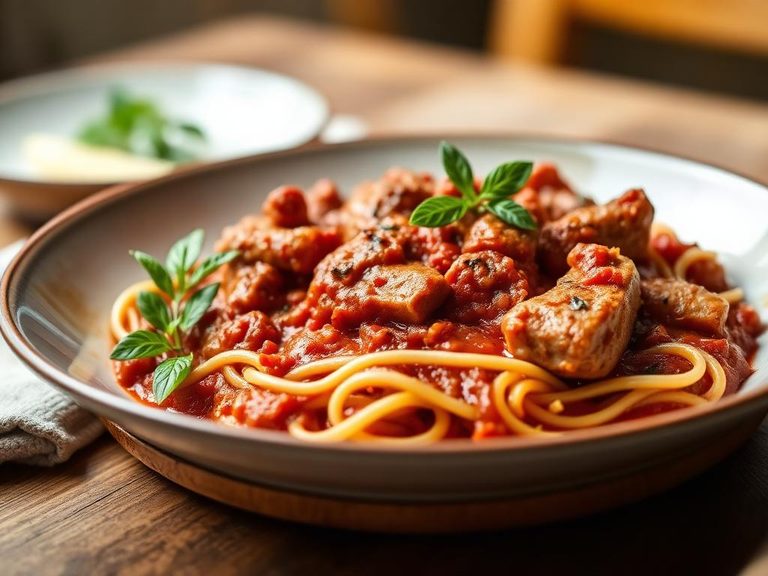
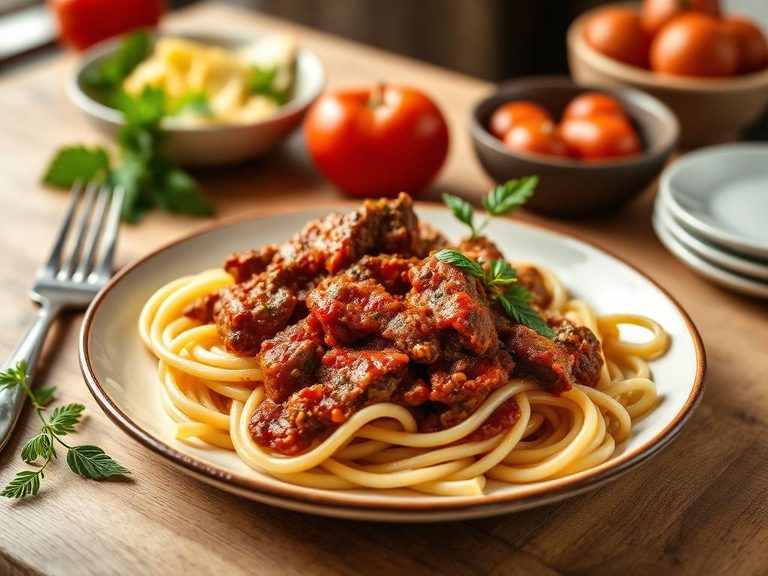
Italian pork ragù is a rich, slow-cooked meat sauce traditionally from Northern Italy, where it's often paired with fresh pasta like tagliatelle. It typically features ground or diced pork simmered with a soffritto of onions, carrots, and celery, tomatoes, red wine, and aromatic herbs such as sage and rosemary.
🍳 View the full Italian pork ragù recipe →
🍽️ Nutrition at a glance
This dish is high in protein from the pork and contains moderate fat, especially if using cuts like shoulder or pancetta. It provides key nutrients like iron, B vitamins, and lycopene from tomatoes, with a typical serving (about 1.5 cups with pasta) ranging from 500-700 calories.
Nutrition breakdown
| Calories | 300 kcal |
| Protein | 22 g |
| Carbs | 12 g |
| Fat | 18 g |
| Fiber | 3 g |
| Sugar | 6 g |
| Sodium | 680 mg |
| Iron | 3.5 mg |
| Potassium | 450 mg |
| Vitamin A | 800 IU |
| Vitamin C | 15 mg |
| Calcium | 60 mg |
| Phosphorus | 250 mg |
| Zinc | 4 mg |
| Vitamin B12 | 1.5 mcg |
Per 1 cup (240 g) · estimated, varies by recipe
💡 What's interesting
Unlike the more common beef ragù, pork ragù has a slightly sweeter, more delicate flavor that pairs beautifully with the earthiness of fresh egg pasta. Nutritionally, the slow-cooking process helps break down connective tissues, making the protein more digestible while allowing the tomatoes' lycopene to become more bioavailable.
🍽️ Related dishes
AI estimate may be inaccurate · Terms