Italian Pork Ragu with Potatoes
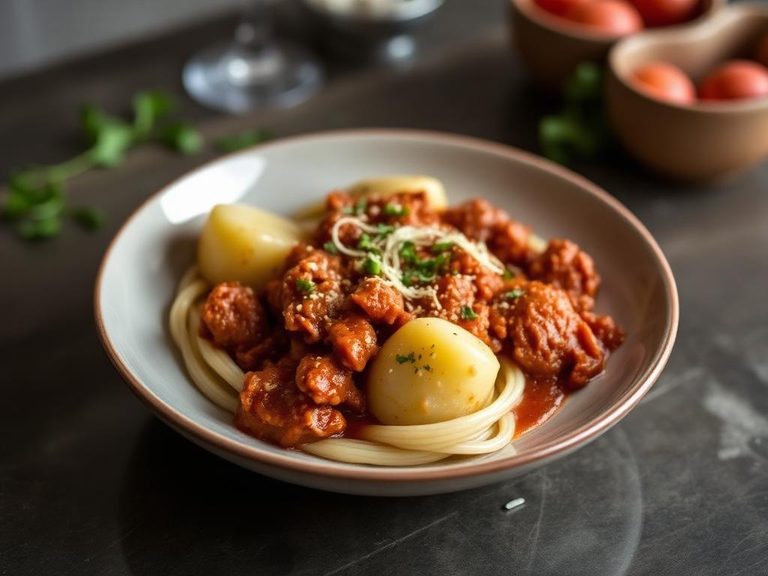
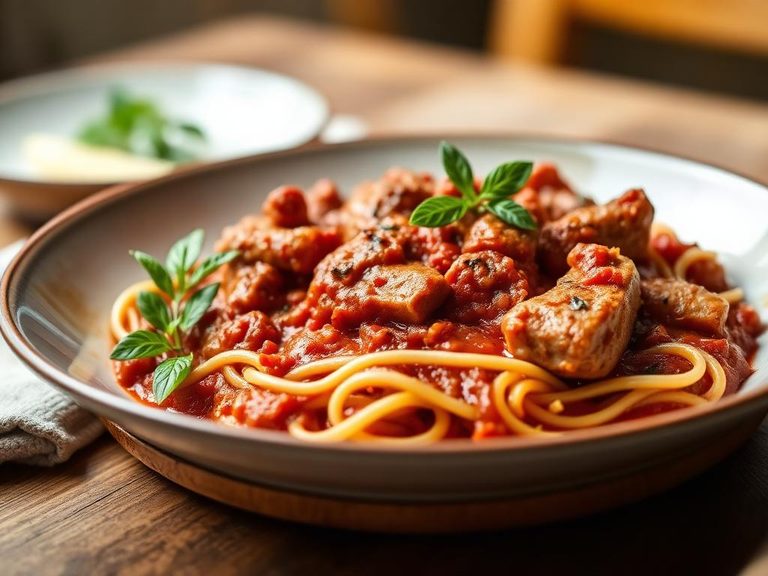
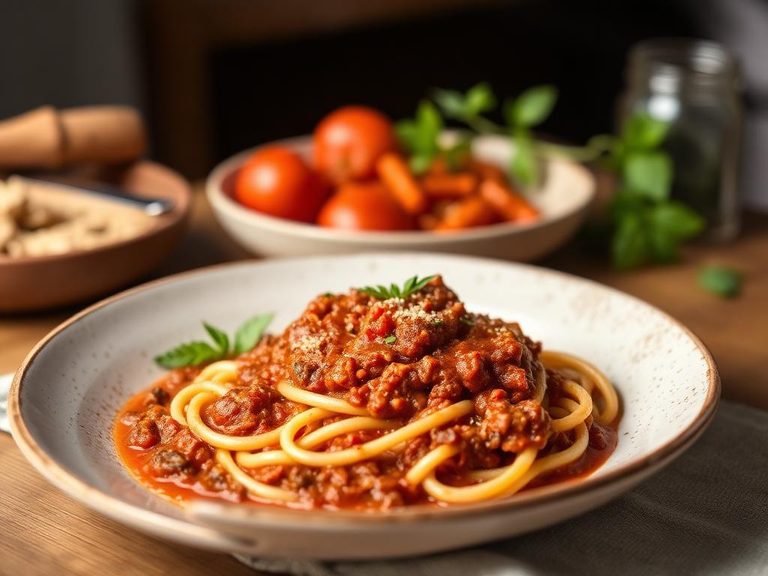
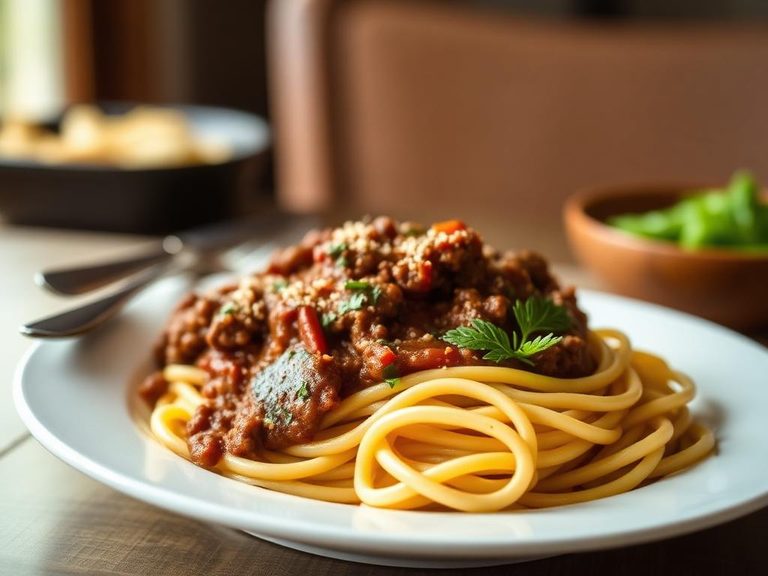
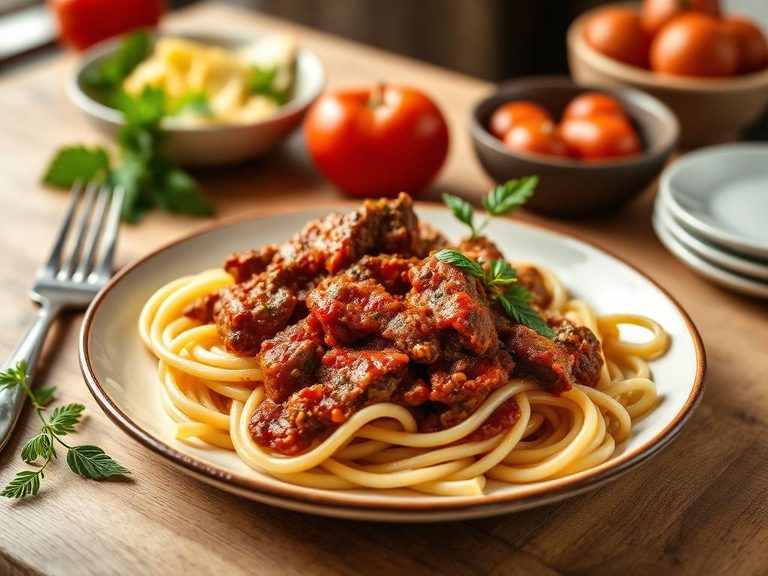
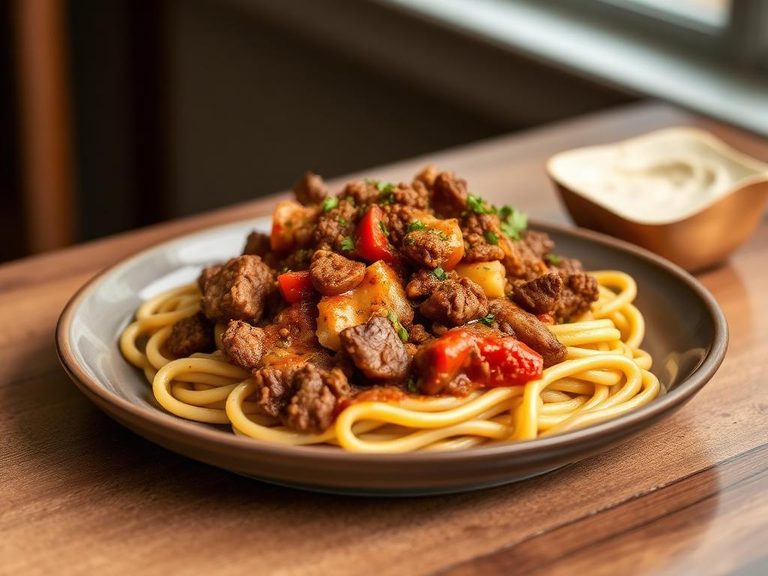
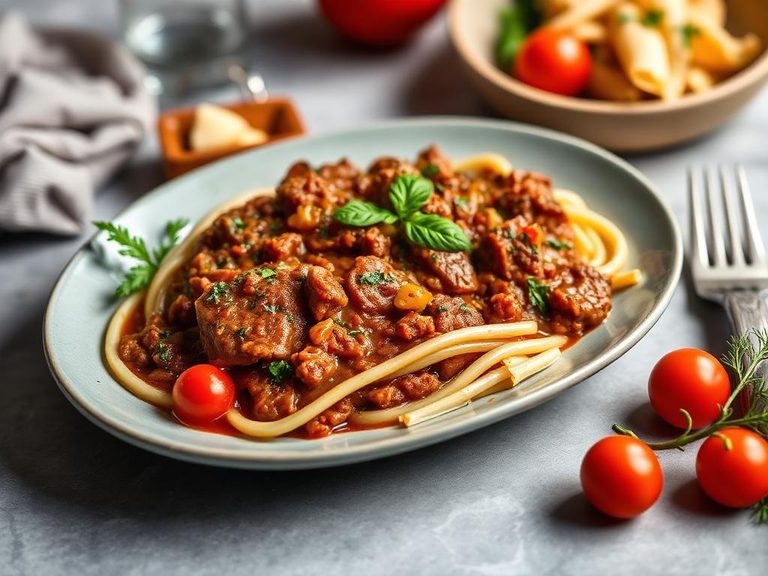
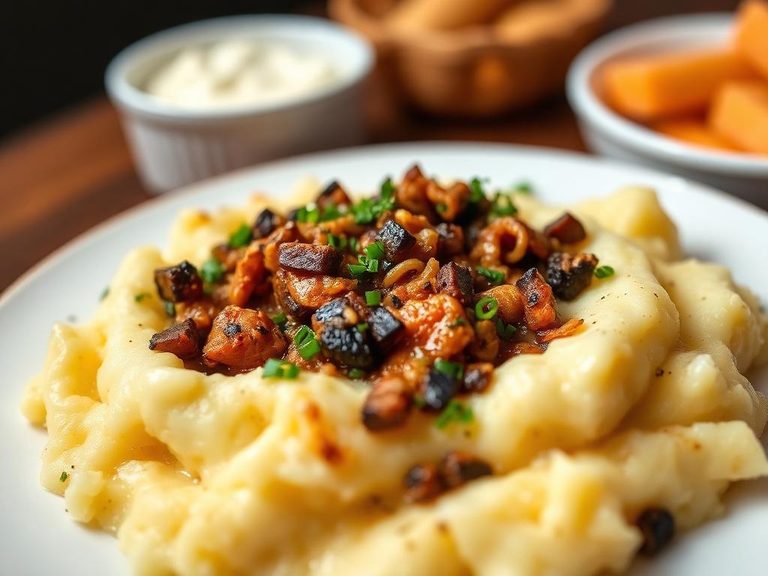
Italian Pork Ragu with Potatoes is a hearty, rustic stew from central Italy, particularly Tuscany and Umbria, where slow-cooked meat sauces are a staple. It features tender pork (often shoulder or ribs) simmered in a rich tomato-based sauce with aromatic vegetables, white wine, and herbs, traditionally served over or alongside chunks of potato that absorb the savory flavors. The dish embodies the Italian principle of 'cucina povera' (peasant cooking), transforming simple, affordable ingredients into a deeply satisfying meal.
🍽️ Nutrition at a glance
This dish is high in protein from the pork and provides a good balance of carbohydrates from the potatoes, with moderate fat depending on the cut of meat used. It offers key nutrients like iron, zinc, and B vitamins from the pork, along with potassium and vitamin C from the potatoes and tomatoes. A typical serving (about 1.5 cups) ranges from 400-600 calories, making it a substantial and nourishing main course.
Nutrition breakdown
| Calories | 450 kcal |
| Protein | 30 g |
| Carbs | 35 g |
| Fat | 20 g |
| Fiber | 5 g |
| Sugar | 6 g |
| Sodium | 850 mg |
| Potassium | 700 mg |
| Iron | 4 mg |
| Vitamin B6 | 0.6 mg |
| Vitamin B12 | 1.2 mcg |
| Niacin (B3) | 8 mg |
| Phosphorus | 300 mg |
| Zinc | 5 mg |
| Selenium | 25 mcg |
Per 1.5 cups (360 g) · estimated, varies by recipe
💡 What's interesting
Culturally, this ragu reflects Italy's regional diversity—while Bolognese uses ground meat and pasta, this version uses chunks of pork and potatoes, showcasing how local ingredients shape national dishes. Nutritionally, the slow-cooking process breaks down collagen in the pork, making it easier to digest while creating a gelatin-rich sauce that supports joint and gut health.