

Instant Mashed Potatoes
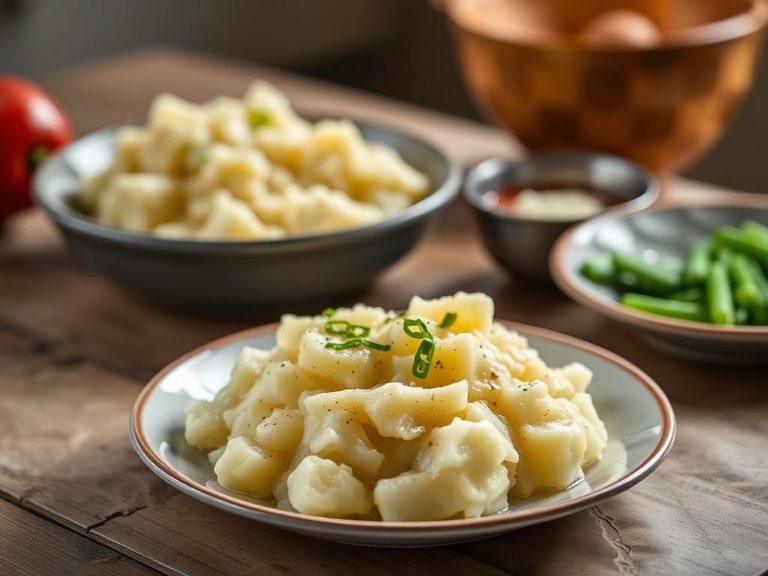
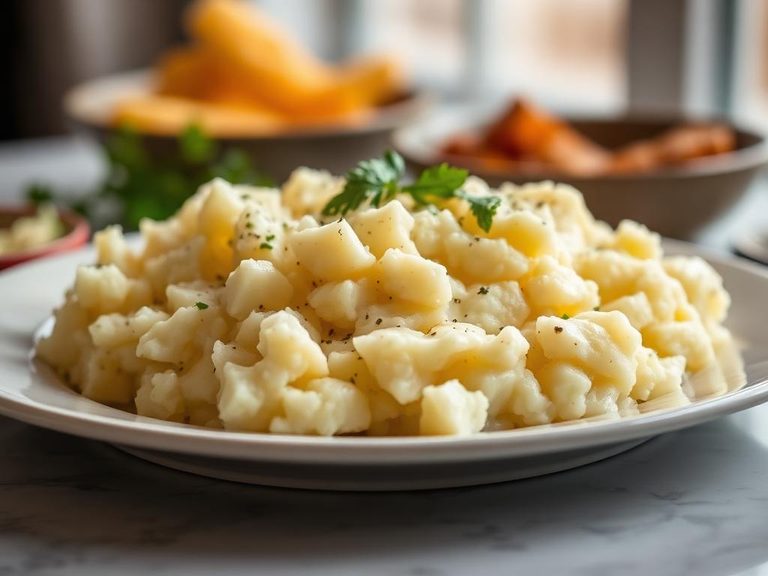
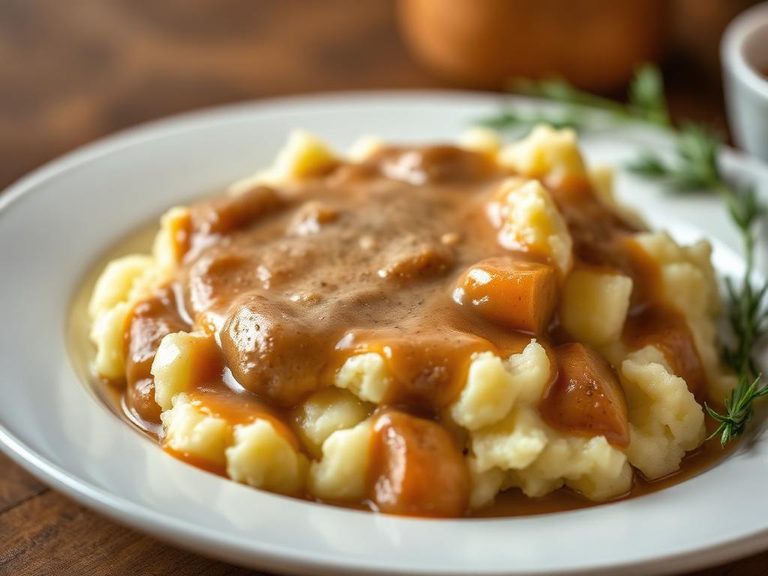
Instant mashed potatoes are a convenient, shelf-stable version of the classic comfort food, made from dehydrated potato flakes or granules that rehydrate quickly with hot water or milk. They typically contain potatoes, salt, and sometimes additives like emulsifiers or preservatives to improve texture and shelf life. Originating in the mid-20th century, they became a staple in American households and military rations for their ease of preparation.
🍳 View the full Instant Mashed Potatoes recipe →
🍽️ Nutrition at a glance
This dish is primarily high in carbohydrates, with a moderate amount of potassium and vitamin C if fortified, but generally low in protein and fat unless butter or cream is added. A standard 1-cup serving prepared with water contains around 200-250 calories, making it a quick energy source.
Nutrition breakdown
| Calories | 200 kcal |
| Protein | 4 g |
| Carbs | 40 g |
| Fat | 2 g |
| Fiber | 3 g |
| Sugar | 2 g |
| Sodium | 600 mg |
| Potassium | 500 mg |
| Sodium | 600 mg |
| Iron | 2 mg |
| Calcium | 30 mg |
| Vitamin C | 15 mg |
| Niacin (B3) | 2 mg |
| Vitamin B6 | 0.2 mg |
| Phosphorus | 100 mg |
Per 1 cup (240 g) · estimated, varies by recipe
💡 What's interesting
Instant mashed potatoes were developed during World War II to provide soldiers with a lightweight, nutritious meal, highlighting their role in food technology for convenience and preservation. Nutritionally, they offer a practical way to include potatoes in diets where fresh produce is scarce, though they often lack the fiber and some nutrients found in whole potatoes.
🍽️ Related dishes
AI estimate may be inaccurate · Terms