

Imitation seafood cocktail
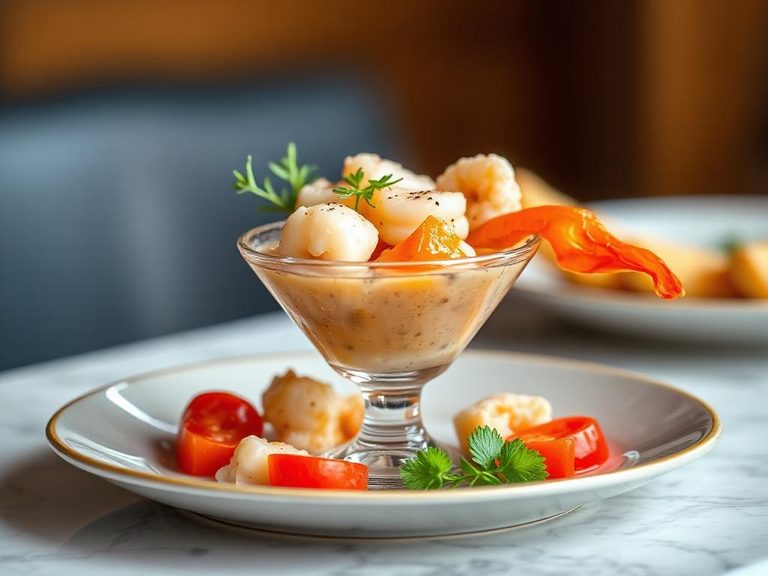
Imitation seafood cocktail is a popular appetizer featuring plant-based or surimi-based seafood substitutes served chilled in a tangy cocktail sauce. The dish typically includes imitation crab, shrimp, or lobster made from fish paste (surimi) or konjac, often paired with celery, lettuce, and a tomato-based sauce. It originated as a budget-friendly alternative to traditional seafood cocktails and is commonly found in Asian fusion cuisine, delis, and casual dining menus.
🍽️ Nutrition at a glance
Imitation seafood cocktail is generally low in fat and moderate in protein, with a relatively low calorie count per serving. It provides some omega-3 fatty acids from fish paste and key nutrients like selenium and vitamin B12, though it may be higher in sodium due to the sauce and processing.
Nutrition breakdown
| Calories | 150 kcal |
| Protein | 12 g |
| Carbs | 18 g |
| Fat | 3 g |
| Fiber | 2 g |
| Sugar | 8 g |
| Sodium | 850 mg |
| Vitamin B12 | 1.2 mcg |
| Selenium | 22 mcg |
| Phosphorus | 180 mg |
| Niacin (B3) | 3.5 mg |
| Potassium | 220 mg |
| Vitamin C | 4 mg |
| Iron | 1.1 mg |
| Zinc | 0.8 mg |
Per 1 cup (240 g) · estimated, varies by recipe
💡 What's interesting
This dish showcases the culinary innovation of using surimi (processed fish paste) to mimic the texture and flavor of real seafood at a fraction of the cost, making seafood-like dishes accessible to a wider audience. It's also a common example of 'mock' or imitation foods in various cuisines, reflecting both economic practicality and creative food science.
🍽️ Related dishes
AI estimate may be inaccurate · Terms