

Horse meat carpaccio
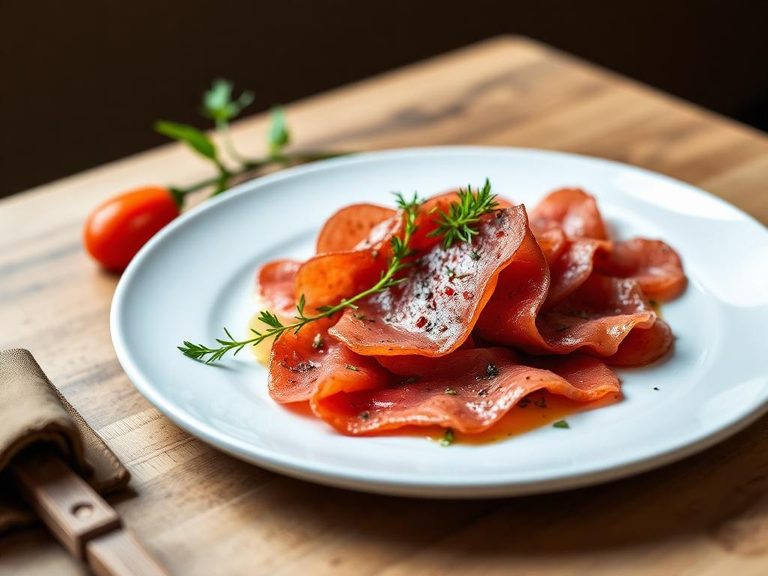
Horse meat carpaccio is a dish of thinly sliced raw horse meat, typically served as an appetizer or light main course. It is often dressed with olive oil, lemon juice, capers, and sometimes shaved Parmesan or arugula. While carpaccio is of Italian origin, using horse meat (known as 'carne di cavallo') is a specific regional variation found in parts of Italy and other European countries.
🍽️ Nutrition at a glance
This dish is very high in protein and relatively low in carbohydrates, with a moderate fat content depending on the cut and dressing. It is an excellent source of iron, B vitamins (especially B12), and zinc, providing a substantial amount of nutrients per serving with a rough ballpark of 250-350 calories.
Nutrition breakdown
| Calories | 300 kcal |
| Protein | 32 g |
| Carbs | 1 g |
| Fat | 18 g |
| Fiber | 0 g |
| Sugar | 0 g |
| Sodium | 150 mg |
| Iron | 4.5 mg |
| Zinc | 5.2 mg |
| Vitamin B12 | 8.0 µg |
| Niacin (B3) | 8.0 mg |
| Phosphorus | 280 mg |
| Potassium | 400 mg |
| Selenium | 25 µg |
| Vitamin B6 | 0.6 mg |
Per 1 serving (150 g) · estimated, varies by recipe
💡 What's interesting
Horse meat is leaner and often richer in certain nutrients like iron and omega-3 fatty acids compared to beef, making it a nutritionally dense choice. Culturally, its consumption is a topic of significant debate and varies greatly by region, being a traditional delicacy in some places while being taboo in others.
🍽️ Related dishes

AI estimate may be inaccurate · Terms