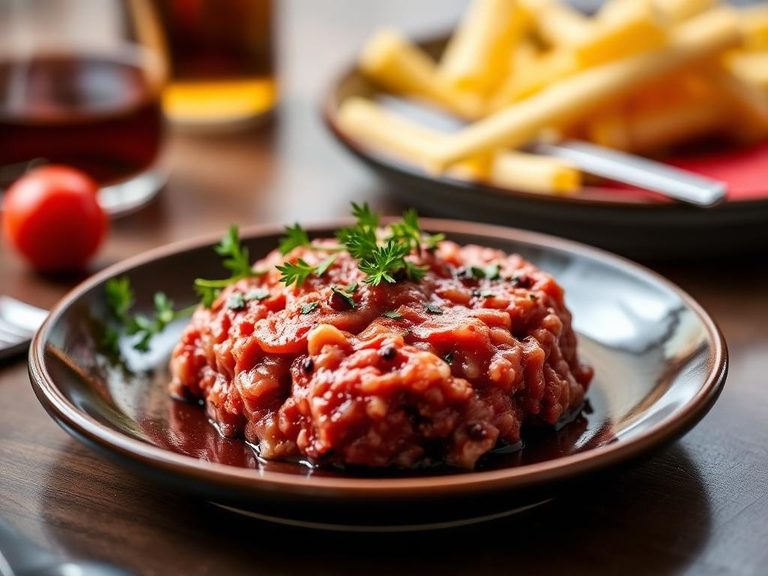
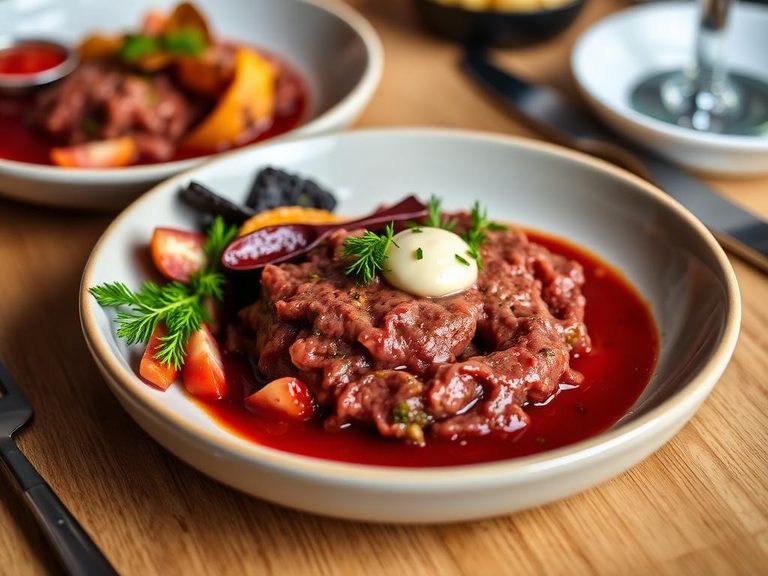
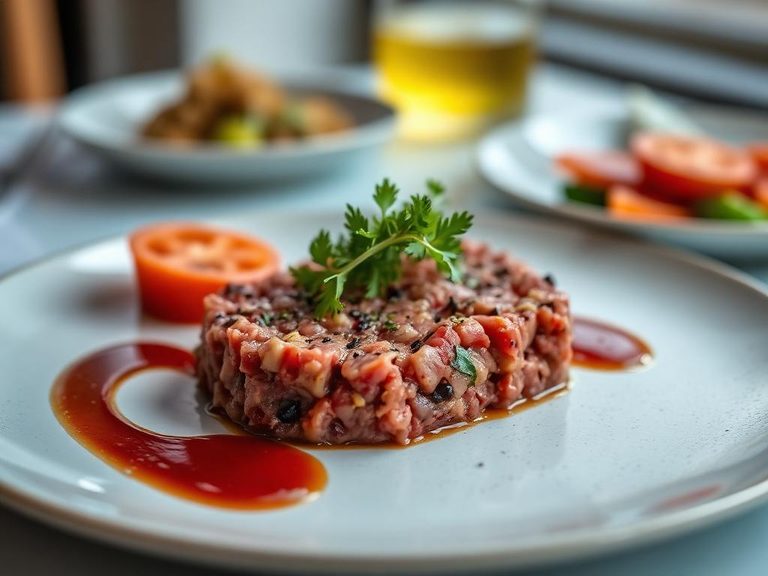
Heart tartare
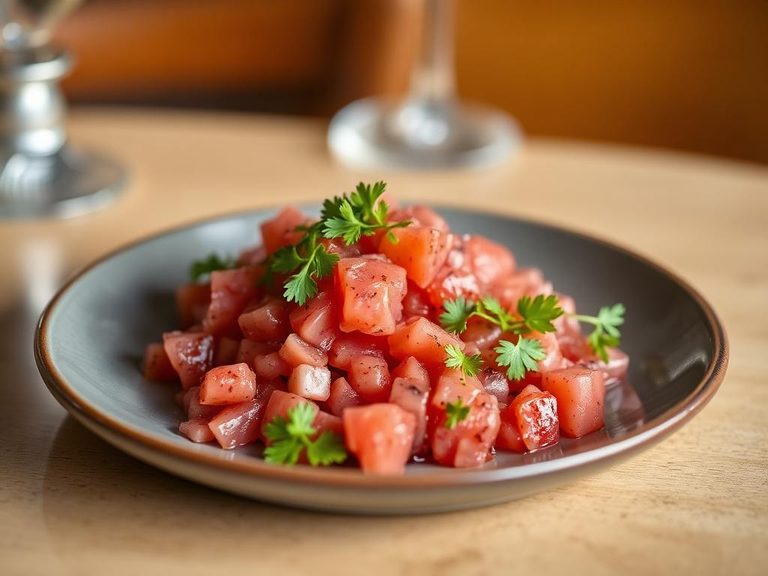
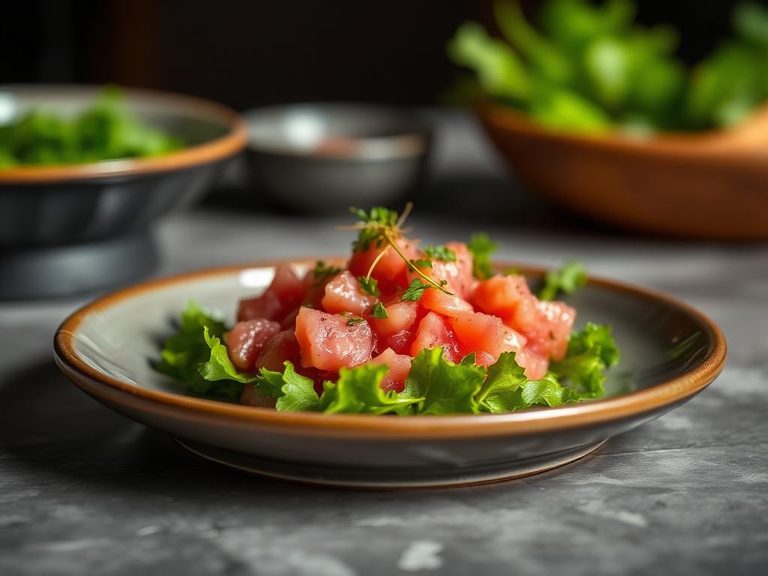
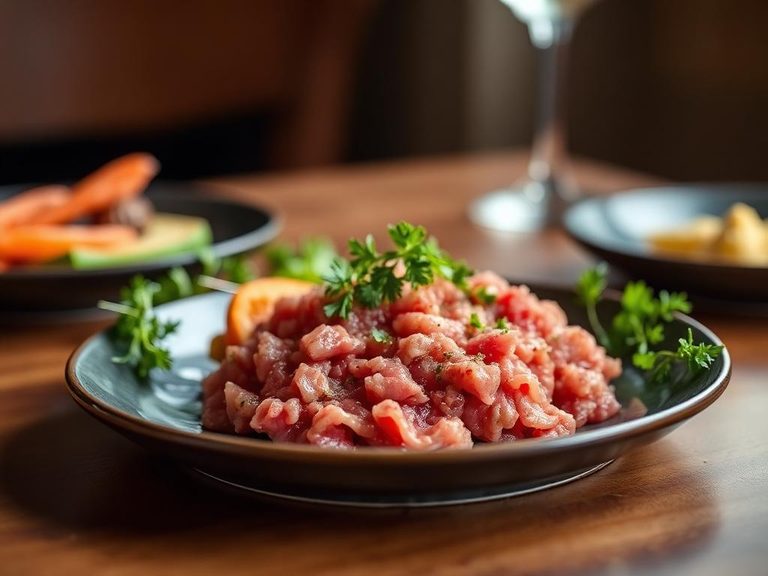
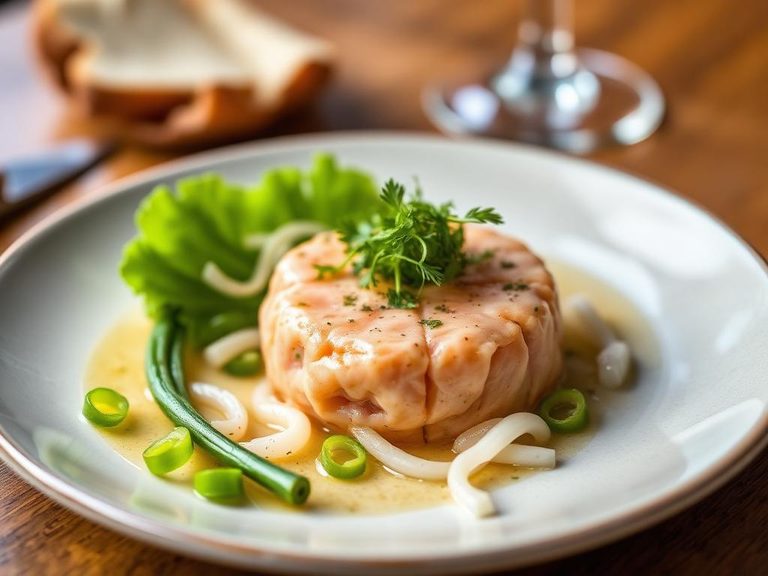
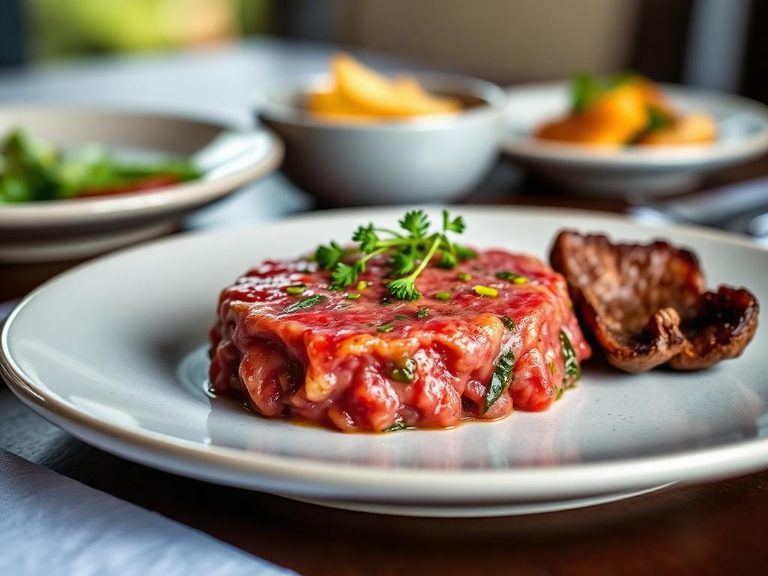
Heart tartare is a raw, finely chopped or minced dish made from animal heart, typically beef or game, seasoned with ingredients like onions, capers, and a raw egg yolk. It is a variation of classic steak tartare, substituting the heart muscle for more common cuts, and is often associated with French or European culinary traditions. The dish emphasizes fresh, high-quality ingredients and minimal cooking to preserve the meat's natural flavor and texture.
🍽️ Nutrition at a glance
Heart tartare is high in protein and low in carbohydrates, with a moderate amount of fat depending on the cut and preparation. It provides essential nutrients like iron, zinc, and B vitamins, particularly B12, and typically ranges from 250 to 350 calories per serving.
Nutrition breakdown
| Calories | 300 kcal |
| Protein | 30 g |
| Carbs | 2 g |
| Fat | 18 g |
| Fiber | 0 g |
| Sugar | 1 g |
| Sodium | 400 mg |
| Iron | 4.5 mg |
| Zinc | 5 mg |
| Vitamin B12 | 12 µg |
| Potassium | 300 mg |
| Phosphorus | 250 mg |
| Selenium | 30 µg |
| Niacin (B3) | 8 mg |
| CoQ10 | 5 mg |
Per 150 grams (about 5.3 ounces) · estimated, varies by recipe
💡 What's interesting
Culturally, heart tartare showcases nose-to-tail eating, utilizing organ meats to reduce waste and honor traditional butchery practices. Nutritionally, heart is a lean, nutrient-dense muscle meat, rich in CoQ10, which supports heart health and energy production.