

Glaze for Ham or Chicken
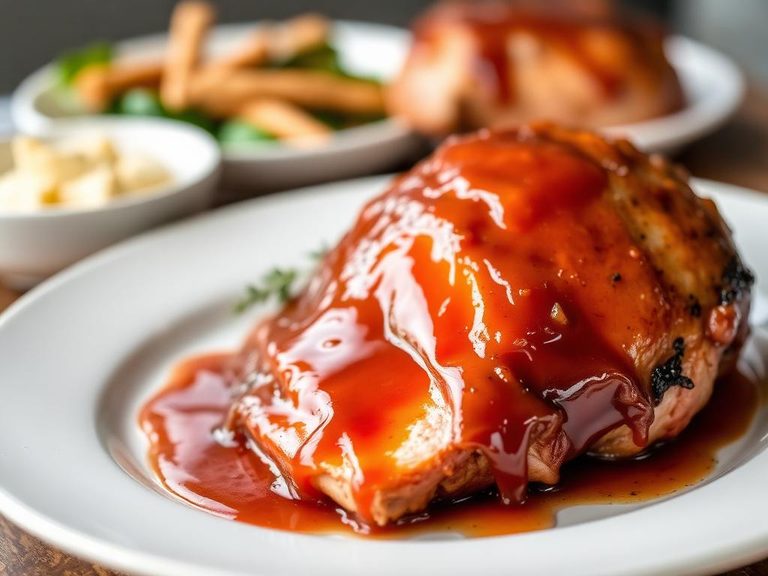
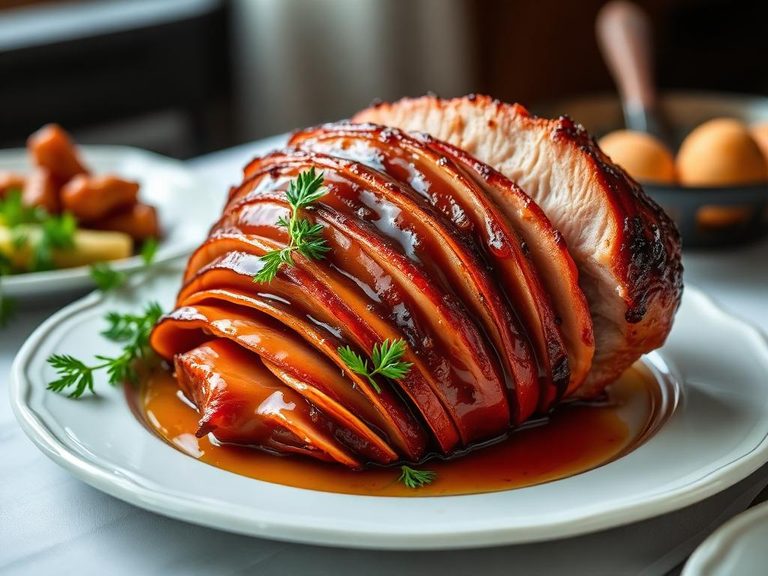
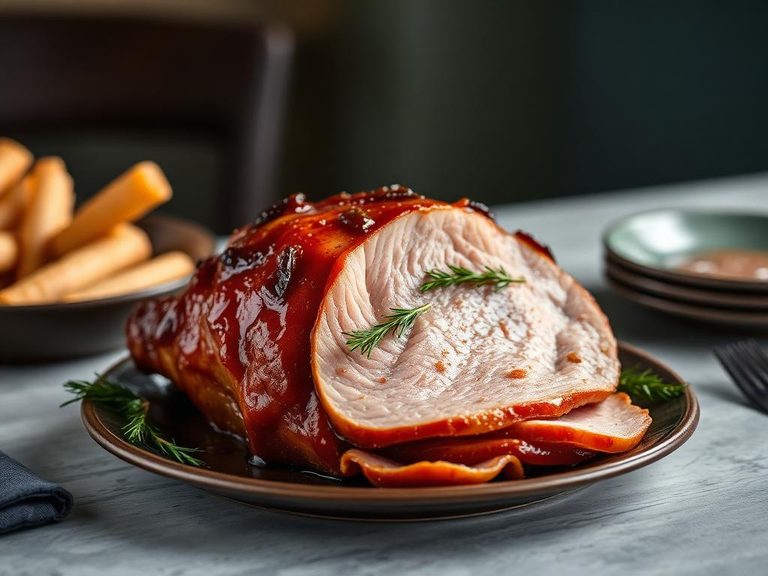
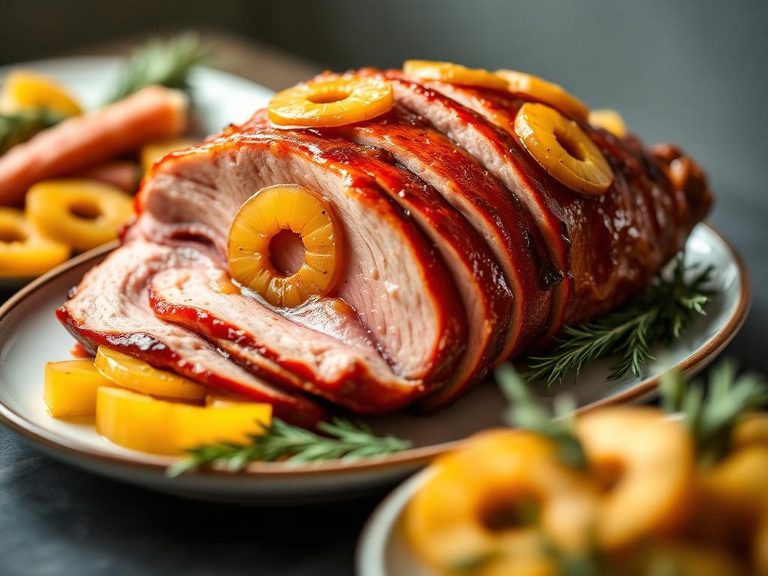
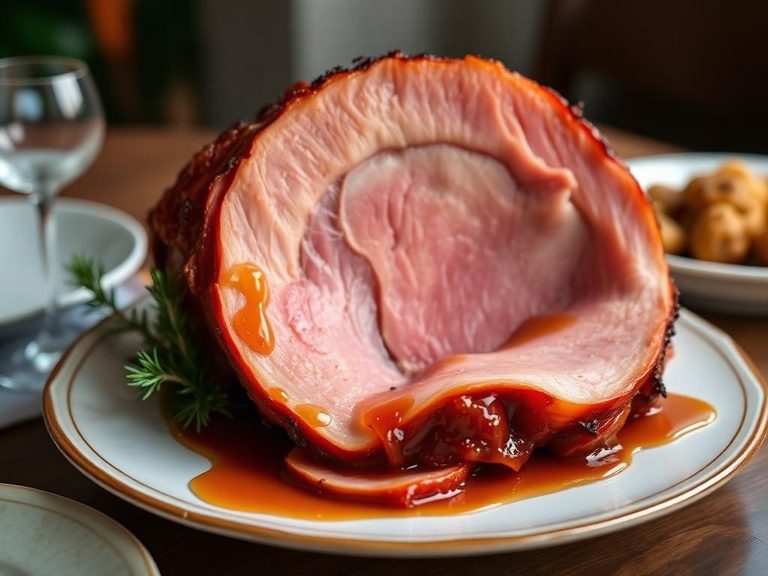
This is a sweet and tangy glaze commonly used to coat and caramelize baked ham or roasted chicken. It typically combines a sweet base like brown sugar or honey with acidic elements such as pineapple juice, mustard, or vinegar, and is often spiced with cloves or cinnamon. The glaze is a staple in American holiday cooking, particularly for Easter or Christmas dinners.
🍽️ Nutrition at a glance
This glaze is high in carbohydrates, primarily from sugars, and contributes a moderate amount of fat if butter or oil is used. It provides quick energy but is not a significant source of protein or fiber, with a typical serving containing roughly 100-150 calories.
Nutrition breakdown
| Calories | 120 kcal |
| Protein | 0 g |
| Carbs | 28 g |
| Fat | 0 g |
| Fiber | 0 g |
| Sugar | 26 g |
| Sodium | 95 mg |
| Potassium | 45 mg |
| Manganese | 0.1 mg |
| Iron | 0.2 mg |
| Vitamin C | 1 mg |
| Niacin (B3) | 0.1 mg |
Per 2 tablespoons (30 g) · estimated, varies by recipe
💡 What's interesting
Culturally, the glaze is a centerpiece of celebratory feasts, symbolizing abundance and care in preparation. Nutritionally, while it adds flavor and moisture, it significantly increases the sugar content of the main dish.
🍽️ Related dishes

AI estimate may be inaccurate · Terms