

Garnish for fish or meat dishes
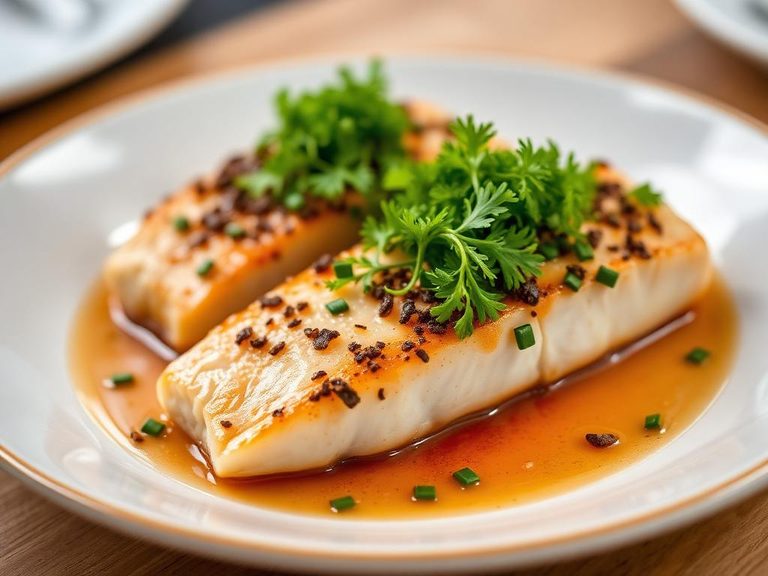
A garnish for fish or meat dishes is a decorative and flavorful accompaniment, typically made from fresh herbs, citrus slices, or pickled vegetables. It originates from global culinary traditions, with common examples including lemon wedges, parsley sprigs, or a simple salsa verde. Its primary role is to enhance the visual appeal and add a complementary flavor note to the main protein.
🍽️ Nutrition at a glance
Garnishes are generally low in calories, carbohydrates, and fat, contributing minimal macronutrients to a meal. They provide small but valuable amounts of vitamins like vitamin C (from citrus) or vitamin K (from herbs), along with antioxidants and a burst of freshness.
Nutrition breakdown
| Calories | 1 kcal |
| Protein | 0.1 g |
| Carbs | 0.2 g |
| Fat | 0 g |
| Fiber | 0.1 g |
| Sugar | 0 g |
| Sodium | 1 mg |
| Vitamin K | 62 mcg |
| Vitamin C | 5 mg |
| Vitamin A | 337 IU |
| Iron | 0.2 mg |
| Folate | 6 mcg |
| Potassium | 20 mg |
Per 1 tablespoon chopped fresh parsley (about 4 g) · estimated, varies by recipe
💡 What's interesting
Culturally, garnishes are a universal language of hospitality and attention to detail in cooking, transforming a simple plate into an inviting presentation. Nutritionally, they can add a concentrated dose of phytonutrients and enzymes that may aid in the digestion of the accompanying protein.
🍽️ Related dishes





AI estimate may be inaccurate · Terms