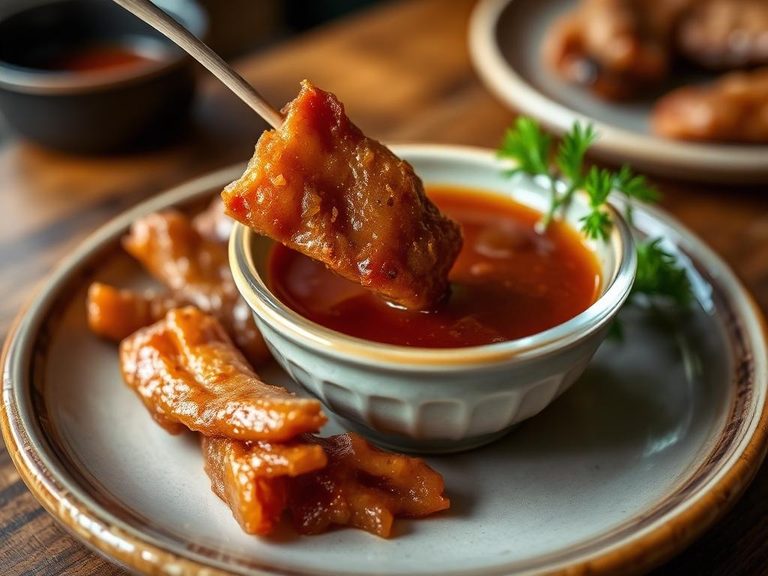
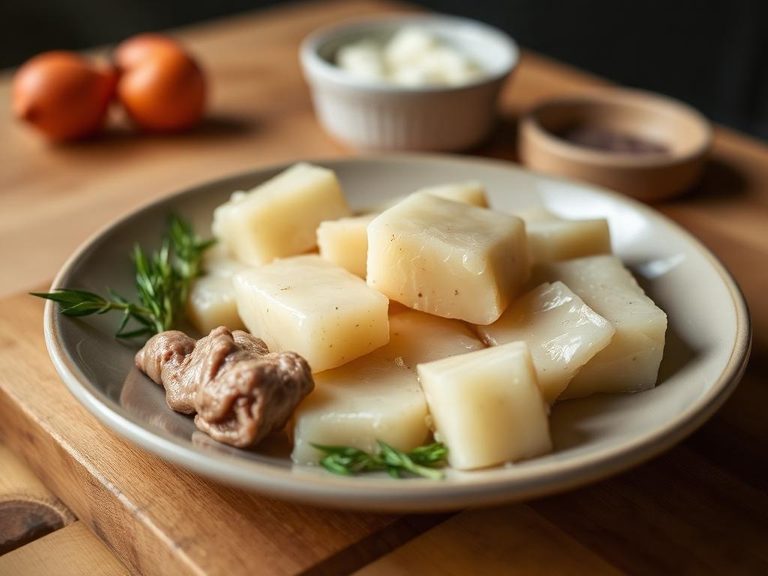
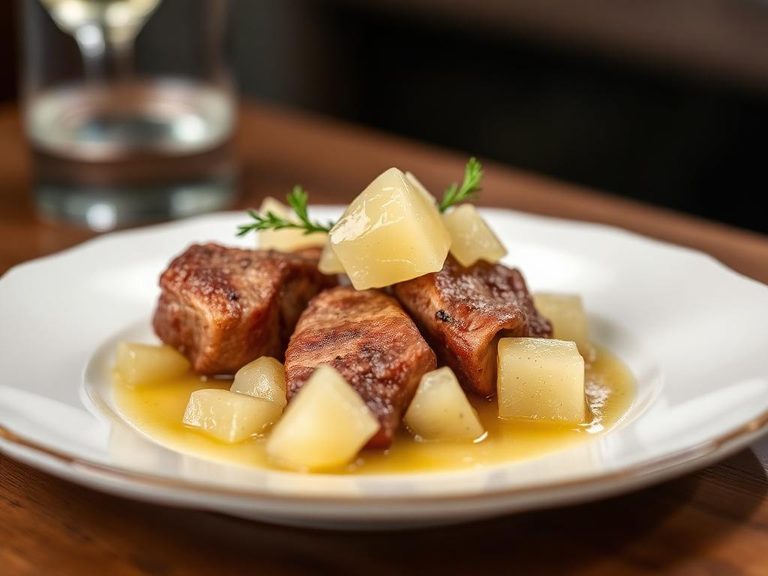
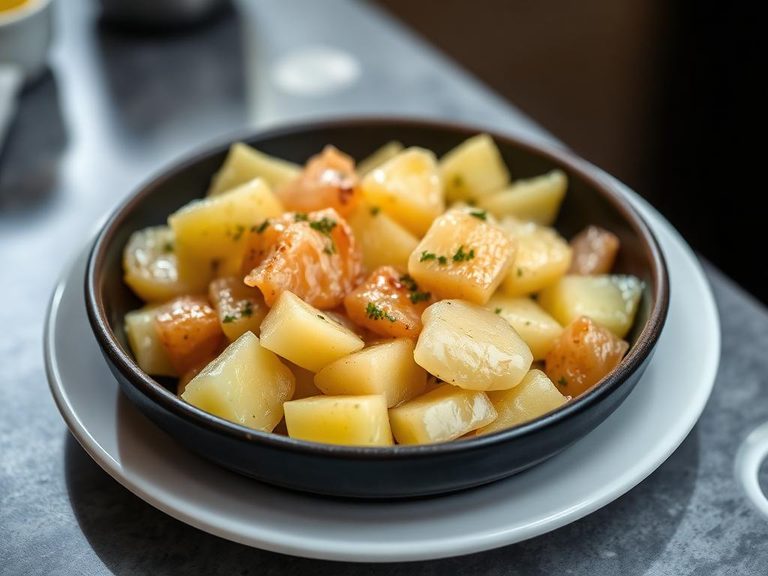
Rendered fat for dipping dried fish or meat
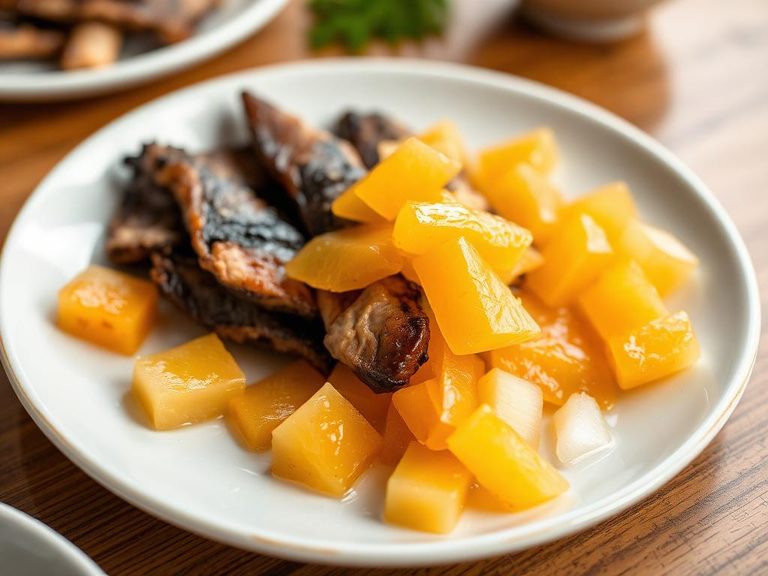
This is a traditional preparation where animal fat, such as lard or tallow, is slowly rendered down to create a rich, savory dipping sauce for preserved foods like dried fish or cured meat. The fat is often infused with aromatics like garlic, chili, or scallions during the rendering process. It is a staple in various cuisines, notably in parts of China, Southeast Asia, and rural communities worldwide.
🍽️ Nutrition at a glance
This dish is extremely high in fat, providing a dense source of calories and essential fatty acids, with virtually no carbohydrates or protein. A small serving delivers a significant amount of energy and fat-soluble vitamins like Vitamin D and E, depending on the animal source.
Nutrition breakdown
| Calories | 240 kcal |
| Protein | 0 g |
| Carbs | 0 g |
| Fat | 27 g |
| Fiber | 0 g |
| Sugar | 0 g |
| Sodium | 0 mg |
| Vitamin D | 2 µg |
| Vitamin E | 0.5 mg |
| Vitamin K | 3 µg |
| Choline | 10 mg |
| Selenium | 1 µg |
| Cholesterol | 25 mg |
| Saturated Fat | 10 g |
| Monounsaturated Fat | 12 g |
Per 2 tablespoons (28 g) · estimated, varies by recipe
💡 What's interesting
Culturally, it represents a historic method of food preservation and calorie-dense nutrition, especially valuable in cold climates or before refrigeration. Nutritionally, it's a pure fat source that can help with the absorption of fat-soluble vitamins from other foods in the meal.