

Fried Fish Sandwiches

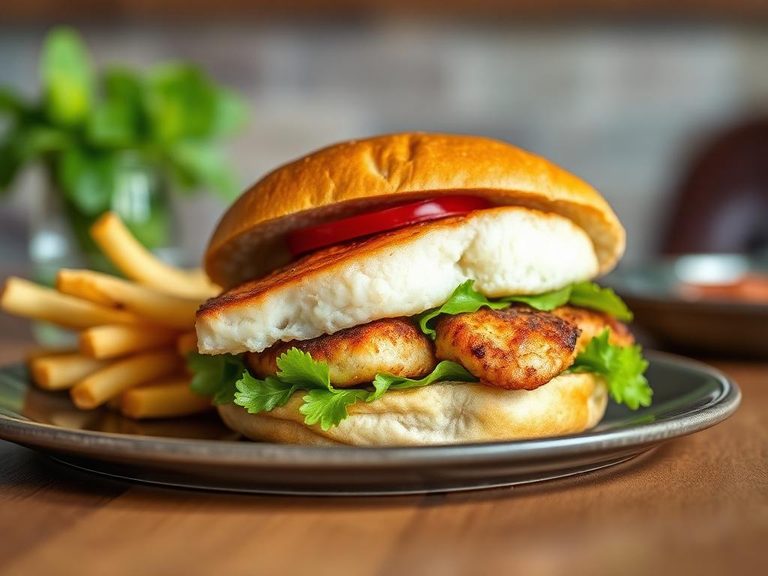
A Fried Fish Sandwich is a beloved street food and casual meal featuring a crispy, battered or breaded fish fillet nestled in a soft bun. Typically made with white fish like cod, haddock, or pollock, it's often topped with tartar sauce, pickles, lettuce, and sometimes cheese. While variations exist worldwide, it's particularly iconic in British and American cuisine, with regional styles like the UK's 'fish finger butty' or the American 'po' boy.
🍽️ Nutrition at a glance
This sandwich is generally high in protein from the fish and carbohydrates from the bun and batter, with a significant amount of fat due to the deep-frying process. A typical serving provides a good source of omega-3 fatty acids, vitamin D, and B vitamins, but the calorie count can range widely from 500 to over 800 calories depending on portion size and preparation.
Nutrition breakdown
| Calories | 480 kcal |
| Protein | 22 g |
| Carbs | 45 g |
| Fat | 24 g |
| Fiber | 2 g |
| Sugar | 5 g |
| Sodium | 890 mg |
| Potassium | 350 mg |
| Phosphorus | 280 mg |
| Iron | 3.5 mg |
| Calcium | 120 mg |
| Vitamin B12 | 2.5 µg |
| Niacin (B3) | 6 mg |
| Vitamin D | 1.5 µg |
| Magnesium | 45 mg |
Per 1 sandwich (220 g) · estimated, varies by recipe
💡 What's interesting
Culturally, the fried fish sandwich is a fascinating example of culinary migration, with its roots often traced to Jewish immigrants in the UK who adapted fried fish from Iberian traditions. Nutritionally, while the frying adds calories, the fish itself remains a nutrient-dense core, offering high-quality protein and essential nutrients that can make it a more substantial and potentially healthier option than many other fast-food sandwiches.
🍽️ Related dishes







AI estimate may be inaccurate · Terms