

Fig Newton cookies
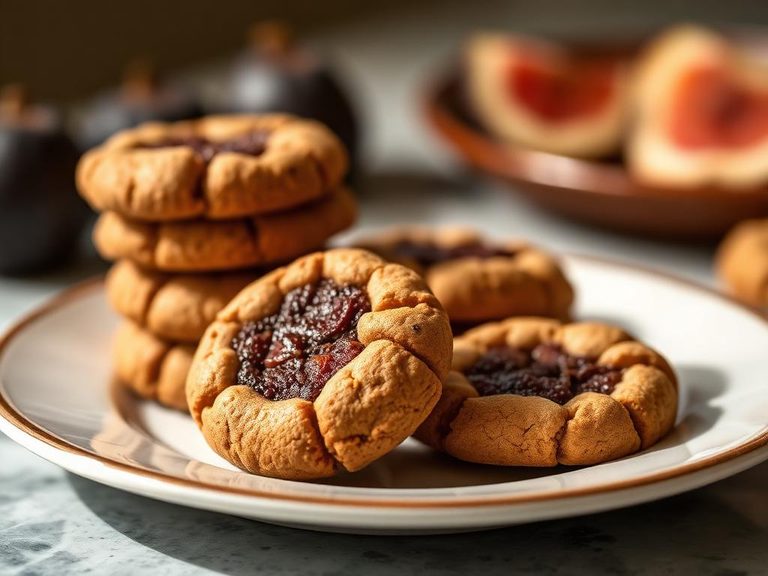
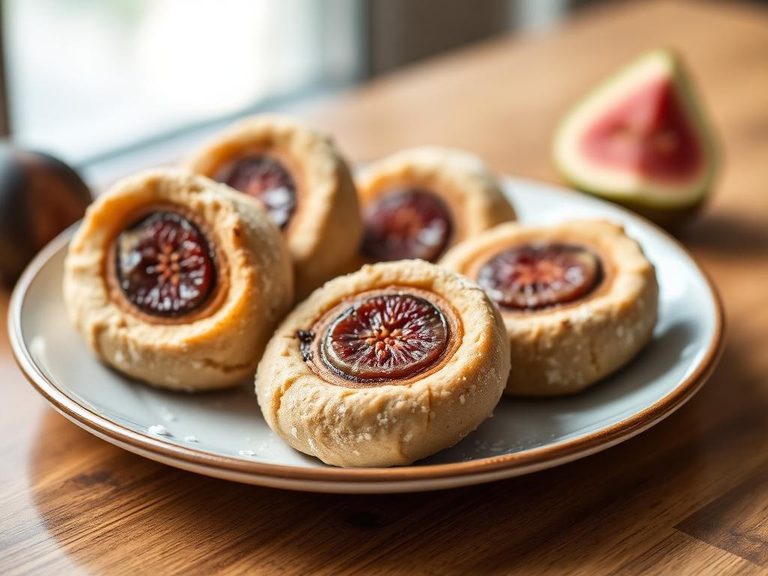
Fig Newton cookies are a popular American cookie consisting of a soft, cake-like outer layer made from flour, sugar, and butter, wrapped around a sweet fig paste filling. They were first produced by the Kennedy Biscuit Works (later Nabisco) in the late 19th century, making them one of the oldest branded cookies in the United States.
🍳 View the full Fig Newton cookies recipe →
🍽️ Nutrition at a glance
Fig Newtons are primarily a source of carbohydrates from both the refined flour and the fruit filling, with a moderate amount of fat and very little protein. A standard two-cookie serving provides around 110-120 calories, along with some dietary fiber and small amounts of minerals like potassium from the figs.
Nutrition breakdown
| Calories | 180 kcal |
| Protein | 2 g |
| Carbs | 34 g |
| Fat | 4 g |
| Fiber | 2 g |
| Sugar | 18 g |
| Sodium | 140 mg |
| Iron | 1.5 mg |
| Calcium | 30 mg |
| Potassium | 120 mg |
| Thiamin (B1) | 0.1 mg |
| Niacin (B3) | 1.2 mg |
| Folate | 30 mcg |
| Phosphorus | 40 mg |
| Magnesium | 15 mg |
Per 2 cookies (56 g) · estimated, varies by recipe
💡 What's interesting
Culturally, Fig Newtons are a classic example of a 'fruit biscuit' and were originally marketed as a wholesome, less messy alternative to eating plain figs. Nutritionally, the fig filling offers a modest boost of fiber and antioxidants compared to many other cookies, though they remain a sweet treat.
🍽️ Related dishes


AI estimate may be inaccurate · Terms