Dried or frozen strips for preservation

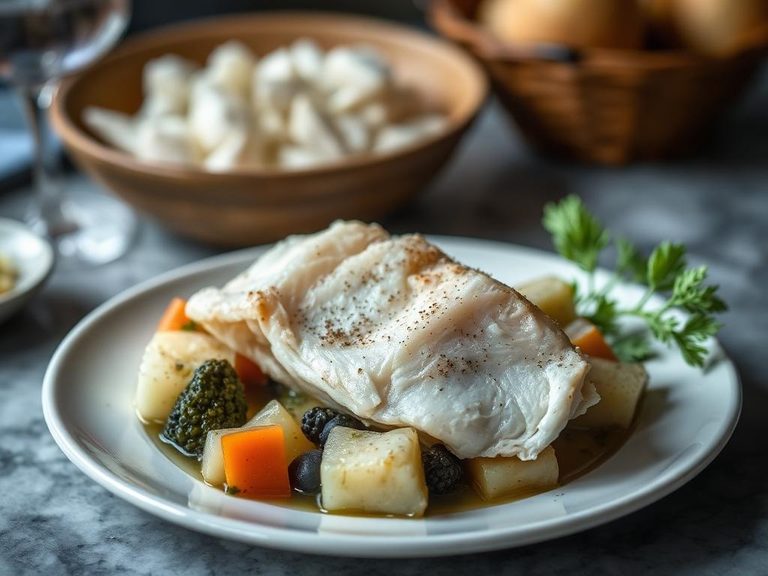
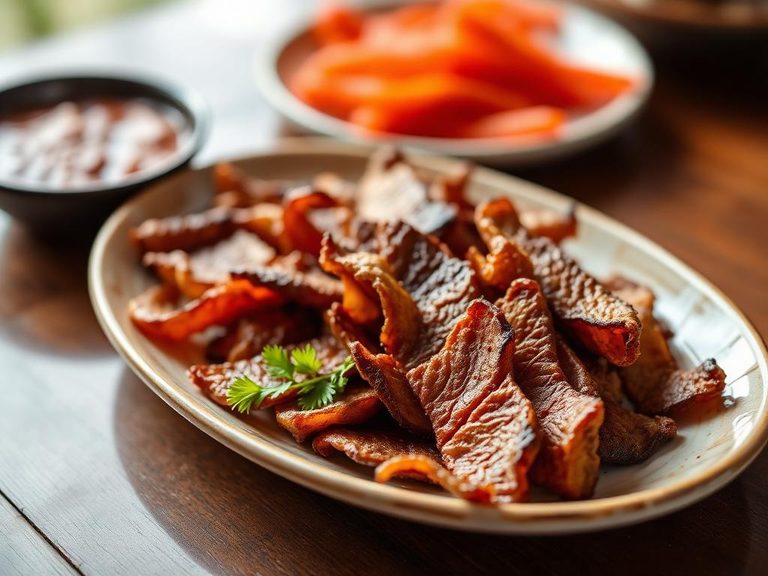
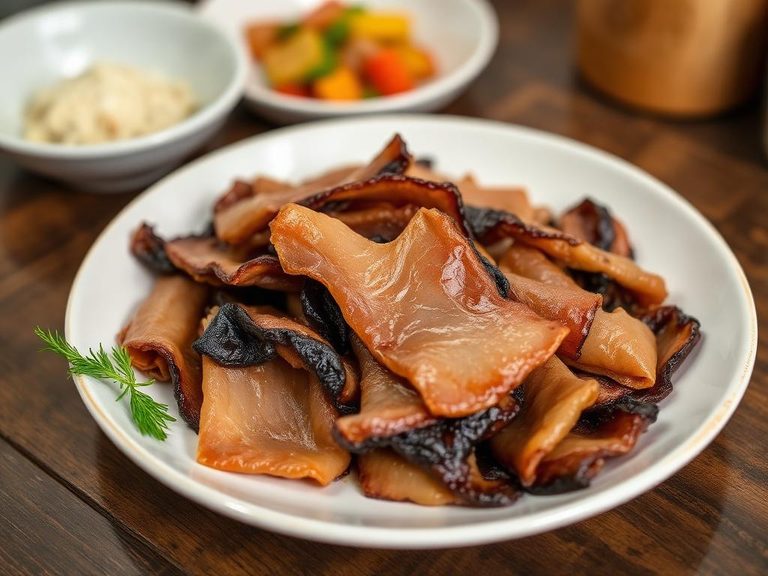
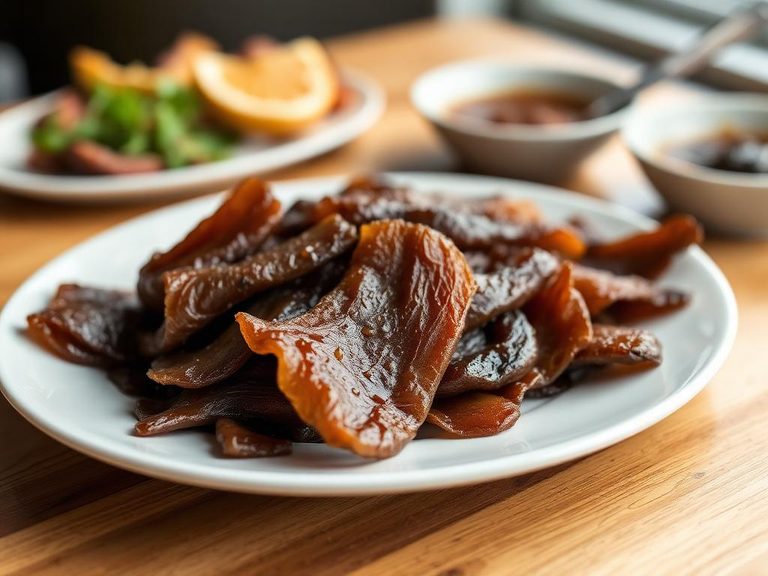
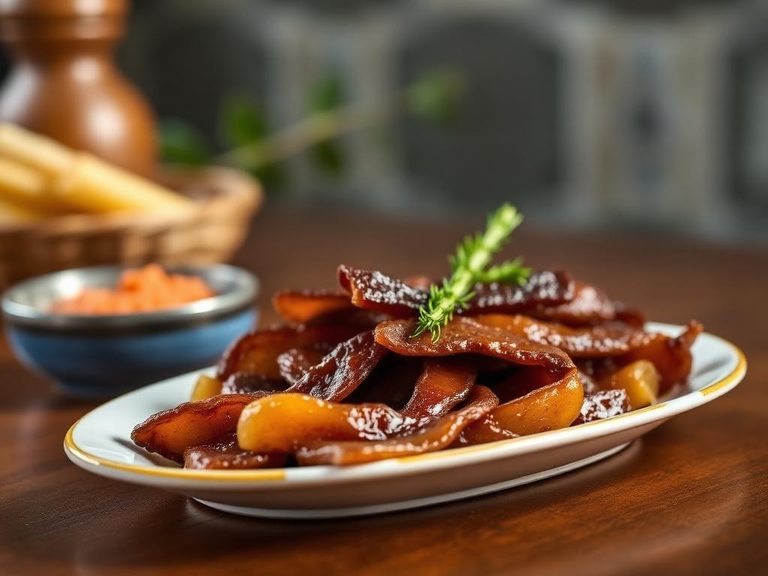
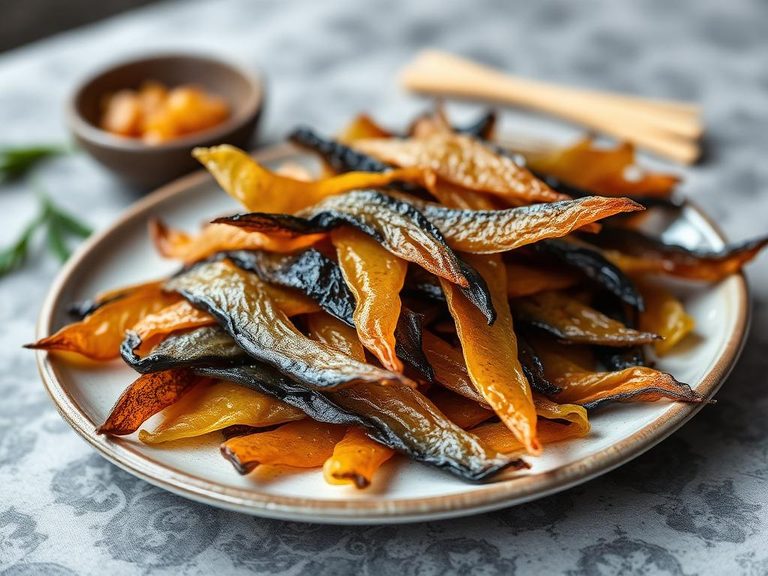
Dried or frozen strips for preservation are a traditional method of preparing and storing fish, commonly found in Nordic and Arctic cuisines. The dish typically consists of fish fillets, often cod or haddock, which are cut into strips, salted, and then either air-dried in the wind and sun or frozen. This technique was historically vital for preserving protein-rich food through long, harsh winters.
🍽️ Nutrition at a glance
This preparation is an extremely high-protein, low-carbohydrate food, providing a concentrated source of energy. A typical serving is also rich in essential minerals like iodine and selenium, with a calorie count that can vary significantly based on the fish species and drying method, often ranging from 200 to 300 kcal per 100g serving.
Nutrition breakdown
| Calories | 250 kcal |
| Protein | 45 g |
| Carbs | 0 g |
| Fat | 8 g |
| Fiber | 0 g |
| Sugar | 0 g |
| Sodium | 1500 mg |
| Vitamin D | 10 µg |
| Vitamin B12 | 5 µg |
| Selenium | 65 µg |
| Iodine | 150 µg |
| Phosphorus | 400 mg |
| Niacin (B3) | 10 mg |
| Omega-3 (EPA+DHA) | 1.5 g |
| Potassium | 350 mg |
Per 100 g (about 3-4 strips) · estimated, varies by recipe
💡 What's interesting
Culturally, this method is a cornerstone of food security in regions like Norway, Iceland, and Greenland, where it enabled survival and trade for centuries. Nutritionally, the drying process concentrates nutrients, making it a potent source of vitamin D (especially from sun-dried fish) and omega-3 fatty acids.