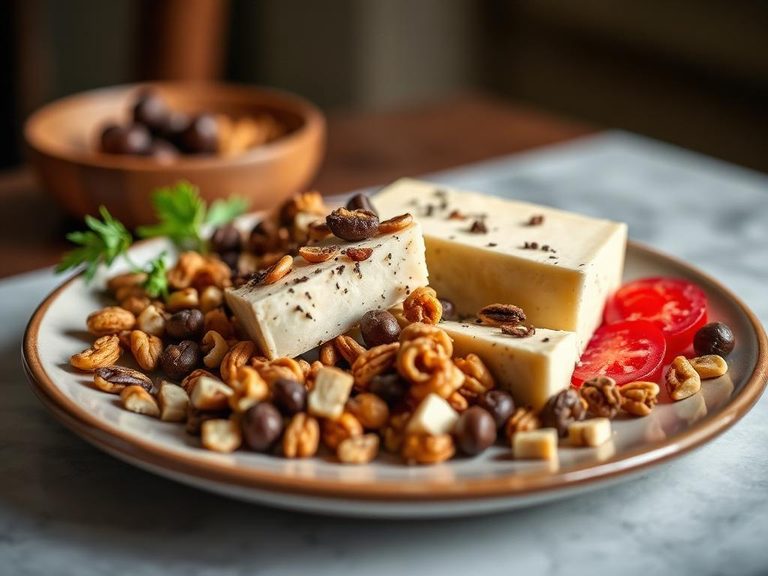
Dairy-free yogurt and cheese alternatives

Dairy-free yogurt and cheese alternatives are plant-based substitutes for traditional dairy products, typically made from ingredients like soy, almonds, oats, coconut, or cashews. They are designed to mimic the taste, texture, and culinary uses of dairy yogurt and cheese, originating from the growing demand for vegan, lactose-free, and health-conscious food options.
🍽️ Nutrition at a glance
These alternatives vary widely in macronutrients; yogurt versions are often moderate in carbs and low in fat, while cheese alternatives can be higher in fat. They are commonly fortified with key nutrients like calcium, vitamin D, and vitamin B12, with a typical serving of yogurt containing around 100-150 calories.
Nutrition breakdown
| Calories | 130 kcal |
| Protein | 3 g |
| Carbs | 12 g |
| Fat | 8 g |
| Fiber | 2 g |
| Sugar | 4 g |
| Sodium | 180 mg |
| Calcium | 450 mg |
| Vitamin D | 2.5 mcg |
| Vitamin B12 | 0.5 mcg |
| Potassium | 200 mg |
| Phosphorus | 100 mg |
| Vitamin E | 3 mg |
| Magnesium | 20 mg |
| Iron | 1 mg |
Per 1 cup (240 g) of unsweetened, plain almond-based yogurt · estimated, varies by recipe
💡 What's interesting
Culturally, these products represent a significant shift in global food systems, making traditional dairy-centric cuisines accessible to those with dietary restrictions. Nutritionally, they offer a way to reduce saturated fat and cholesterol intake while providing plant-based protein and fiber, especially when made from whole-food ingredients like soy or oats.