

Döner Kebab
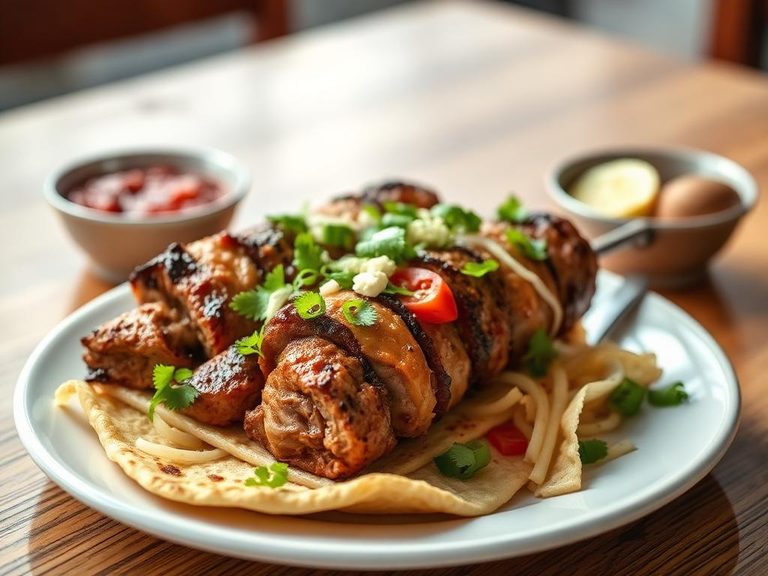
Döner Kebab is a savory dish originating from the Ottoman Empire, now a staple in Turkish and Middle Eastern cuisine. It features seasoned meat—typically lamb, beef, or chicken—slow-roasted on a vertical rotisserie, then sliced thin and often served in a pita or flatbread with fresh vegetables and sauces.
🍽️ Nutrition at a glance
A typical serving is high in protein from the meat and moderate in fat, especially if served with creamy sauces like tahini or yogurt-based dressings. The bread adds carbohydrates, making it a balanced but calorie-dense meal, with a ballpark of 500-800 calories per serving depending on portion size and accompaniments.
Nutrition breakdown
| Calories | 580 kcal |
| Protein | 32 g |
| Carbs | 48 g |
| Fat | 28 g |
| Fiber | 4 g |
| Sugar | 6 g |
| Sodium | 1200 mg |
| Iron | 4.5 mg |
| Vitamin C | 15 mg |
| Calcium | 120 mg |
| Potassium | 400 mg |
| Vitamin A | 80 mcg |
| Vitamin B12 | 2.5 mcg |
| Zinc | 5 mg |
| Phosphorus | 300 mg |
Per 1 sandwich (350 g) · estimated, varies by recipe
💡 What's interesting
Culturally, Döner Kebab has evolved into global street food icons like the German Döner Kebab and Greek Gyros, showcasing culinary adaptation. Nutritionally, it's unique for providing a complete protein source while often incorporating fresh veggies like tomatoes and onions, adding vitamins and fiber to the mix.
🍽️ Related dishes

AI estimate may be inaccurate · Terms