Crumbled as a topping for casseroles or salads
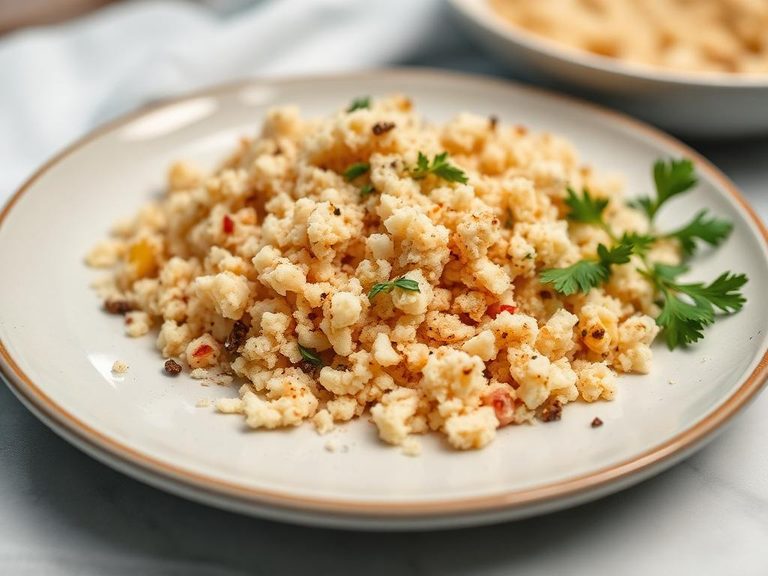
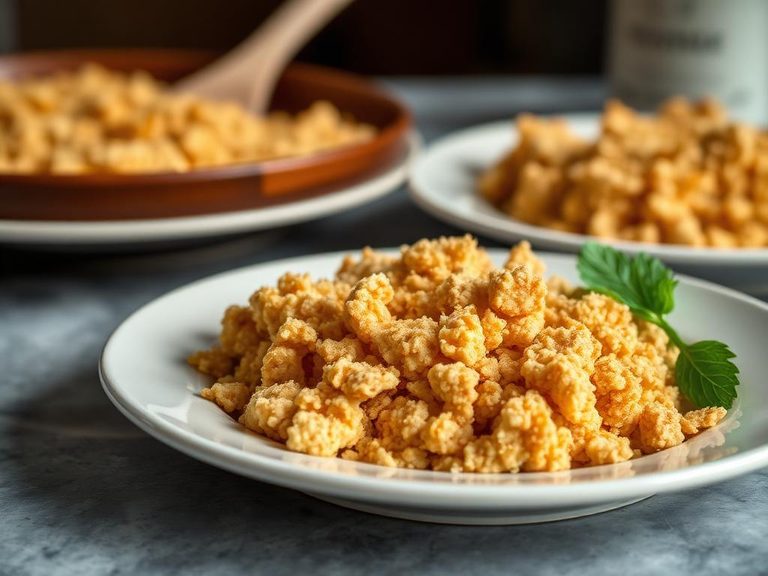
Crumbled as a topping for casseroles or salads refers to a variety of foods—most commonly cheeses like feta, goat cheese, or blue cheese, but also crispy fried onions or breadcrumbs—that are broken into small, irregular pieces. These toppings are used to add texture, flavor, and visual appeal to dishes like green bean casseroles, pasta bakes, or garden salads. While the concept is global, the specific ingredients often point to Mediterranean or American culinary traditions.
🍽️ Nutrition at a glance
If the crumble is cheese-based, it is typically high in fat and protein, with a moderate calorie count (around 70-100 calories per ounce). Key nutrients include calcium, phosphorus, and, in the case of blue cheese, probiotics. For breadcrumb or onion-based crumbles, they are higher in carbohydrates and fats from frying or oil, with fewer significant micronutrients.
Nutrition breakdown
| Calories | 110 kcal |
| Protein | 7 g |
| Carbs | 1 g |
| Fat | 9 g |
| Fiber | 0 g |
| Sugar | 0.5 g |
| Sodium | 180 mg |
| Calcium | 200 mg |
| Phosphorus | 150 mg |
| Vitamin A | 250 IU |
| Vitamin B12 | 0.3 mcg |
| Riboflavin | 0.1 mg |
| Zinc | 1.0 mg |
| Selenium | 5 mcg |
| Vitamin D | 0.2 mcg |
Per 1/4 cup (28 g) · estimated, varies by recipe
💡 What's interesting
Culturally, the act of 'crumbling' a topping is a simple yet transformative culinary technique that can elevate a humble dish. Nutritionally, a cheese crumble provides a concentrated source of energy and nutrients, while a breadcrumb crumble is often more about adding satisfying crunch than nutritional value.
🍽️ Related dishes
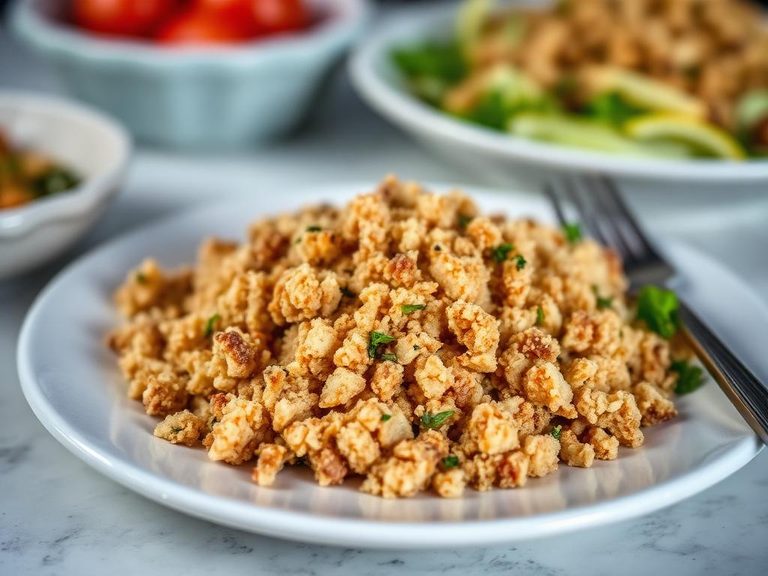 Crumbled topping for casseroles or salads
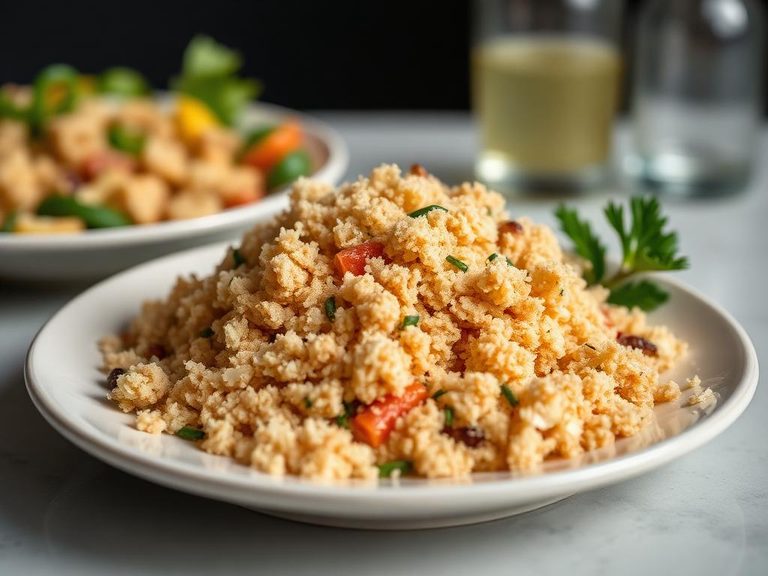 Crumbled as a topping for baked casseroles or salads
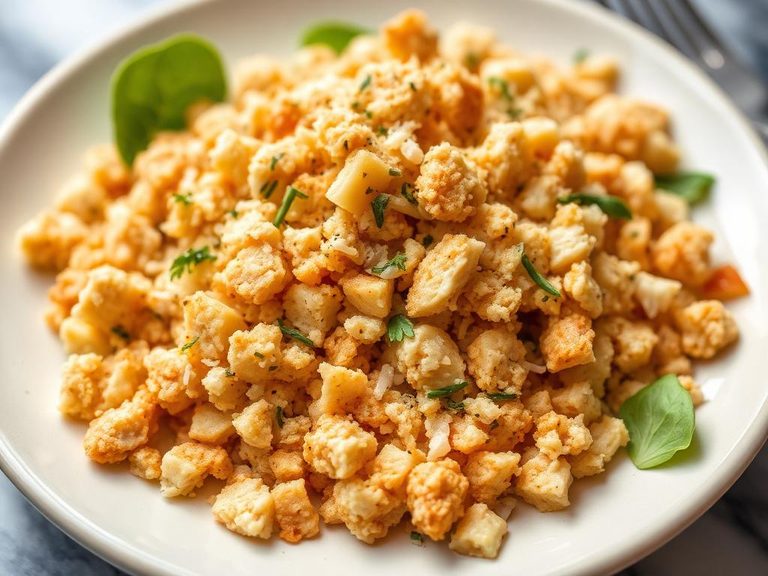 Crumbled as a topping for salads or casseroles
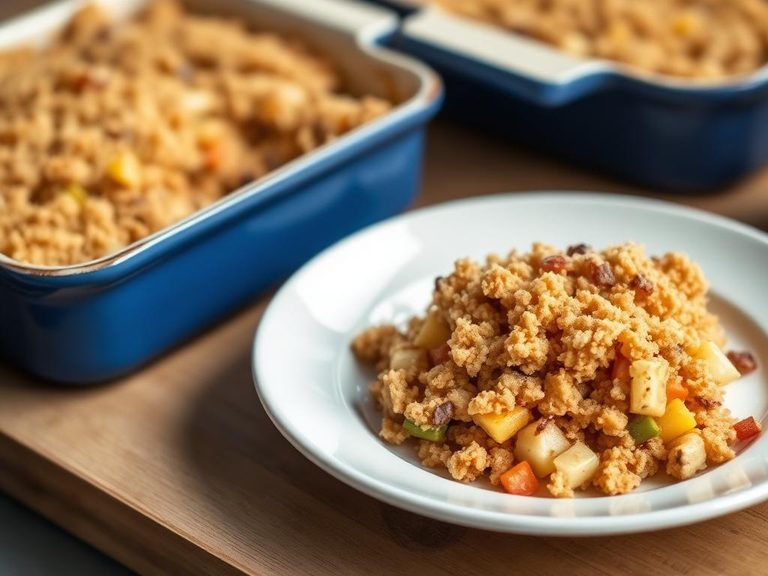 Crumbled topping for baked casseroles
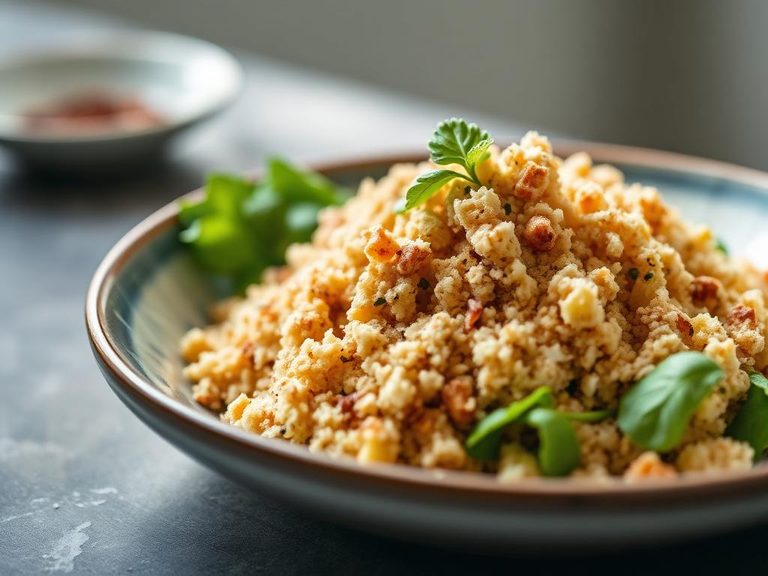 Crumbled topping for salads or soups
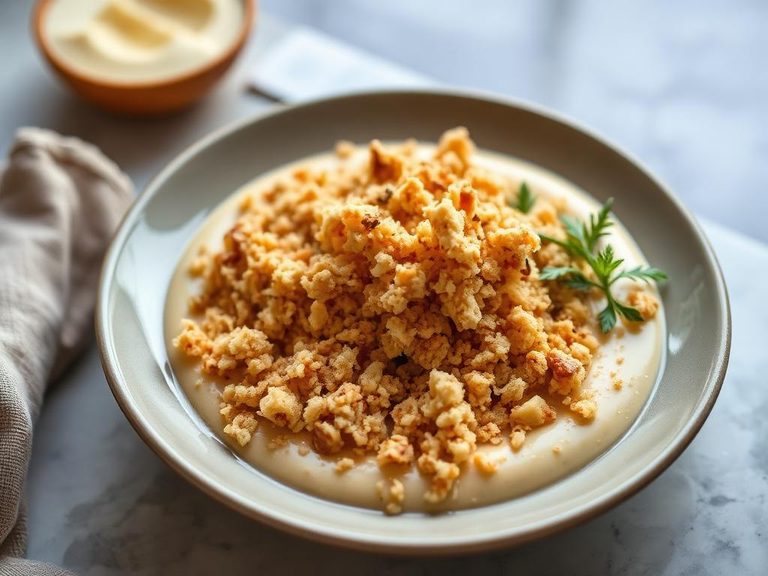 Crumbled topping for creamy soups or salads
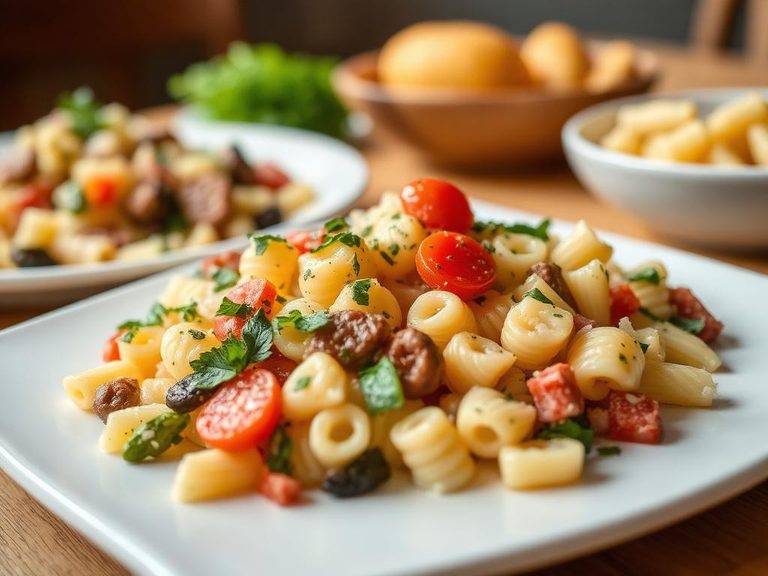 Chopped in pasta salads or potato salads
 Crushed Cracker Topping for Casseroles